





 Portuguese
  English
  Spanish
  3 min of reading
  0 comments


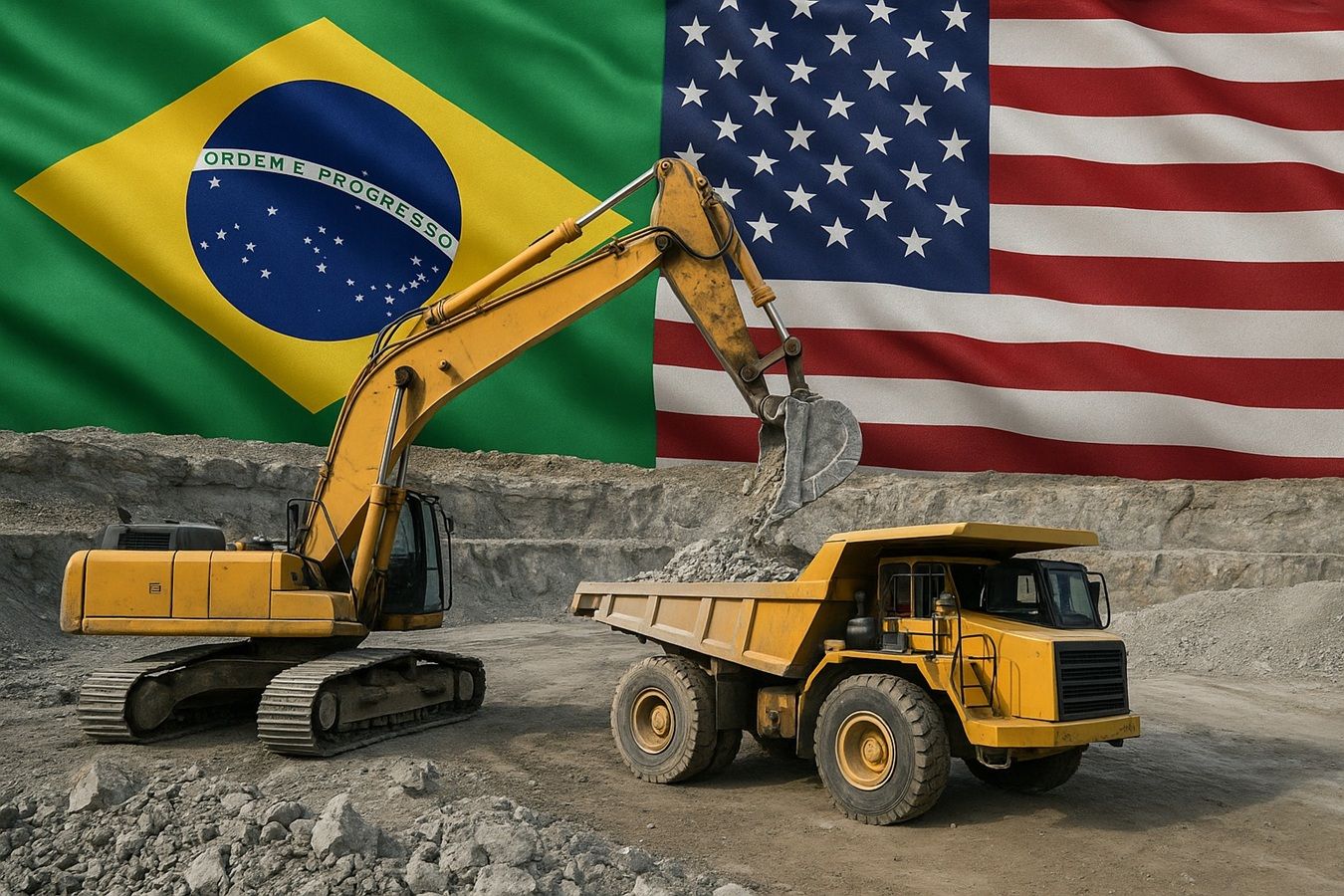
Finance Minister Proposes Including Critical Minerals in Negotiations with the U.S., While Lula Strengthens Defense of Sovereignty over Strategic Resources.
Fernando Haddad, the finance minister, stated this Wednesday, the 4th, that Brazil can include the exploration of critical minerals and rare earths in negotiations with the United States regarding the tariffs imposed by the U.S. government on Brazilian products.
The statement was made in an interview with BandNewsTV.
Haddad’s Proposal
According to the minister, Brazil, being one of the largest holders of reserves of these minerals, can increase its participation in bilateral trade and attract strategic investments from the United States.
-
Guarulhos becomes the “Faria Lima of warehouses” with logistics square meter at R$ 37.11, more expensive than the São Paulo capital, while Shopee, Mercado Livre, Amazon, and billion-dollar funds compete for space near the largest airport in South America.

-
Amazon plans to invest more than R$ 1 billion to transform the Brazilian airport into a major cargo hub; the agreement with the city hall is expected to be signed by 2026 and could generate around 5,000 jobs.

-
Fan discovers that watching the 2026 World Cup may cost more than an international trip: variable tickets, expensive train, R$ 92 beer, and FIFA’s billion-dollar revenue turn the World Cup into a warning for the wallet.
-
Broken umbrellas that were destined for the trash are turned into modern clothing in Petrópolis; the entrepreneur started with R$ 400, sold everything at the first fair, and today earns R$ 200,000 per year with sustainable fashion and exclusive pieces sold online.


Haddad emphasized that the North American country is not rich in these elements and that this opens space for cooperation agreements in areas such as the production of more efficient batteries and advanced technologies.
In addition to mining, the minister highlighted that other sectors could benefit from such an approach, specifically citing the data center sector.
Brazil, he said, has a large energy supply to feed processing and data storage structures.
For Haddad, the range of sectors of common interest is broad and can contribute to a more balanced relationship.
Diversification of Partners
Haddad also indicated that the government seeks to avoid excessive dependence on a single economic bloc.
“We do not want only China, or now with the European Union, the European Union to invest in Brazil. We also want the United States to invest,” he stated.
This vision aligns with the strategy of market diversification, which seeks to reduce geopolitical risks and expand the country’s bargaining margin.
U.S. Interest
The topic gained traction after the Chargé d’Affaires of the U.S. Embassy in Brazil, Gabriel Escobar, informed the Brazilian Mining Institute that Washington wants to make agreements to acquire minerals deemed strategic.
This move comes at a time when major powers are seeking to secure supplies of essential raw materials for the technology and defense industries.
What’s at Stake
Rare earths, a group of 17 chemical elements found in products such as smartphones, televisions, digital cameras, and LEDs, are irreplaceable in many applications.
The vast majority of reserves are concentrated in China and Brazil, which has the second-largest global reserve, equivalent to 25% of the identified potential territory.
These minerals play a central role in the manufacturing of permanent magnets, which are essential for wind turbines, electric vehicles, and military equipment such as fighter jets and submarines. With values that can reach thousands of reais per kilo, depending on the element, the sector is highly profitable and strategic.
Global Competition
The race for critical minerals is part of a broader scenario of commercial and technological disputes. The United States, China, and the European Union have sought to secure access to these resources to reduce vulnerabilities and ensure advancements in key sectors.
In this context, Brazil finds itself facing a dilemma: to capitalize on demand to strengthen international partnerships or adopt a more closed stance to preserve control over its production.




-

-

-

7 people reacted to this.