






 Portuguese
  Spanish


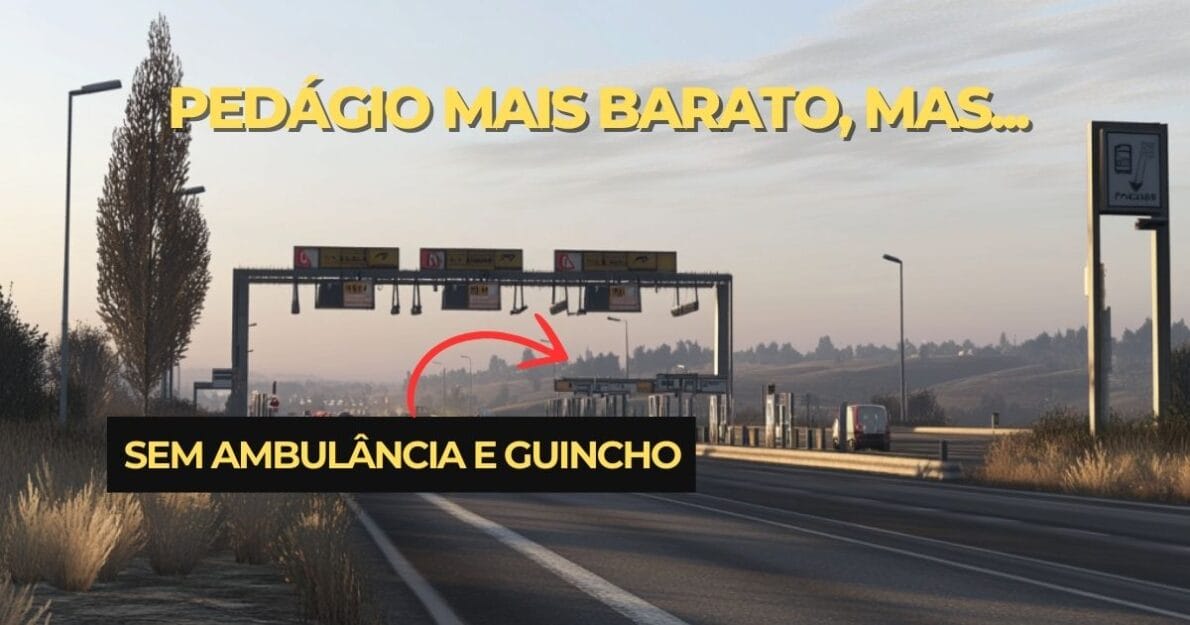

Federal Government Plans A New Model For Highway Concessions With Lower Tolls And Electronic Collection, But Without Offering Essential Services Such As Towing And Ambulances.
Would you accept paying less in tolls, even if it meant giving up essential services such as ambulances and tow trucks?
This is one of the proposals under review by the federal government, which is seeking alternatives for the concession of lower-traffic highways.
But the issue goes far beyond the toll price. Do the financial advantages outweigh the risks involved? Let’s understand how this new strategy is intended to work and why it is causing so much debate.
-
Classic Volkswagen Beetles of Brazilian Presidents to Swap Museums in Historic Partnership

-
British Factory Transitions from Mechanical Parts to Producing 420,000 Electric Power Units Annually, Supplying 70% of Ford’s Electric Cars Sold in Europe
-
Toyota Shifts from Hybrid Cars to Electric Air Taxis with Joby’s 6-Rotor Aircraft, Capable of 322 km/h, Aiming for Mass Production to Electrify Urban Skies

-
Ferrari Unveils Limited Edition 12Cilindri Manuale: 6.5-Liter V12, 830 HP, 0-100 km/h in 2.9 Seconds, Top Speed Over 340 km/h, Only 1,499 Units Available


The government, through the Ministry of Transport, is working to enable a new type of federal highway concession: the so-called “smart concessions.”
This model, according to Minister Renan Filho, offers a lower toll rate by adopting an electronic collection system, also known as free flow.
However, the big difference lies in the absence of services such as towing and ambulances, which is already raising concerns among highway users.
The Focus Is On Maintenance, Not Services
Unlike traditional concessions, which have long contracts and require heavy investments in infrastructure and emergency services, smart concessions propose a leaner approach, focusing solely on road maintenance.
These contracts have a duration of 10 years and are designed for lower-tier highways, with daily traffic between 2,000 and 5,000 vehicles, far below the major concessions such as the Presidente Dutra Highway, which connects São Paulo to Rio de Janeiro and records traffic of 180,000 vehicles daily.
According to information provided by the Ministry of Transport, at least 15 smart concession projects are under study.
One example is the BR-393, known as the Steel Highway, which is 200 kilometers long and connects Minas Gerais to Rio de Janeiro.
The federal government plans to revoke the current concession due to the breach of contract by the concessionaire KInfra and offer this segment to the market under the new model.
Investments And International Partnerships
This new model is not limited to Brazilian territory.
In April 2024, the government sent a delegation led by Executive Secretary George Santoro to the United States to present the highway concession portfolio and attract investments.
Additionally, a loan of US$ 700 million was requested from the World Bank to finance this new structure.
According to the NeoFeed portal, experts claim that the smart concession model has the potential to attract smaller companies and investment funds that cannot afford the high costs of traditional concessions, which require contracts of 20 to 30 years.
The Director of Planning and Economy at Abdib, Roberto Guimarães, sees this as an important step for the maturation of the concession sector in Brazil, especially after the new Bidding Law (Law 14.133/2021), which brought more legal security and stimulated the participation of new investors in the auctions.
A Market With New Opportunities, But Also With Challenges
This model is viewed by some as a way to facilitate the entry of new players into the sector, especially companies that operate in highway maintenance projects, but do not want or cannot afford large works.
“The private sector, besides being more agile in hiring equipment and labor, tends to have a greater commitment to asset management,” comments Guimarães.
However, not everyone shares this enthusiasm.
Attorney Lucas Hellmann, an expert in administrative law, warns that this approach may face resistance from the public, who question paying tolls without receiving essential services such as towing and ambulances.
“The government will have to make a very effective communication effort to explain the benefits of this new model to the population,” Hellmann comments.
Another important point is that current legislation does not differentiate concessions of different sizes. All projects, whether large or small, follow the same rules and guidelines, which may pose challenges in implementing the new format.
Experts such as Fernando Gallacci from Souza Okawa Advogados also point out that the absence of large works may deter major investors, leaving room for smaller players more focused on keeping the pavement in good condition.
Return Of Large Contractors?
Despite the challenges, Renan Filho suggests that the new model may attract large contractors, who dominated concessions between 2007 and 2014 but were heavily affected by the economic crisis and the Lava Jato Operation.
Companies such as Odebrecht, Andrade Gutierrez, and Camargo Corrêa faced financial difficulties and significantly reduced their participation in the highway concession sector.
In 2023, after being rehabilitated to participate in public tenders, these contractors returned to compete in Petrobras projects, but have not yet shown interest in highway concessions.
However, Roberto Guimarães from Abdib believes that, if the risk/return matrix is adequate, these large construction companies may return to bid on smart concession auctions.
The Future Of Highway Concessions
With the promise of lower tariffs, but without the presence of support services, the federal government plans to hold the first auction of smart concessions in 2025.
The proposal may attract new investors and companies, but the population will have to decide if they are willing to pay a lower price for tolls in exchange for a simpler structure without emergency services.
And you, would you accept paying less in tolls knowing that towing and ambulances will not be available? Can this model really bring benefits to Brazil or will it end up compromising safety on the roads?






Trabalhei no Resgate do Rodoanel Mário Covas/SP trechos Sul e Leste como socorrista, os usuários não fazem a menor idéia de quantas pessoas são atendidas pelos serviços “gratuitos” nas rodovias pedagiádas, muito menos, a porcentagem de óbitos. Essas estatísticas são públicas, se informe, reflita e depois, comente.
Ainda mais grave é, em rodovias de baixo movimento, imagine:
Madrugada chuvosa de uma terça ou quarta-feira, voce perde o controle de seu carro devido uma aquaplanagem, roda na pista, e cai em uma ribanceira. Qual a chance de voce ser pelo menis visto……porque, se não houver seeviços emergenciais ofertados pela concessionária, voce acha que haverá cameras de vudeo cobrindo todo trecho, ou onde for importante para a concessionária. Como as praças de pedágio, por exemplo. Mas essa informação não chega até você, que de pronto, cansado de pagar tantos e tão caros impostos e taxas, diz que é melhor pagar menos. Avalie bem se voce não esta novamente sendo manipulado!
Sim
Economia porca