






 Portuguese
  Spanish


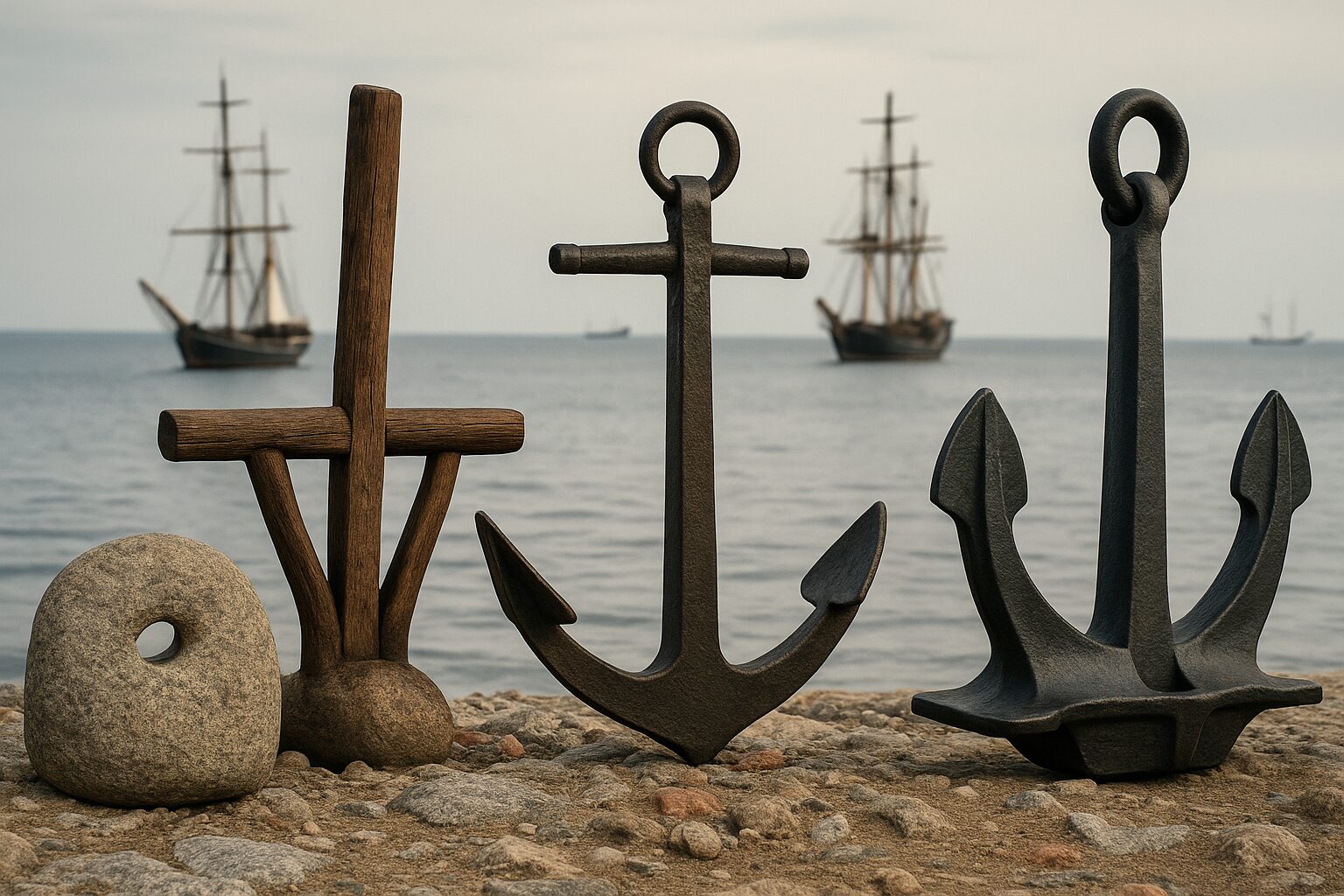

From Primitive Stones to Symbols of Faith and Naval Technology: The Millennial Journey of the Anchor Reveals Its Technical and Symbolic Importance in the History of Humanity
The anchor is one of the oldest pieces of navigation. From humanity’s first boats to modern ships, it has been present, evolving over time. Its role goes beyond its technical function. It also carries symbolic, religious, and historical meanings.
Stones at the Bottom of the Nile
The first anchors were simple. They were stones thrown to the bottom of the river to keep the boats in place. In Ancient Egypt, for example, navigators used this method in the Nile River.
As time passed, the stones began to have holes to tie ropes. Later, they received pieces of wood to help anchor them to the bed.
-
The U.S. Navy Conducts Submarine Tests in Idaho Lake to Detect Underwater Noises Hidden by the Ocean

-
Nuclear Submarine USS Alexandria Retired After 35 Years, Having Completed Over 1 Million Miles in Missions

-
MODEC Introduces New Hull Design for FPSO Gato do Mato to Produce Up to 120,000 Barrels of Oil Per Day in Brazil’s Pre-Salt Region
-
This Massive 12-Meter, 21-Ton Underwater Drone Can Operate Autonomously for Up to Five Days


Wood with Horns and Crossbar
In Southeast Asia, around the third millennium B.C., a new model emerged. It was made of wood and had two horns and a crossbar.
The design resembles modern anchors. These pieces were efficient and spread among different peoples. Metallurgy improved this technology. The horns began to be made of lead, increasing their ability to penetrate the bottom.
The Arrival of Iron
The use of iron in anchor construction began around the 8th century B.C. Sources from that time, such as Pausanias and Pliny the Younger, mention the Phrygian king Midas and the Greek Evlampius as inventors of this type of anchor. At that time, iron was expensive. Therefore, these anchors were rare and highly valued.
Symbol of Hope
The anchor was not only used to keep the boats in place. It also took on symbolic meaning. In Ancient Greece, it was called “ankura,” derived from the root “ankh,” meaning “hook” or “bend.”
For the early Christians, it became a symbol of hope. It represented steadfastness and also the cross.
Treasure in the Sea
In 2018, archaeologists found an iron anchor near the coast of England. It was about two thousand years old. It is believed to have belonged to a large Roman ship. The discovery reinforces the presence of the Roman Empire in regions outside the Mediterranean.
Modern Models
Today, there are various types of anchors. Each model is made for a different condition. The Danforth anchor, for example, has two parallel pointed prongs. It is effective in sandy or muddy bottoms. The Bruce anchor, on the other hand, is more versatile. It is easy to use and works well in different types of bottoms.
The Help of the Windlass
To lift the anchor, the windlass, also called a winch, is used. This equipment has a drum and a handle. It was previously made of wood. Today, the models are made of metal and are often motorized. There are electric and hydraulic versions that make work on board easier.
Right Choice, Guaranteed Safety
The choice of anchor depends on the type of boat and the anchorage location. It is necessary to assess the seabed, the depth, and the weather conditions.
All this ensures greater safety. It is also essential to take care of the maintenance of the anchor and the mooring systems.
Present and Future of the Anchor
Even with advancements in technology, the anchor remains essential. It represents safety at sea. It is also a symbol of stability amidst the uncertainties of navigation. After millennia of use, it continues to stand strong as one of the pillars of maritime life.





Reportagem interessante sobre um item que persiste no tempo ha milenios.
E muito interessante está matéria sobre as âncoras tão importante hoje e durante milênios já era utilizada. Achei legal também saber sobre o simbolismo da fé e firmeza representados pelas âncoras. Isso nos faz pensar. Quanto mais caminhamos para o futuro . O passado nós acompanha. Att Beltrão.