






 Portuguese
  Spanish


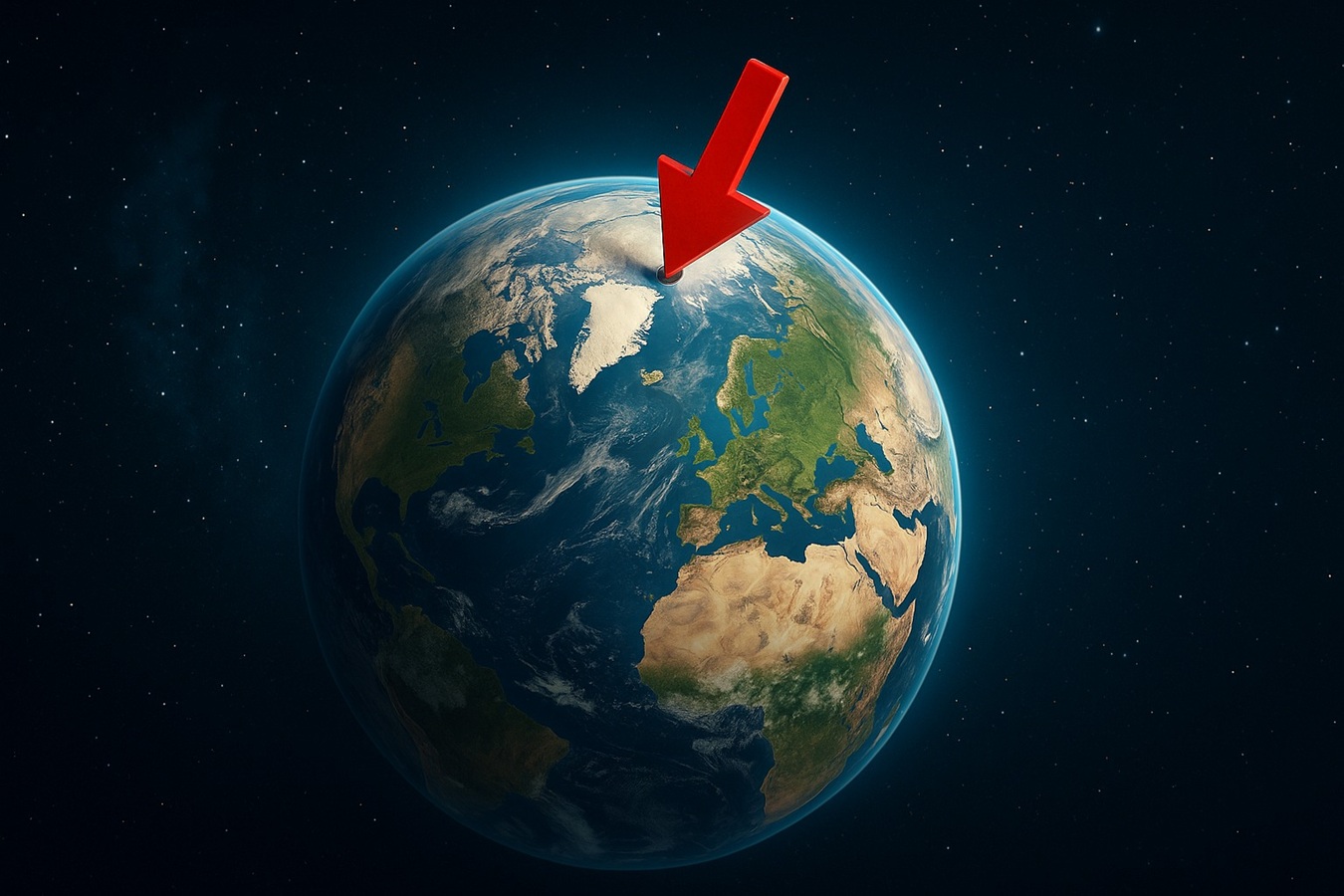

For almost two centuries, dams have been built to control rivers, generate energy, and supply cities. But a new discovery revealed an unexpected effect: the shift in the Earth’s axis. The impact goes beyond the environment
In the last two centuries, dam construction around the world has had an unexpected geophysical effect. According to a study from Harvard University, nearly 7,000 dams built between 1835 and 2011 caused the geographical North Pole to shift by about 1 meter.
This movement is not symbolic. The position of the Earth’s axis, a fundamental point for the planet’s rotation, has changed measurably.
The most important thing is to understand why this happened. The cause lies in the redistribution of mass generated by these structures.
-
Alaska’s 1,287 km Pipeline Built on 78,000 Metal Supports to Prevent Thawing, Survives Earthquakes and Remote Forests, Highlighting the Challenge of Hot Oil in a Harsh Environment

-
Brazilian Student Innovates Sustainable Ceramic Tableware Using Rice Husks and Recycled Glass, Achieving Up to 60% Waste Composition and Comparable Performance to Conventional Materials
-
AI-generated fake doctors deceive elderly in Brazil, health videos go viral with nearly 300,000 views, turning disease fear into a global audience and money machine.

-
Innovative Thermal Battery in Brazil Can Store Renewable Energy for Weeks, Offering Cheap Electricity and Winter Heating




By holding back water, billions of liters leave the oceans and become concentrated in specific areas of the Earth’s crust. This new concentration changes the physical balance of the planet.
What Is True Polar Shift
This phenomenon is known as “true polar shift.” The Earth, like a top, seeks to balance itself. If one part becomes heavier, the axis adjusts.
Therefore, the accumulation of water in large reservoirs shifts the axis of rotation. And while this may seem subtle on a human scale, the movement accumulated since 1835 has already reached 113 centimeters.
This shift affects various systems. The fall of 21 millimeters in global sea level, caused by damming, is one example.
It may seem small, but it is equivalent to filling the Grand Canyon twice. This volume left the oceans and became stored on land, changing the water distribution on the planet.
Two Marked Impact Phases
The study also identified two distinct phases in this geophysical change. The first spans from 1835 to 1954. During this period, most dams were built in North America and Europe.
This caused a shift of 20.5 centimeters in the Earth’s axis, towards the 103-degree east meridian in Central Asia.
The second phase began in 1954. With the construction of large dams in East Africa and Asia, the axis moved another 57 centimeters, now towards the 117-degree west meridian, which points to the Eastern Pacific.
Together, these two phases represent more than 1 meter of change in the axis of the planet.
Consequences Ignored by Engineering
Therefore, the impact of dams goes beyond what is visible. The infrastructure built for practical purposes — such as water supply, irrigation, and power generation — also affects the stability of the planet.
The Earth’s crust responds to this redistribution of weight, and this may have indirect effects on phenomena such as earthquakes or GPS accuracy.
Additionally, subtle changes in rotation influence climate prediction models and how gravity distributes water across the planet. These aspects are still little considered in engineering decisions.
Future Requires Attention to Cumulative Effects
Even with these discoveries, large dam projects continue to progress. Countries like China, Ethiopia, and India keep investing in hydropower infrastructure.
Examples such as the Three Gorges Dam or the Grand Renaissance Dam show that the trend remains strong.
The Harvard study warns of the importance of considering these cumulative effects. Changes caused by human action are not limited to the local environment. They shape the planet as a whole.


