






 Portuguese
  Spanish


Edgard Filipe Segantini started at his father’s ice cream factory at the age of thirteen and today leads Frosty, a brand that has reached 145 stores, with revenue close to R$ 300 million and leadership in domestic consumption in the Northeast, while preparing expansion to new states with refrigerated logistics, with more sustainable regional growth.
At thirteen, Edgard Filipe Segantini worked during the holidays at the ice cream factory run by his father in Ceará, performing operational tasks without being introduced to colleagues as the owner’s son. Today, at twenty-five, he leads Frosty, a company that has expanded its regional presence and has come to occupy a prominent position in domestic ice cream consumption in the Northeast.
According to Exame, the company, founded in Fortaleza in 1990 and acquired by his father in 2006, maintains an industrial plant in Maracanaú, in the Metropolitan Region of the capital of Ceará. According to data released by the company, the operation produces approximately 15,000 tons of ice cream, açaí, and pulps per year, employs 1,090 people, and ended 2025 with revenue close to R$ 300 million.
From the factory during holidays to leading Frosty at twenty-five years old
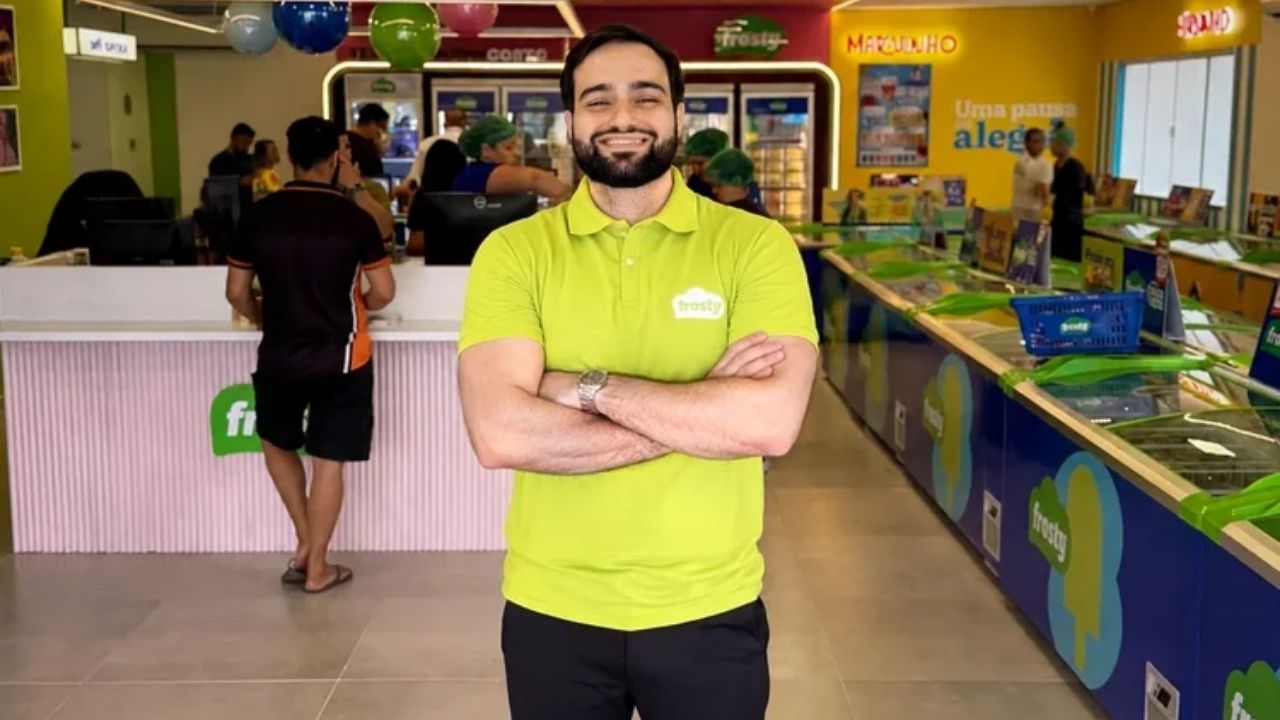
Filipe’s entry into the family business began long before any leadership position. As a teenager, he started working in the factory as an operator during school holidays, in a routine planned by his father so that he would know the operation from the ground up and understand the workings of the industry before taking on greater responsibilities.
-
Brazil’s 2026 Tax Refund: Record 9.58 Million Filers in Largest Payout Ever, But a Key Detail on Priority Recipients Draws Nationwide Attention

-
Itaú Alters Hybrid Work Model, Increasing Office Days from 2028, Prompting Employees to Adjust to New Routine
-
Facing Labor Shortage, Japan Plans to Invest $34 Million to Attract Foreign Workers in Construction, Healthcare, Industry, and Commerce

-
Brazilian City Makes Remarkable Leap, Becomes 4th Wealthiest in the Country with GDP of R$ 134.1 Billion




At that time, the other employees did not know that the young man was the owner’s son. The experience became part of the current executive’s training, who years later would take over the management of a company with industrial production, its own stores, refrigerated distribution, and direct competition with national and multinational brands.
The trajectory draws attention because it starts on the factory floor and reaches the command of a brand that advanced to regional leadership in a competitive category. The transition from one generation to another occurred alongside Frosty’s commercial expansion, especially through its own units.
Filipe served as executive director between 2021 and 2024 and officially became CEO in 2025, when the stores, previously organized in a separate structure, were incorporated into the company. His father, Edgard, began serving as chairman of the board.
Company produces in Maracanaú and approaches R$ 300 million in revenue
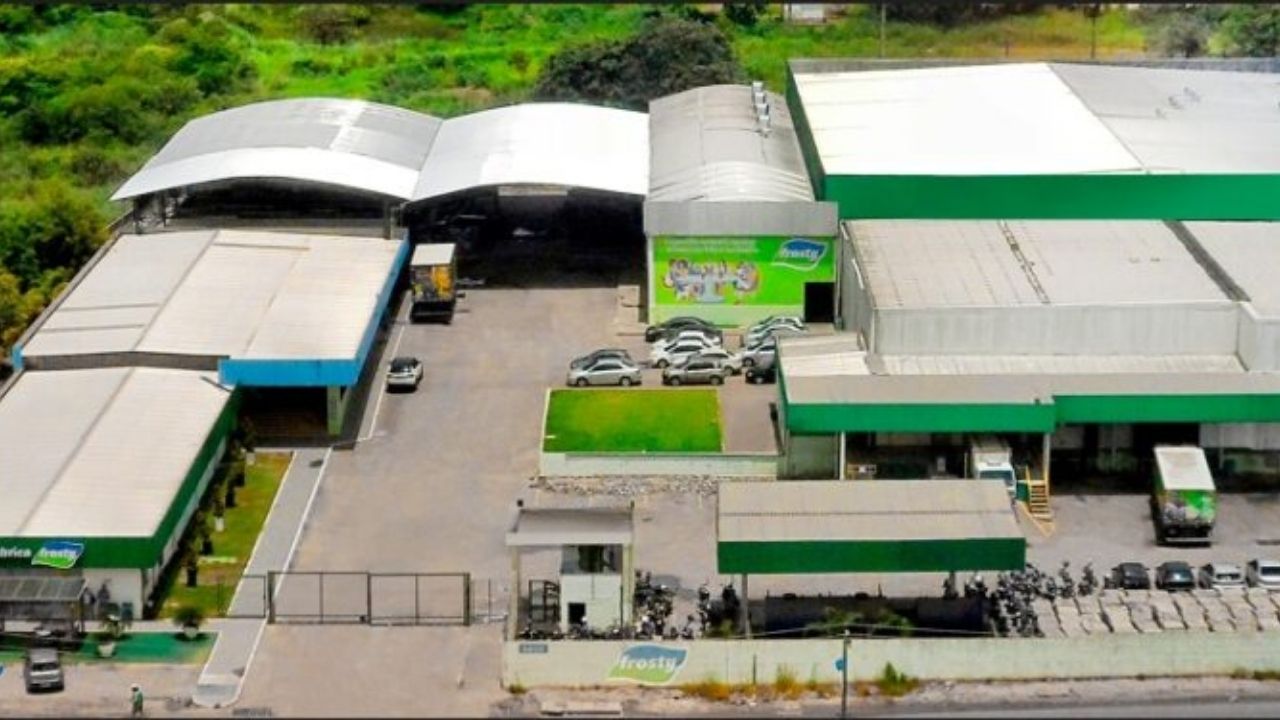
Frosty operates a factory of almost 15,000 square meters in Maracanaú, a municipality located in the Metropolitan Region of Fortaleza. The plant concentrates the production of ice creams, popsicles, açaí, and pulps, items that supply both the food retail and its own network of stores.
In 2025, according to the company, the revenue was close to R$ 300 million. The result accompanies an expansion built in different channels: supermarkets, bakeries, small businesses, pharmacies, and own units aimed at purchasing frozen products for home consumption.
Industrial growth is directly linked to the ability to keep frozen products available at different points of sale. In this segment, producing on a large scale is only part of the challenge; the company also needs to control storage, refrigerated transport, and delivery without compromising the quality of the items.
The operation employs 1,090 people and manufactures about 15,000 tons per year, according to the figures presented by the company. These data measure the size reached by a business that was bought by Filipe’s father when it was still smaller and went through an expansion process in Ceará.
Ice cream for home consumption puts brand at the top of the Northeast
Frosty was identified as the best-selling ice cream brand for home consumption in the Northeast, according to a ranking by the Brazilian Association of Supermarkets, ABRAS, in partnership with NielsenIQ, cited in the company’s performance disclosure. The category considers tubs and boxes purchased by consumers to take home.
In the national scenario of ice cream food retail, the company ranks fifth. The result places a regional brand in competition with companies of broad reach, including multinationals consolidated in the Brazilian market.
The regional leadership reinforces an important shift: Frosty has evolved from being just a local industry to competing for space in the daily choices of northeastern consumers. The challenge now will be to preserve this strength while expanding its presence in states where it does not yet operate.
The identity of the products appears as one of the strategies used by the company in this competition. Instead of merely reproducing standardized lines, the brand bets on flavors associated with regional consumption, such as cajá, coconut, cashew nut, and açaí, seeking to maintain proximity to local preferences.
From five to 145 stores: own expansion changed the brand’s reach
The stronger entry into its own retail began in 2018, when Frosty opened two units. In seven years, the company went from five to 145 own stores, present in seven states, increasing brand exposure and creating a direct channel between the factory and the consumer.
The expansion gained momentum during the pandemic, a period in which the company opened more than 15 points, even amid trade restrictions. Some of these units operated with adapted service, without internal customer circulation, while the company took advantage of more favorable commercial conditions to negotiate properties and new addresses.
The model does not exactly reproduce a traditional ice cream parlor: the stores were organized to sell frozen products in quantity, intended for home consumption. The proposal is to offer a variety superior to that available in conventional supermarket freezers, where space is usually reserved for high-turnover items.
In addition to ice creams and popsicles, the units sell açaí, pulps, frozen fruits, desserts, sugar-free items, and products aimed at consumers with dietary restrictions. The variety increases the potential purchase ticket but also increases the complexity of stock and distribution.
Regional flavors become a response to competition with multinationals
When competing with large-scale companies, Frosty seeks to differentiate its products through identification with the local market. The bet on flavors recognized in the Northeast works as a strategy to build a bond with consumers who are already familiar with ingredients and combinations present in the region’s food culture.
The logic is simple: a regional company can respond more quickly to specific preferences of its audience, while larger brands need to work with lines suitable for different markets simultaneously. This proximity helps explain why the company attributes importance to flavors like cajá, cashew nut, coconut, and açaí.
In the competition with multinationals, the company tries to turn regionality into a competitive advantage. It’s not just about selling ice cream, but about offering products that the consumer associates with the Northeast consumption experience and the brand’s identity.
Filipe also began to frequently appear on the company’s social media, showing behind-the-scenes, responding to consumers, and linking his image to the company. The strategy seeks to give a face to Frosty in a sector where some competitors have strong brands, but their executives remain distant from the public.
Growth hits the challenge of transporting frozen products
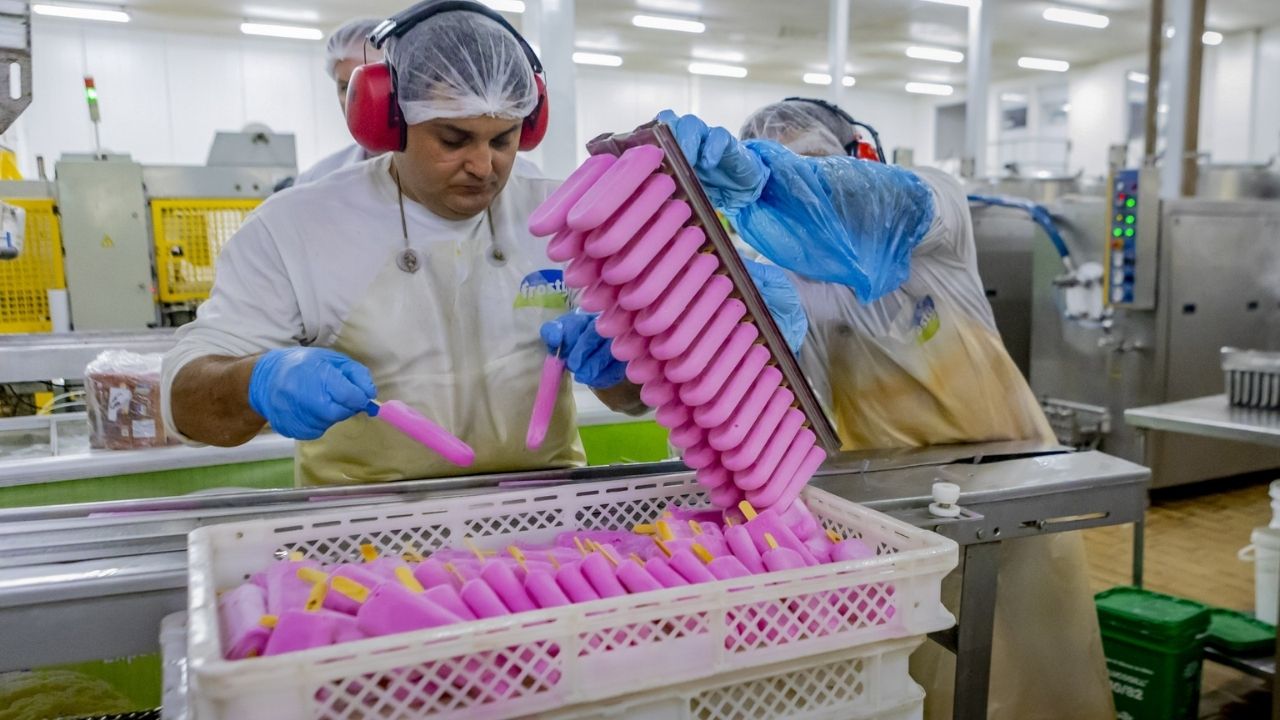
After the accelerated expansion of recent years, Frosty has begun to approach the advancement into new markets with greater caution. The projection informed by the company is to reach a range between 170 and 180 units, but opening stores outside the regions already served requires a balance between commercial reach and operational costs.
The main obstacle is refrigerated logistics. Unlike products that can remain at room temperature, ice creams, açaí, and pulps depend on controlled storage and transportation throughout the journey between the factory, sales points, and consumers.
A new store can increase revenue, but also raise costs if it is far from the already established refrigerated network. The company has more than 80 refrigerated trucks, according to the disclosed information, a structure that needs to accompany any territorial expansion in an economically sustainable manner.
For 2026, the declared challenge involves reaching Alagoas, Sergipe, and Bahia, the three northeastern states where Frosty has not yet arrived. The move could complete the brand’s regional presence but will depend on a distribution capable of maintaining products in suitable conditions and financially viable deliveries.
The factory’s history also involves the move from São Paulo to Ceará
The family’s relationship with ice cream began before Frosty. Filipe’s father, Edgard, had entrepreneurial experiences in the interior of São Paulo and realized that the segment could become a significant business, but faced the seasonality of consumption during periods of lower temperatures.
With lower demand in the São Paulo winter, the factory would halt activities at certain times of the year. The search for a market with a more favorable climate led Edgard to Ceará, where he bought Frosty in 2006 and began to develop operations in a region with potentially more regular consumption throughout the months.
The geographical change altered the company’s path: the father took the business to a warm climate market, and the son now tries to expand this presence throughout the Northeast. The trajectory connects family decision, industrial expansion, and the transformation of a local brand into a larger-scale operation.
The company will still have to demonstrate how it will sustain this advancement in the face of increasing stores, the need to maintain the cold chain, and competition with regional and multinational brands. Recent numbers show strength, but the continuity of growth will depend on the execution of the next steps.
Heir tries to take brand beyond the factory without losing regional roots
The story of Edgard Filipe Segantini brings together elements that arouse curiosity: the young man who worked in the factory without being recognized as the owner’s son now leads a company with 145 stores, more than a thousand employees, and revenue close to R$ 300 million, according to data released by the company itself.
The advancement of Frosty also shows how regional brands can occupy a relevant space by combining industrial production, their own sales channels, and products connected to local taste. At the same time, frozen logistics emerges as a concrete limit for an expansion that intends to reach new states.
The next chapter will depend on the company growing without letting distance, costs, and distribution reduce the strength gained in the Northeast. For Filipe, the mission now is not just to expand stores, but to maintain a recognizable brand in a market contested by larger companies.
Do you believe that regional flavors and proximity to the consumer can allow a northeastern brand to face multinationals for many years, or will scale and logistics end up weighing more in this dispute? Leave your opinion in the comments.








