






 Portuguese
  Spanish


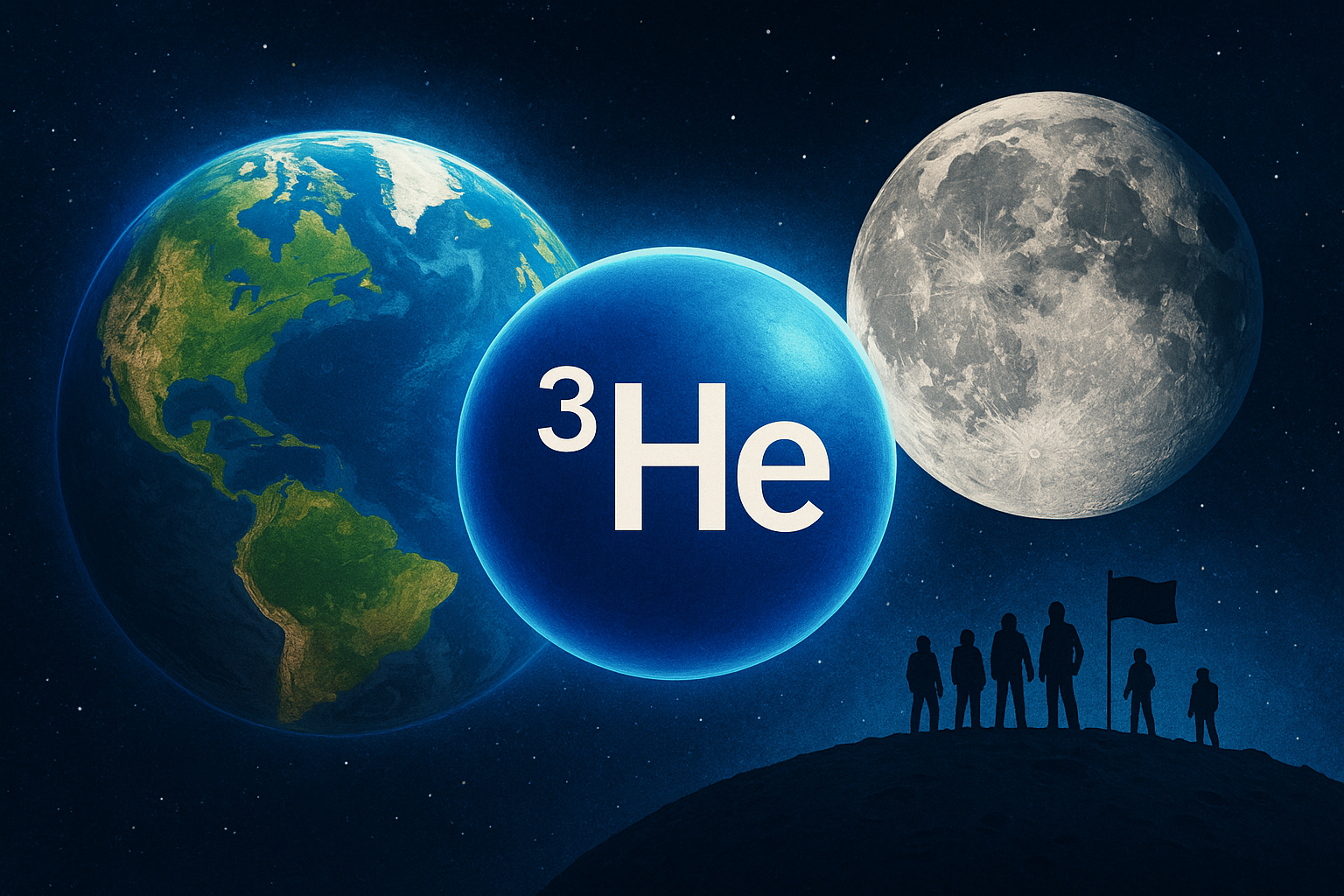

Rare Isotope, Helium-3 Has the Potential to Transform Global Energy with Clean Fusion and Spurs a New Space Race to the Moon
Helium-3 is a rare isotope that has been gaining attention for its revolutionary potential in energy generation. Unlike helium-4, which is abundant on Earth, helium-3 is scarce and piques interest mainly for its application in clean nuclear fusion.
Composition and Difference Between Isotopes
Helium-3 is made up of two protons and only one neutron. In contrast, the more common helium-4 has two protons and two neutrons. This small difference changes everything. Helium-3 is stable, lighter, and does not undergo radioactive decay.
It is a noble gas, colorless, odorless, and chemically inert. At extremely low temperatures, it exhibits unique physical behaviors, such as superfluidity. It also does not solidify under atmospheric pressure, even close to absolute zero.
-
Astronaut from Artemis II steps down after mission to the Moon and decision surprises after a record of 406,771 km, a historic 10-day journey, and an unprecedented achievement for Canada.

-
A fossil kept for years in a small museum in Montreal concealed 450-million-year-old soft tissue, a discovery that has only happened once before in history.

-
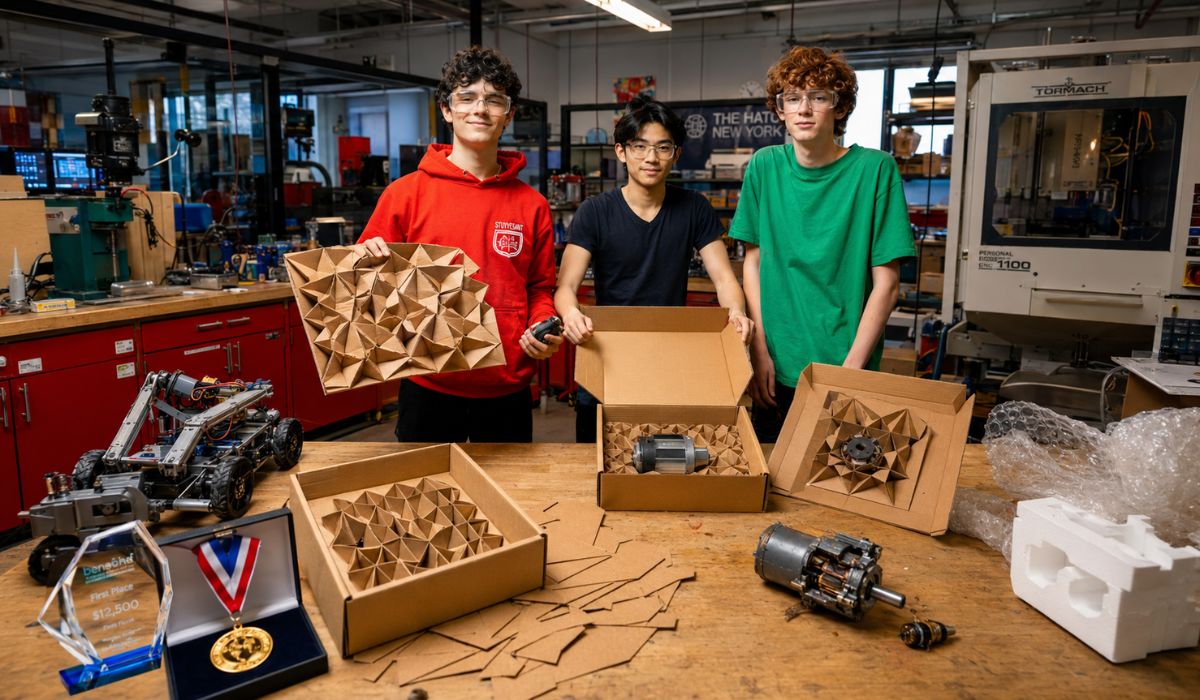
Three teenagers transform cut cardboard into Japanese origami-style packaging that promises to retire styrofoam and bubble wrap, win a $12,500 prize, and target giants like Amazon, FedEx, and Home Depot after a robot motor arrived broken.

-
The large jar blender has a rival: Oster Ultra Power bets on 1,000 W, six stainless steel blades, and two portable cups with leak-proof lids.



The distinction between these isotopes goes beyond the number of neutrons. It directly affects properties such as mass, stability, and reactivity.
Isotopes are variations of the same element, with the same number of protons but different numbers of neutrons. Some are stable, while others are unstable. There are isotopes used in medicine, fossil dating, and energy generation.
Nuclear Fusion Without Radiation
The primary interest in helium-3 comes from its role in nuclear fusion. When combined with deuterium, another light isotope, it creates an aneutronic fusion reaction. This means there are no neutron emissions, which are responsible for secondary radiation.
Instead, the reaction releases protons, which can be used directly in electricity production with reduced risk and greater control.
This reaction is considered cleaner and safer. The absence of neutrons reduces structural damage in reactors and allows for simpler and cheaper designs. It also decreases the need for heavy shielding. As a result, helium-3 is viewed as a key player in the future of energy.
Scarcity on Earth and Abundance on the Moon
On Earth, helium-3 is very rare. It is present in small quantities underground, can be generated in nuclear reactors, or appears as a byproduct of tritium degradation.
Extraction is difficult, costly, and limited. The planet lost much of its helium-3 during its formation. Being light and non-radioactive, the gas escaped Earth’s gravity and drifted into space.
The situation on the Moon is different. Lacking an atmosphere and magnetic field, the Moon is constantly bombarded by solar wind.
This wind brings charged particles, such as helium-3 ions, which become trapped in the surface layers of lunar soil. It is estimated that tons of this isotope are present there, attracting interest from space agencies and private companies.
Space Race for Energy
The possibility of extracting helium-3 from the Moon has turned this resource into a strategic objective. Scientists and companies see lunar exploration as an opportunity to obtain fuel for future fusion reactors.
The presence of helium-3 in large quantities on the lunar surface could be a turning point in enabling cleaner nuclear power plants, without the risks of traditional radiation.
The search for sustainable energy solutions has put helium-3 at the center of scientific and technological debates.
The scarcity on Earth and the promise of efficiency and safety are driving investments in research and space exploration. The race for helium-3 is just beginning, but it could be decisive in the future of global energy.
With information from Tempo.com.


