Portuguese
  Spanish


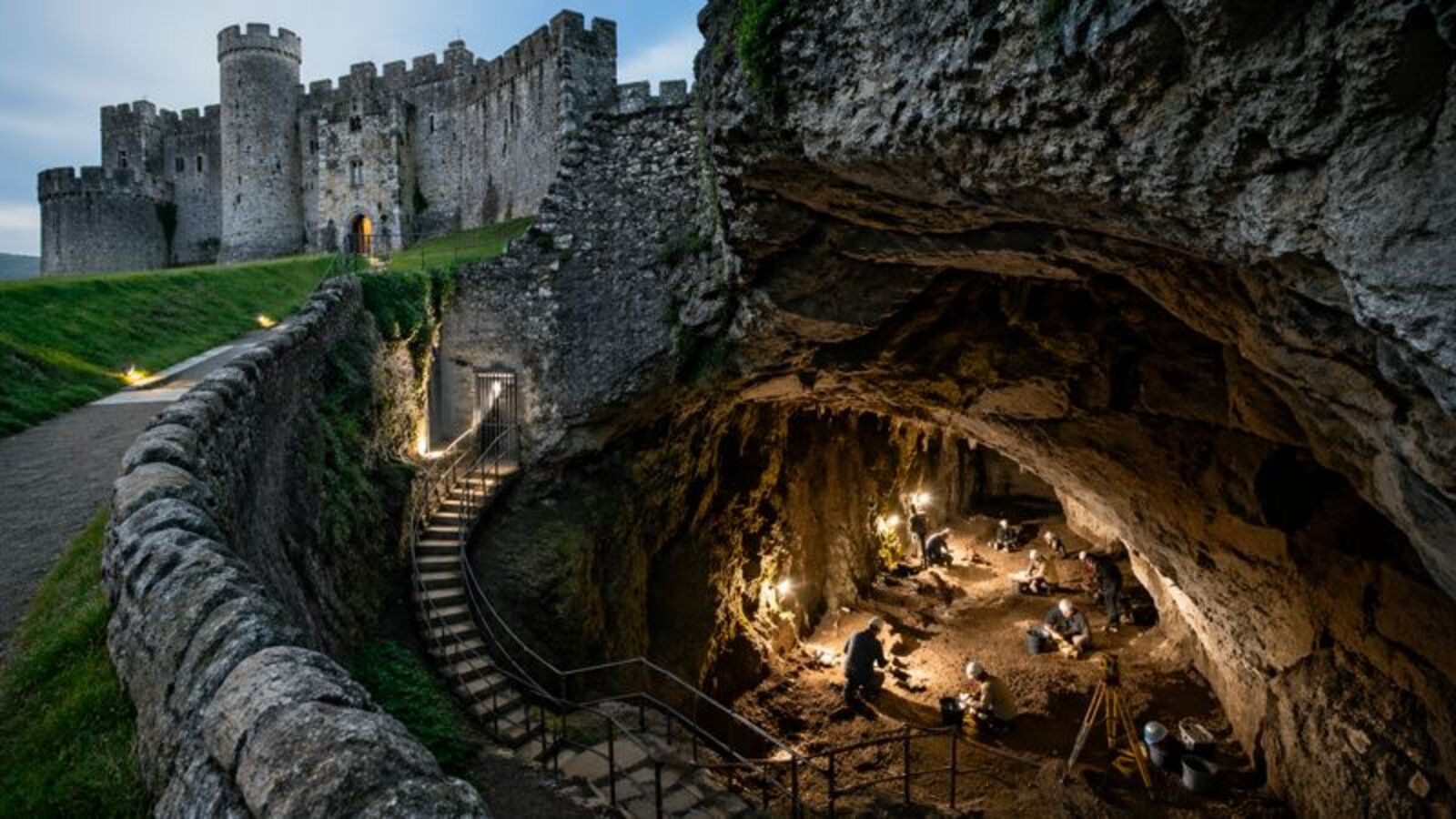


Cave under Pembroke Castle preserves intact sediments, fossils of extinct animals, stone tools, and human traces that can help scientists reconstruct ancient climate changes, migrations, and occupations in Wales
The prehistoric cave Wogan Cavern, under Pembroke Castle in Wales, has revealed 120,000 years of human occupation and animal life, with tools, fossils, and sediments capable of expanding the understanding of British prehistory.

Rare find under a medieval castle
The site, previously considered empty by Victorian explorers in the 19th century, underwent excavations between 2021 and 2024.
The work revealed intact sediments, preserved beneath the medieval structure, in an area connected to the castle walls.
-
Human Waste in Kenya is Solar-Treated and Turned into Fuel Briquettes, Tackling Open Sewage, Charcoal Use, and Deforestation

-
Bolivian Teen Builds Functional Robots from Scrap Materials in High-Altitude Rural Town
-
Student Creates 3D-Printed Prosthetics from Recycled Plastic, Turning Waste into Affordable Custom Arms
-
Climate Scientist Who “Proved” Humanity Is Warming the Earth




These layers contained stone tools and fossils of mammoths, woolly rhinoceroses, and even a hippopotamus.
The collection records periods when cold and heat alternated in extensive cycles, changing the environment and the presence of species.
The University of Aberdeen described the discovery as unique in a generation. The prehistoric cave has come to be seen as a natural archive, capable of bringing together preserved human, animal, and climatic traces.
Traces of modern humans and Neanderthals
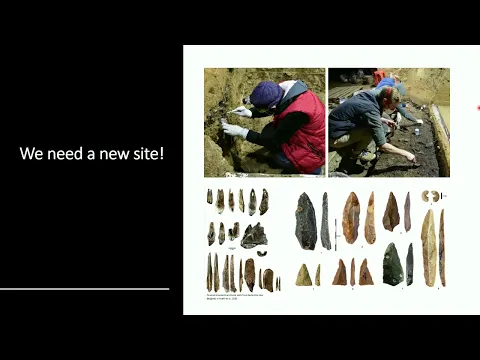
Some of the materials found are approximately 45,000 years old. This period coincides with the arrival of the first Homo sapiens in Great Britain, making the site important for the study of ancient human occupations.
There are also older signs that may indicate the presence of Neanderthals. The possible overlap between two human lineages makes Wogan Cavern a rare point to investigate population transitions.
This combination functions as a geological palimpsest. Instead of just visible bones, researchers can observe marks left in sediments, tools, and organic remains, gathering clues from occupations separated by thousands of years.
Environmental DNA analysis will be one of the central techniques. It allows tracking species that lived in the area even when they left no bones, using genetic material preserved in the soil of the prehistoric cave.

Hippopotamus shows a warmer Wales
The hippopotamus bones found in the deepest layers are approximately 120,000 years old. They belong to the last interglacial period, when Wales was warmer and wetter than previously imagined.
This data is noteworthy because it links the cave to environmental changes. The animal’s presence forces climatologists to re-evaluate the boundaries of temperate zones and species movements during glacial and interglacial phases.
In addition to the hippopotamus, remains of reindeer, wild horses, and other Pleistocene species were identified.
Many disappeared with the advance of glaciers, leaving records that help to reconstruct the scenario of cold, thaw, and adaptation.
The collection reveals how fauna and humans reacted to abrupt changes. The alternation between ice ages and warmer periods appears preserved in the layers, forming a portrait of past environmental pressures.
New excavation begins in 2026
A new excavation project is scheduled to begin in 2026 and last five years. The study will be funded by the Calleva Foundation and the Pembroke Castle Trust, using cutting-edge technology.
The investigation aims to apply genetic analysis and high-resolution dating. The objective is to more precisely map the transitions between Neanderthals and modern humans, as well as the associated ecological impacts.
Researchers also seek to understand how hunter-gatherers survived the climatic oscillations at the end of the last Ice Age.
The combination of genetics, geology, and archaeology should better organize human and animal activities.
Access to the site reinforces the contrast between history and prehistory. A spiral staircase descends from the medieval walls to the cave, connecting the castle’s construction to an ancient timeline.

Digital collection expected to expand public access
The University of Aberdeen and the National Museum of Wales plan to create a digital collection of the discoveries. The proposal is to allow the public to virtually explore the layers revealed in Wogan Cavern.
The initiative transforms archaeological finds into an interactive and educational experience. It also connects technology and research, bringing the public closer to fossils, sediments, and evidence restricted to laboratories.
The scientific potential of the site has been compared to that of iconic caves such as Altamira, in Spain, and Chauvet, in France.
The Welsh differential lies in the stratigraphic continuity and the coexistence of extinct species with human remains.
Pembroke’s prehistoric cave now emerges as an ancient refuge in northern Europe, bringing together bones, tools, pollen, DNA, and traces of rare human survival.
With information from O Cafézinho.