Portuguese
  Spanish


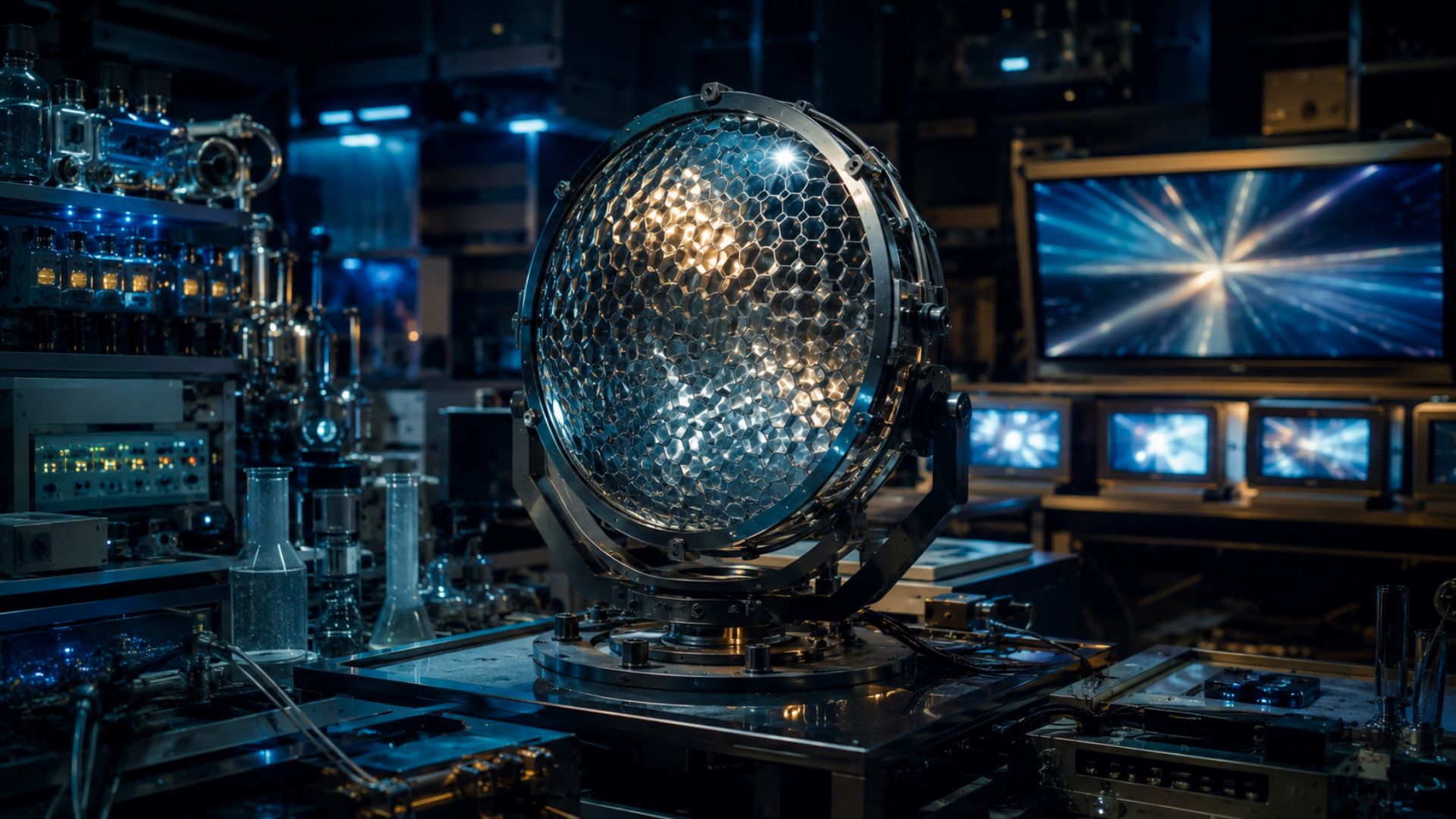


In January 2000, the BBC’s Tomorrow’s World program showcased an impossible lens developed by NHK in Tokyo. Composed of 2,500 microlenses, it allowed viewing television in 3D without glasses. The technology was experimental and, at the time, had no sales forecast before 2010.
The impossible lens that promised to revolutionize television was hidden in a research laboratory in Tokyo and came to light in January 2000. Presented by the BBC One program Tomorrow’s World, it was the NHK engineers’ bet to transform the TV viewing experience. The secret of that technology was in a single piece that seemed ordinary but actually contained 2,500 tiny microlenses, each seeing a different image, similar to how insect eyes work.
The promise was bold for the time and aimed at an old problem of 3D TV. Unlike traditional 3D systems, which required special glasses, that lens allowed images to pop out to the eyes without any accessory on the face. The report was conducted by journalist Philippa Forrester, who visited the Japanese laboratories and spoke with the responsible researchers. The information is based on a segment from the BBC archive, originally broadcast on January 19, 2000.
Why 3D TV has always been a distant dream
To understand the importance of that impossible lens, it is necessary to remember how television worked. Despite all the evolution, from the first shaky black and white images to high-definition color screens, TV remained a two-dimensional experience, a moving image on a flat surface. Making images truly pop out was, until then, an unattainable dream.
-
The battery that promises to change cell phones and electric cars still has a microscopic enemy: researchers discover how lithium dendrites pierce the solid electrolyte and are already testing ways to prevent cracks and short circuits.

-
An old ferry rusted for more than 10 years in New York, almost sank after the engine room was flooded, and now volunteers are rushing to clean the hull, remove wires, life jackets, and loose paint before sinking it in the Atlantic to become an artificial reef full of marine life.

-
SpaceX launch turned Falcon 9 into a giant jellyfish in the night sky, with a colorful plume illuminated by the Sun at high altitude, confusing observers and showing how a routine flight can become a rare spectacle of atmospheric physics over Earth.
-
Advancement in science: a new plastic developed by researchers in the USA combines structural strength and thermal blocking in a single technology, opening new possibilities for construction, transportation, electronics, and sustainable solutions with a direct impact on global energy efficiency.


The challenge was in reproducing the way we see the world. The human brain uses visual cues, such as the size of objects, to understand the distance and position of each thing in relation to others. Since the early days of photography, 3D systems have tried to recreate this sense of depth, separating the foreground from the background to give the sense of three-dimensionality that a common screen lacks.
How traditional 3D with glasses worked
Before the Japanese innovation, the best 3D systems already tried to mimic the functioning of the human eye, but in a more limited way. Since our eyes are separated, each captures a slightly different perspective of the same scene, and the brain recombines these images to create the notion of depth. The technology of the time tried to copy exactly this process.
The method, however, had clear limitations. Two cameras positioned at different angles took two photos of the same scene, which were then recombined by the viewer’s eyes with the help of 3D glasses. The result gave a sense of depth, but still seemed artificial, like a series of overlapping layers, compared in the report to a cardboard cutout theater. And, of course, no one escaped having to wear the glasses.
The impossible lens with 2,500 microlenses
The major breakthrough proposed by NHK started from a simple question: if two photos from different angles give depth, what would happen if many images were taken at the same time? This was exactly what the engineers at the Tokyo lab were looking for. The answer lay in a lens that seemed unique but hid an astonishing structure.
The secret was the number of small lenses embedded in that piece. The impossible lens gathered 2,500 tiny microlenses, each capturing a different image, exactly like the compound eyes of an insect see the world. These microlenses divided the scene into thousands of small images, which meant that the camera filmed from hundreds of different angles at the same time, generating a wealth of visual information impossible to achieve with just two cameras.
Goodbye to glasses: the image that looked like a hologram


The greatest advantage of the system appeared when watching. To transform all those tiny images into a large three-dimensional image, they were reproduced on a special screen filled with microlenses, reversing the capture process. Instead of the glasses recombining the image, the screen itself did this work for the viewer.
The effect described by the report was impressive for the time. The image looked more rounded, full, and three-dimensional, like looking at a hologram, and the viewer could move their head without destroying the illusion. In fact, the movement even intensified the 3D effect, allowing the scene to be seen from different angles. It was possible to look at the image from the side, above, or below, something traditional glasses could never offer.
The promise of a future that would change living rooms
The potential of that system went far beyond a small screen. As it allowed images to be viewed from any angle, the viewer no longer needed to be directly in front of the television and could even watch while lying on the couch. This freedom was presented as a possible revolution in the way audiovisual content is consumed.
The ambitions for the future were grand. The researchers imagined that, with the advancement of technology, the microlenses would shrink to become tiny dots, producing ultra-high-definition images on huge screens capable of covering entire walls or the sides of buildings. Even so, the report itself issued a warning: all of that was in the experimental phase, with rudimentary resolution, and there was no expectation of reaching the market before 2010, at the earliest.
And you, did you imagine that such a bold 3D TV technology without glasses had existed in a laboratory for over 25 years? Share in the comments if you still believe in three-dimensional television or if you think this impossible lens is indeed a thing of the past.