In 1930, the British economist John Maynard Keynes predicted 15-hour workweeks in about a hundred years, thanks to technological advancement. Productivity really exploded, but the prediction failed. Experts explain that increasing consumption and poor distribution of gains broke the equation.
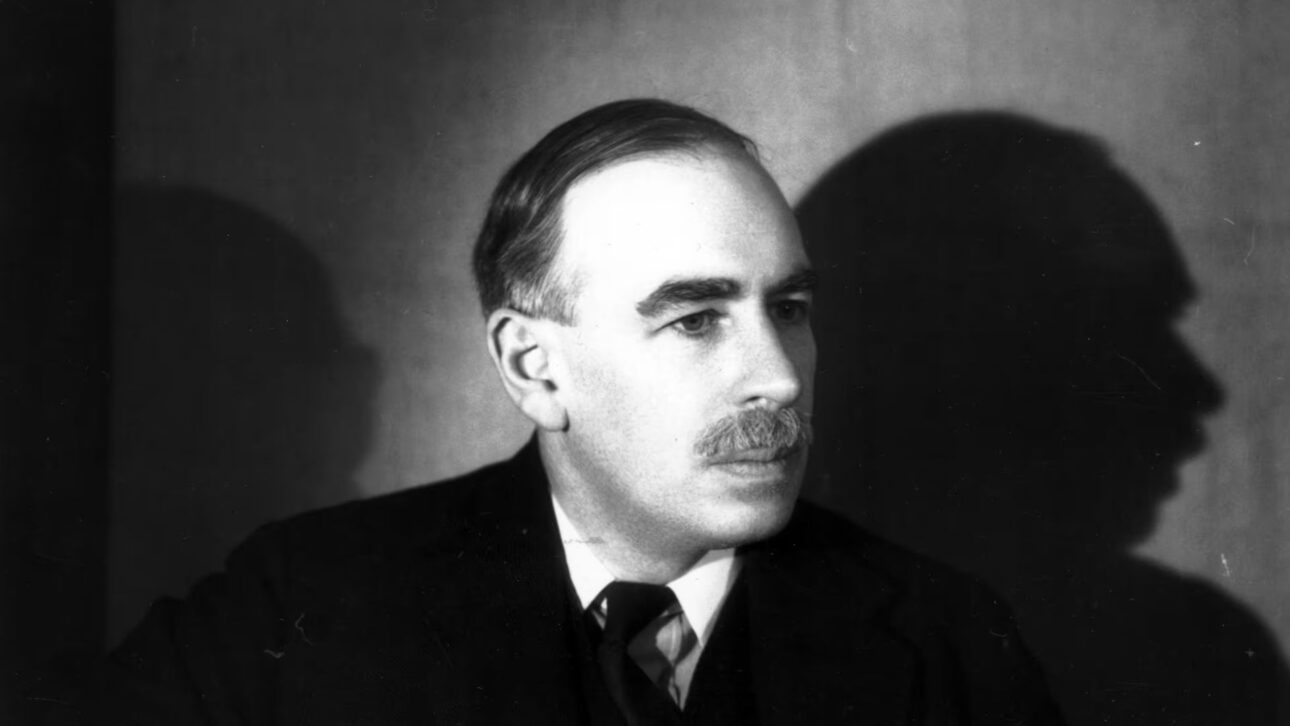
Few predictions have been as interestingly wrong as that of one of the greatest names in economic history. In 1930, the economist John Maynard Keynes claimed that, in about a hundred years, humanity would work only 15 hours a week, something like three hours a day. The bet was in the essay “Economic Possibilities for Our Grandchildren,” where he imagined societies much richer and freed from the daily struggle for survival. Almost a century later, technology advanced as he expected, but the short workweek didn’t come close to materializing.
The most curious part is that part of his reasoning was correct. Productivity indeed grew extraordinarily, but the promised free time didn’t come, and understanding why the equation didn’t balance is what makes this story so current. Keynes’ error says less about technology and more about human behavior and the way wealth is distributed. The information was released by g1, based on interviews with economists and labor specialists.
The optimistic bet of the British economist
The text was presented at a conference in 1928, expanded in a lecture in Madrid, and published in 1930, during the Great Depression, the great crisis that shook the world economy at the end of that decade. Even in the face of economic chaos, Keynes saw it as just a transitional phase, not a permanent decline of capitalism.
-
China wants to impress the world once again with a mega canal featuring giant locks, deep waters, and space for the largest ships, in a project aimed at shortening journeys, reducing queues, and rivaling the Panama Canal in global trade.

-
Brazil saved US$ 32.4 billion in 2025 by switching from fossil to renewable energy and only ranked behind China and the United States on the IRENA global podium.

-
A company from SC that moves R$ 125 billion in agribusiness is integrated into an international group, maintains its headquarters and jobs in Chapecó, and is preparing to expand software for cooperatives, grain companies, and industries while targeting new markets without leaving the western region of Santa Catarina.
-
Portugal “hides” gold reserves of 382 tons valued at 47 billion euros in an armored building, and the story involves gold from colonial Brazil, Nazi Germany, and a fortune that once amounted to 866 tons.





The deputy director of DIEESE, economist Patrícia Pelatieri, classifies the essay as one of the classic texts of the thinker. According to her, Keynes presented a very optimistic view of the future, believing that the combination of capital accumulation, compound interest, and technical progress would allow for more production with less human labor. Behind that optimism was the perception that, for millennia, the standard of living had barely changed until the Industrial Revolution triggered unprecedented growth.
The dream of the 15-hour workweek
The boldest part of the prediction was precisely the drastic reduction of the workweek. Keynes imagined that, once the problem of material scarcity was solved, basic needs would be largely met, and the struggle for survival would no longer be the center of life. In this scenario, 15 hours a week would be enough to keep society functioning and ensure work for everyone.
This vision directly confronted a dominant idea in the economics of the time. Sociologist Paulo Niccoli Ramirez explains that Keynes challenged the classical dogma that more work equals more wealth by recognizing the weight that technology had in this equation. For the economist, it would be possible to go against this logic, increasing productivity while reducing the workweek and providing a better quality of life for the worker, who would gain time for leisure.
The “art of living” that Keynes imagined
More than a calculation about hours worked, the essay was a deep reflection on what to do with so much abundance. Keynes believed that when work ceased to be a vital necessity, a new challenge would arise for humanity: finding purpose and learning to use free time well. For him, this would be a permanent problem for the human race, trained for centuries to fight and not to enjoy.
The bet was that values such as culture, social interaction, and personal development would gain more space than the accumulation of money. Keynes said that it would be precisely those people capable of cultivating the “art of living,” and not selling themselves for means of living, who would best enjoy the abundance when it arrived. It was almost a utopia, in which society would become less obsessed with wealth and more focused on the pleasure of simply living.
Who was John Maynard Keynes
To gauge the weight of this prediction, it’s worth knowing who made it. The economist is considered one of the most influential of the 20th century and one of the main theorists of macroeconomics. Retired labor judge Brasilino Santos Ramos recalls that Keynes came from the high British intellectual middle class and was educated in the most prestigious academic centers of his time.
His main contribution was changing the way governments think about the economy. A proponent of the market economy, but also of state intervention to correct failures, Keynes refuted the neoclassical idea that the free market would automatically ensure jobs as long as wages were flexible. At the core of the Keynesian school is the view of the state as an economic control agent in pursuit of full employment, capable of taming what he called the “animal spirit” of entrepreneurs.
Why the prediction went wrong
This leads to the central question: why, with so much technology, are three-hour workdays not even on the horizon? Political scientist Christian Lohbauer acknowledges that Keynes was right about the increase in productivity but failed to predict another equally powerful movement. Consumption has also grown exponentially over the decades.
This is where the equation doesn’t add up. According to Lohbauer, people want more leisure, but they continue to consume more and more goods and services, and for that, they need more work hours, not less. According to him, for Keynes’ formula to work, people would need to accept having a smaller house, using the car less, eating out less, and traveling less per year, something that doesn’t happen even among those who can, nor among the majority who merely desire these privileges.
The consumption that Keynes did not foresee
The explanation for the failure involves a misreading of human desire. Economist Patrícia Pelatieri recalls that Keynes himself divided needs into two types: basic, related to survival, and relative, linked to status and social recognition. He believed that the basic needs would be quickly met, ending much of the race for more work.
The problem is that the notion of what is basic has changed over time. What Keynes did not foresee was capitalism’s ability to create new needs, such as cell phones, the internet, and digital services, which have come to be perceived as essential for daily life. Thus, instead of being content with enough, society continued to expand what it considers indispensable, keeping the need for long work hours alive.
The inequality in the distribution of gains
There is yet another factor that might better explain the failure of the prediction: who reaped the fruits of all this productivity. Pelatieri emphasizes that although global production has grown significantly, the gains have not been distributed evenly. A significant portion of the benefits was appropriated in the form of profits and capital income.
The numbers help illustrate this concentration. The economist cites that in 2024, 204 new billionaires were created worldwide, almost one per week, while many workers remain dependent on extensive work hours to maintain a modest standard of living. For her, Keynes underestimated the conflicts surrounding the distribution of productivity gains, and it is at this point, not in the technology itself, that lies the true explanation for the free time that never arrived.
The promises that turned inside out
If the dream was to work less, what many felt was the opposite. According to sociologist Paulo Niccoli Ramirez, the reduction of working hours was promised, but what came was the loss of labor rights. He sees a fundamental contradiction in the idea of increasing wealth by shortening work, summarized in the phrase that there is no capitalism without the exploitation of labor.
Technology, which was supposed to liberate, ended up creating new forms of demands. Pelatieri points out that digital tools have expanded the possibilities of monitoring, control, and permanent availability of workers, intensifying work instead of reducing it. In the end, the progress that promised free time turned, in many cases, into greater income concentration and a workday that invades even moments of rest, far from the utopia imagined almost a century ago.
And you, do you think we will ever get close to the 15-hour workweek predicted by the economist, or will consumption and inequality keep the long work hours forever? Leave your opinion in the comments about this prediction that almost didn’t come true.