Portuguese
  Spanish


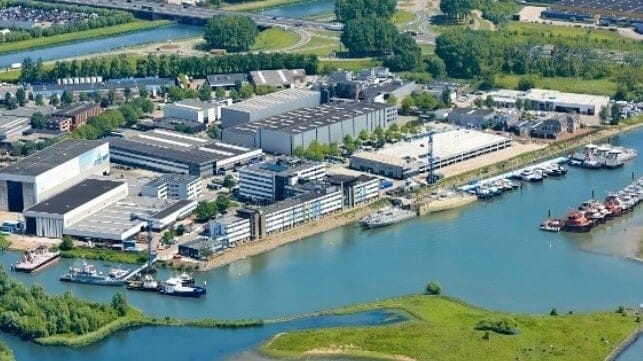

Dutch Authorities See Opportunities in the Country’s Shipbuilding Industry for the National Economy and Decide to Amplify Investments
In the heart of Europe, the Netherlands is preparing for a revolution in its shipbuilding industry. The Dutch government is aligning its resources for a robust investment injection into the country’s maritime industry. With €60 million ready to be anchored in the ports of innovation and naval competence, the Netherlands is gearing up to elevate its sector to new tides of prosperity.
The government of the Netherlands is not joking around: it recognizes that the capacity for building warships and specialized vessels is below what is necessary. National security and critical infrastructure are at the forefront of this initiative. In a country intertwined with dikes and land reclaimed from the claws of the sea, the challenges of rising water levels make maritime robustness not just desirable, but essential.
Marja van Bijsterveldt, the special envoy from the cabinet, raises her voice against the historical silence surrounding Dutch maritime power. With crystalline clarity, she reveals that the Netherlands, along with other European players, has seen its share of the global shipbuilding markets eclipsed by Asia. She emphasizes that the Netherlands can no longer afford to ignore the consequences of inattentive policies and must reclaim its position on the global stage.
-
They exchanged the idea of a large house for a 35 m² warehouse, spent US$ 12,000 on the structure, and created a tiny house in Colorado with space to live and work.

-
While modern cities rely on pumps and electricity, in Iran, ancient tunnels carried water through the desert using only slope and gravity.
-
Instead of sending families far from the city, a project in Chile intentionally created incomplete houses on expensive urban land and left technical space for each to grow.
-
General Motors Replaces Over a Thousand Workers with 50 Cobots at Electric Vehicle Plant, UAW Union Criticizes Move Amid Industry’s Automation Push


Navigating Competitive Waters
- Market Loss: In the 1980s, the Netherlands proudly accounted for 45% of the domestic shipbuilding volume. Now, that number has sunk to a dismal 4%. Asian competition, bolstered by government support, now dominates, building more sophisticated ships at a significantly lower cost.
- High Costs: Shipowners point out that building a ship in the Netherlands is between 20 and 40 percent more expensive than in Asia. A scenario that Van Bijsterveldt classifies as “shocking.”
Opportunities on the Horizon
Beyond security, the Netherlands sees a sea of emerging opportunities. The global fleet of ships is aging, and with an average lifespan of 30 years, a major replacement cycle is about to begin. And this does not take into account the new environmental regulations that demand urgent adaptations.
The government already has a Maritime Master Plan that envisions the construction of up to 40 sustainable ships, capable of operating with LNG, methanol, or hydrogen and even capturing CO2. For this, €210 million from the National Growth Fund is already allocated. The goal is to cut construction costs by up to 15% with the help of digitalization and robotization, bringing new competitive breathing room to the industry.
Strengthening the Maritime Sector
The shipbuilding industry is not just about producing ships, but also about tackling sustainability and national security challenges while staying competitive on the global stage. The plan is to strengthen the entire maritime ecosystem, from financing to regulations that favor maritime transport.
The Dutch Navy, for its part, is already pouring €50 million annually into maritime innovations. And with the new government directives, it is expected that national interests will be even more reflected in future naval acquisitions.
Pioneering Projects and Long-Term Vision
- Digital initiatives to boost efficiency;
- Exploration of new technologies and business models;
- Studies on nuclear propulsion for a forefront in innovation.
The creation of the National Agency for Maritime Manufacturing Industry Management is another bold step inspired by the British model, while a long-term envoy will take up the torch from Van Bijsterveldt, carrying the mission forward.
Towards 2024 and 2025
Plans are laid for the Dutch shipbuilding industry to renew itself and reaffirm its relevance in 2024 and 2025. With these initiatives and investments, the Netherlands is ready to set sail towards a future where its shipbuilding industry not only survives but thrives in increasingly contested international waters.