Portuguese
  Spanish


Family Leaves the City and Moves to an Island That Can Only Be Accessed Twice a Day, Where Silence and the Sea Have Become Synonyms for Freedom and New Beginnings.
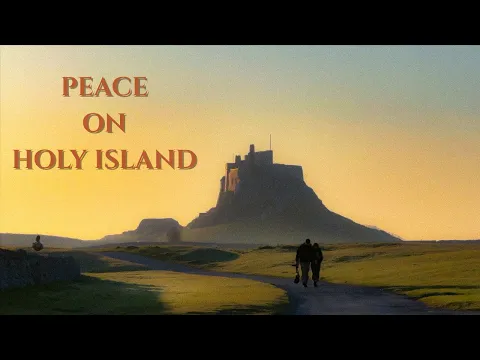
The routine of this family seems straight out of an old novel, but it is reality. On a small coastal island in northern England, accessible only when the low tide reveals a narrow sand road, a family decided to completely abandon urban life to live surrounded by the sea, seagulls, and silence. They reside on Holy Island — also known as Lindisfarne — a territory where the clock obeys nature and where, for a few hours each day, the world simply disappears beneath the waters.
When the tide rises, access is cut off. No cars come in or out, and the island becomes an isolated refuge, a stronghold of a few dozen inhabitants. For those who have chosen this lifestyle, solitude has ceased to be a fear and has become a choice. The family, consisting of a couple and two children, says that the move was motivated by the exhaustion of the work routine, noise, and rush of big cities. On the island, they say, “time has a different rhythm, and peace is not a luxury, it’s a necessity.”
The Rhythm of the Tide Defines Daily Life
Holy Island is one of the few places in the world that still maintains an intermittent physical connection with the mainland. Access depends on the so-called “causeway,” a natural road that completely disappears when the tide rises. This means that residents live based on tide tables — any slip-up can mean hours stranded on one side or the other. For many, it would be an inconvenience. For them, it is a form of discipline and respect for nature.
-
A fossil kept for years in a small museum in Montreal concealed 450-million-year-old soft tissue, a discovery that has only happened once before in history.

-
Engineers spend a decade building a $2.3 million bridge, but the project features a surreal curve, becomes a joke, and ends with seven suspended.

-
7-year-old boy acts without hesitation and saves his 1-year-old brother from drowning in the family pool in Texas: the boy’s courage impressed the sheriff and he may now receive an official police commendation.

-
The forgotten Atari stock that seemed like something out of a movie: millions of sealed cartridges were buried underground and were sold for very low prices.







The family has adapted their entire routine to island life. Shopping, medical appointments, and visits to the mainland need to be planned in advance. During high tide, isolation is absolute. In those hours, the island transforms into a small autonomous world. No traffic, no noise, just the sound of the wind and the waves crashing against the rocks. It is in this environment that the children study remotely and the couple works online, with limited internet and a controlled energy routine to avoid waste.
Silence, Wind, and Sea: The New Concept of Freedom
Living on Holy Island means giving up urban comfort in exchange for a quieter kind of freedom. The couple reports that in the first few months, the isolation caused strangeness and some anxiety. The lack of nearby neighbors and the constant noise of the sea felt heavy. Over time, the sound of the seagulls and the cycle of the tides became an integral part of life. The sunrise and sunset began to dictate the rhythm of tasks, replacing the clock and traffic.
The minimalist lifestyle is sustained by a garden and partially solar energy. The family has reduced consumption to minimal levels, turning their home into an example of self-sufficiency. The decision to live this way came from the desire to raise their children close to nature and away from consumer pressures. The isolation has also led to a reflection on what is truly essential: food, shelter, time, and genuine human contact.
The Challenge of Isolation and the Price of Peace
Despite the idyllic setting, life on the island comes with high costs. In medical emergencies, response times can be long. The transport of supplies is limited and expensive. During storms, the wind can cut off access for days. Even so, for those who have chosen to live there, the risks are part of the reward. “We prefer to face the force of the sea than the rush of the city,” the father said in an interview with the local press.
The island also attracts curious visitors and tourists during the summer, which requires a balance between tranquility and coexistence with visitors. The local economy revolves around tourism, fishing, and small handmade productions. The family takes part in these activities and has become a symbol of a new way of living — neither completely isolated nor dependent on the metropolis. An intermediate existence, where nature sets the rules and freedom is not tied to consumption, but to space and silence.
A Choice That Inspires Other Families
In recent years, the phenomenon of families abandoning urban life to live in remote locations has grown in various parts of the world. The search for mental well-being, sustainability, and connection with nature has led people to rediscover ways of life once considered impossible. Holy Island is just one example. There are entire villages in Norway, Japan, and South America where tranquility is valued more than speed.
The case of this British family gained attention for symbolizing a break from the fast pace of modernity. What started as a temporary experience has become a permanent lifestyle, with more than a decade of residence on the island. The routine that once seemed extreme now represents a new ideal: to live with less, breathe fresh air, and have control over one’s own time.