






 Portuguese
  Spanish


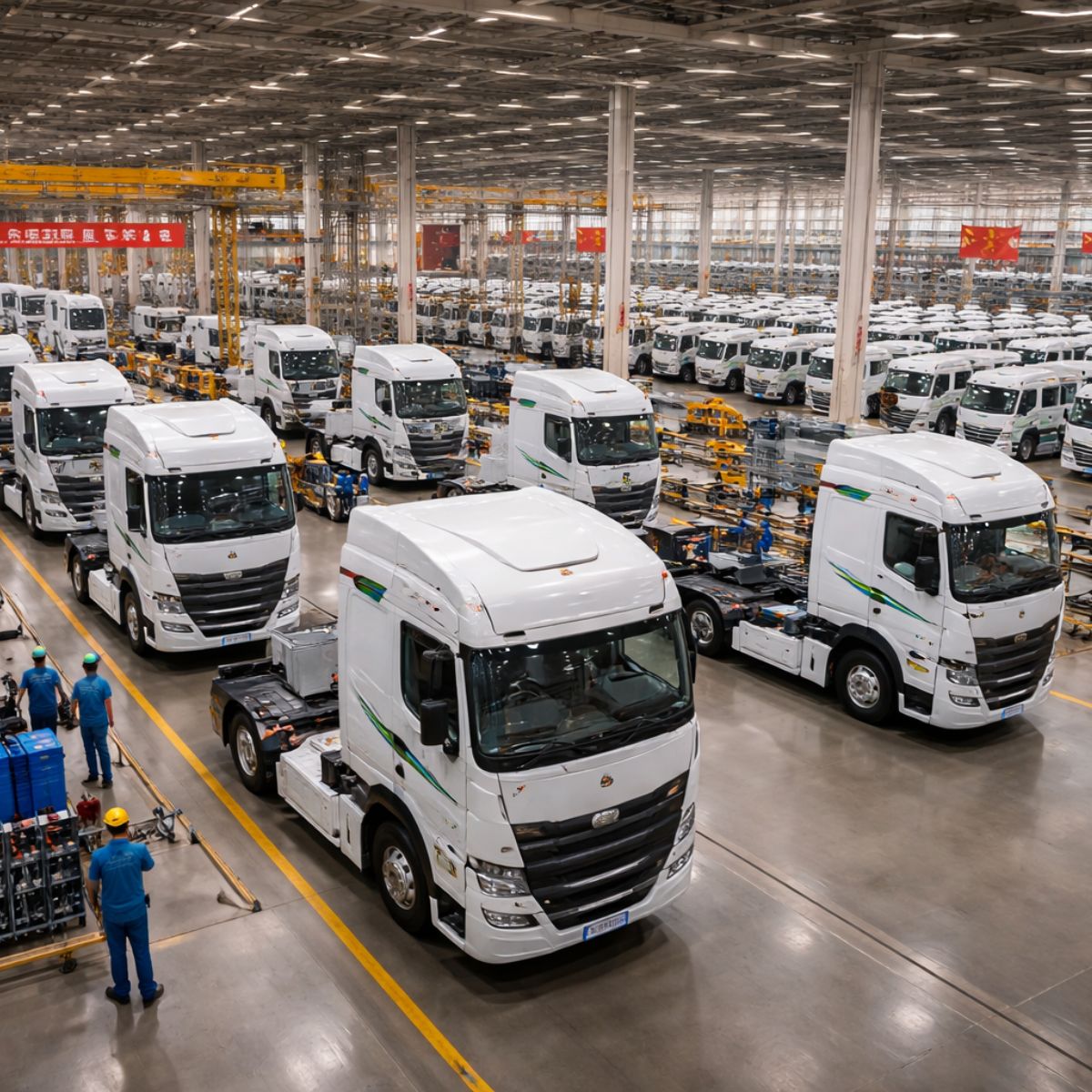


The CLW group has a factory in Hubei, China, that produces more than 20,000 special trucks per year, sells directly to governments in hundreds of countries, and operates with 8,000 employees close to four hundred local suppliers, a model that the West cannot replicate.
The city of Suizhou, in Hubei province, central China, houses one of the largest manufacturing complexes for specialized and heavy-duty trucks on the planet. The CLW group operates with around 8,000 employees, including hundreds of engineers and technicians, spread across dozens of production and assembly lines that deliver more than 20,000 units per year. To put the number in perspective: in the United States, the entire fire truck industry manufactures approximately 5,000 units annually, and Oshkosh Pierce, the leader in the American segment, produces about a thousand. Just three large warehouses in the CLW complex surpass the combined production of the entire American sector in this category.
The differentiator that allows this scale is not just size. CLW sells directly to buyers spread across hundreds of countries, eliminating distributors, agencies, and dealership networks that in Western models add layers of cost between the factory and the end customer. Municipal governments, fire departments, and logistics companies negotiate directly with the engineering and sales teams of the complex, receive customized trucks according to specifications, and when they need maintenance parts, they receive components by air directly from the manufacturer. The model eliminates middlemen at every stage of the process.
Why Chinese trucks cost less than Western ones

The price advantage of CLW does not come solely from cheaper labor. The province of Hubei has more than 2,000 suppliers in the automotive industry, and the manufacturing group has over four hundred of them concentrated within a sixty-minute radius of the assembly lines. This proximity allows the company to operate without large stocks of raw materials or components: parts are ordered as needed and arrive at the factory floor in real-time, a system known as pull production.
-
Billionaire says the most valuable skill will help overcome job elimination caused by AI, following Bill Gates’ fears

-
A Dutchman created a ‘box’ that makes trees grow in the desert almost without water and without irrigation: the invention has already brought seedlings to dozens of countries and achieves up to 90% survival where common planting did not exceed 10%.

-
Abandoned warehouse hid a giant collection of rare computers, with over 2,000 artifacts from the 1930s to the 1980s.
-
Scientists warn that melting ice is triggering an alarming chemical transformation in preserved areas, and the first signs are already concerning researchers worldwide.




In the Western model, a city that purchases fire trucks from Oshkosh or Volvo also signs maintenance contracts with dealership networks that set their own prices locally. With CLW, the buyer negotiates each step directly with the factory, and when a part needs to be replaced, Chinese engineers simply ship it on a plane and send it. Fire departments and fleet operators usually have qualified mechanics to perform the replacement, eliminating the cost of authorized technicians. The result is a shorter, faster, and significantly cheaper supply chain.
The secret of mass customization of CLW trucks

CLW does not manufacture a single model repeated thousands of times. The group produces over a thousand variations of trucks and special vehicles, including firefighting equipment, emergency vehicles, dump trucks, mobile cranes, and new energy platforms. There are six different types of trucks running through the same production line at the same time, with each unit receiving specific customizations according to the buyer’s order.
This capacity for mass customization explains why over two hundred brands in the automotive and truck industry worldwide outsource design and manufacturing to CLW. Companies that hire the service can even place their own brand on the equipment, operating under the model known as OEM (original equipment manufacturer). For companies with a solid reputation in their local markets, this means offering trucks manufactured in China with industrial standards and prices unmatched by any domestic competitor, all carrying the name of the purchasing company.
The industrial policy of China that makes CLW unstoppable

The Chinese dominance in the special truck segment is not accidental. China has adopted an industrial clustering policy for decades that concentrates manufacturers and suppliers of the same sector in a single geographic region. Hubei has been designated as an automotive hub, and the concentration of over 2,000 suppliers in the same territory allows factories like CLW to access any component within hours.
The same pattern is repeated in other sectors: Foshan concentrates furniture manufacturing, Henan and Shandong dominate construction machinery. When a foreign buyer orders trucks from CLW, the entire supply chain of Hubei is just a phone call and a trip of less than sixty minutes away. This eliminates logistical delays, reduces intermediate transportation costs, and allows each vehicle to be custom-made without delivery times becoming prohibitive. It is an industrial ecosystem that Western countries took decades to develop on a smaller scale, and which China replicates efficiently across multiple sectors simultaneously.
The global impact: Chinese trucks in hundreds of countries


CLW’s presence in the international market is already a fact. Municipal governments from dozens of countries purchase fire trucks, emergency vehicles, and special equipment directly from the Chinese manufacturing group, attracted by the price and the customization capability that Western manufacturers cannot match at the same cost level. Every day, hundreds of foreign buyers circulate through the group’s facilities in Suizhou, negotiating technical specifications and delivery times.
For Western truck manufacturers, the scenario is concerning. CLW does not compete only on price: it competes on scale, delivery speed, and customization flexibility, three fronts where the American and European industries operate at a structural disadvantage. While a factory in the U.S. assembles a thousand fire trucks a year and relies on dealerships for distribution and maintenance, the Chinese group delivers 20,000 units annually directly to the end buyer. The difference in model is so great that it is not a competition, but two industrial systems operating under completely distinct logics.
What the Chinese truck model means for the future of the industry
The success of CLW signals a trend that goes beyond the special truck sector. The Chinese model of custom manufacturing with direct sales, without distributors or dealerships, is being adopted by governments and companies around the world because it delivers the same product at a fraction of the cost. For the buyer, the question that arises is straightforward: why pay three or four times more for an American or European truck when the equivalent Chinese one comes off the same production line that supplies 200 global brands?
The response that Western manufacturers usually give involves quality, technical support, and long-term reliability. But as CLW and similar groups improve their standards and expand after-sales service with direct air shipment of parts, this justification loses strength. Chinese trucks are already operating in hundreds of nations, and each unit delivered without issues is one more argument for the next buyer who hesitates between a Western quote and a proposal that comes directly from Suizhou.
And you, do you think that Western truck manufacturers will be able to compete with this Chinese model or is the cost and scale difference insurmountable? Leave your opinion in the comments.





There is no way any company or country can compete. The technology in China is already at par if not above the rest of the world. Their economy of acale surpasees all others. Their logistical placing is producing the best form of pull production possible where demand and supply do not exhaust each other came creating a more level trading field without large fluctuations. I came, I saw, I believe in China.