Portuguese
  Spanish


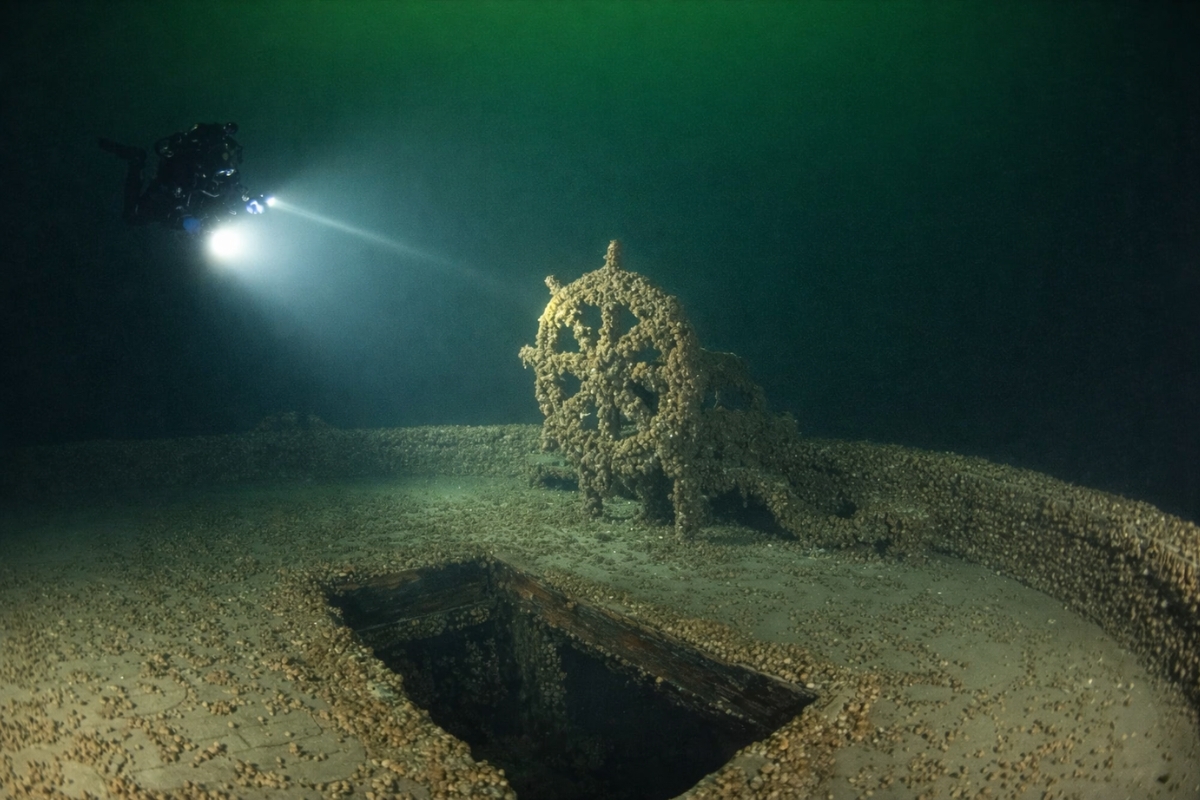

The Colombian operation opened a new phase of archaeological research, placed historical pieces under special conservation, and reignited the international dispute over one of the planet’s most valuable shipwrecks in deep waters.
Colombia presented on November 19, 2025 the first objects retrieved from the galleon San José, which sank in 1708 near Cartagena in the Caribbean. The collection includes a bronze cannon, coins, and porcelain collected during a scientific mission at the archaeological site.
The shipwreck lies more than 600 meters deep and has become one of the largest heritage disputes in the world. In addition to its historical weight, the cargo is estimated by some international media to be worth up to US$ 20 billion, which keeps pressure on the research and the fate of the pieces.
The central point is that public exploration did not start in 2026. The scientific phase was launched in 2024, without direct retrieval of pieces, and the public collection occurred in 2025, when the Colombian government displayed the first materials brought to the surface.
-
How to Prevent Brown Recluse Spider Bites: Common Hiding Spots and Free Tips to Reduce Risks

-
Natto: The Unusual Japanese Superfood Gaining Popularity on Social Media and Driving Record Exports
-
Brazilian Mayor Goes Undercover as Homeless for 24 Hours to Assess Public Services

-
15-Year-Old Entrepreneur Malu Lira Publishes 20 Children’s Books on Financial Education, Earns $500,000, and Expands Her Project to the Amazon Rainforest




Scientific phase began in 2024 and paved the way for retrieval
The initial stage of the project began in 2024 and covered 461,307 square meters of the seabed. This sweep identified new areas of interest archaeological and expanded the map of the wreck field around the ship.
Only after this reading of the seabed did the mission advance to the second phase, now with selective collection. It was in this stage that the five objects and fragments were officially presented in Cartagena.
What came from the seabed and why it matters so much
According to MinCultura, the ministry responsible for the country’s cultural policy, the second phase collected three macuquinas, two porcelain cups, and one bronze cannon, as well as fragments of porcelain, a fragment of rope, and associated sediments.
After retrieval, the cannon was kept at 4 degrees Celsius and the other pieces were kept in seawater to reduce the risk of corrosion and loss of stability. The material entered a process of conservation and laboratory analysis.

Coins and Porcelains Reinforce the Identity of the San José
An academic study on the coins found at the archaeological site pointed to marks from Lima and a date of 1707, a strong indication that the wreck may indeed be the San José and that the sinking occurred after that year.
The Chinese porcelains and other materials associated with the ship also help reconstruct maritime trade of the 18th century and the route of the cargo crossing the Atlantic during the war.
The 1708 Shipwreck Still Holds a Central Question
The San José sank on June 8, 1708 during a British attack near Barú. The ship carried about 600 crew members and, according to historical accounts cited in public documents, transported something close to 11 million coins of gold and silver.
Even with the fame of the explosion that supposedly destroyed the galleon, recent investigations mapped 6,738 pieces of evidence around the site and began to consider that the ship may not have sunk due to a massive explosion, but due to another sequence of damages, such as a hull failure.

Billion-Dollar Dispute Continues Between Governments, Company, and Indigenous Peoples
The legal battle continues. The company Sea Search Armada claims it is entitled to 50% of the value of the find, and the international case records a claim of about US$ 10 billion against Colombia.
At the same time, Spain argues that the galleon was a state ship, while representatives of the Qhara Qhara claim a historical connection to part of the cargo extracted from Potosí. The result is a deadlock that mixes sovereignty, colonial memory, and the idea of shared heritage.
The removal of these five pieces changed the debate because it transformed images from the seabed into material evidence under analysis. Now the investigation can compare the manufacture, origin, and chronology of the objects with much greater precision.
San José remains surrounded by historical value, financial value, and an international dispute without resolution. For Colombia, the case is about cultural heritage. For other interested parties, the shipwreck is still at the center of a fight that could drag on for years.