Portuguese
  Spanish


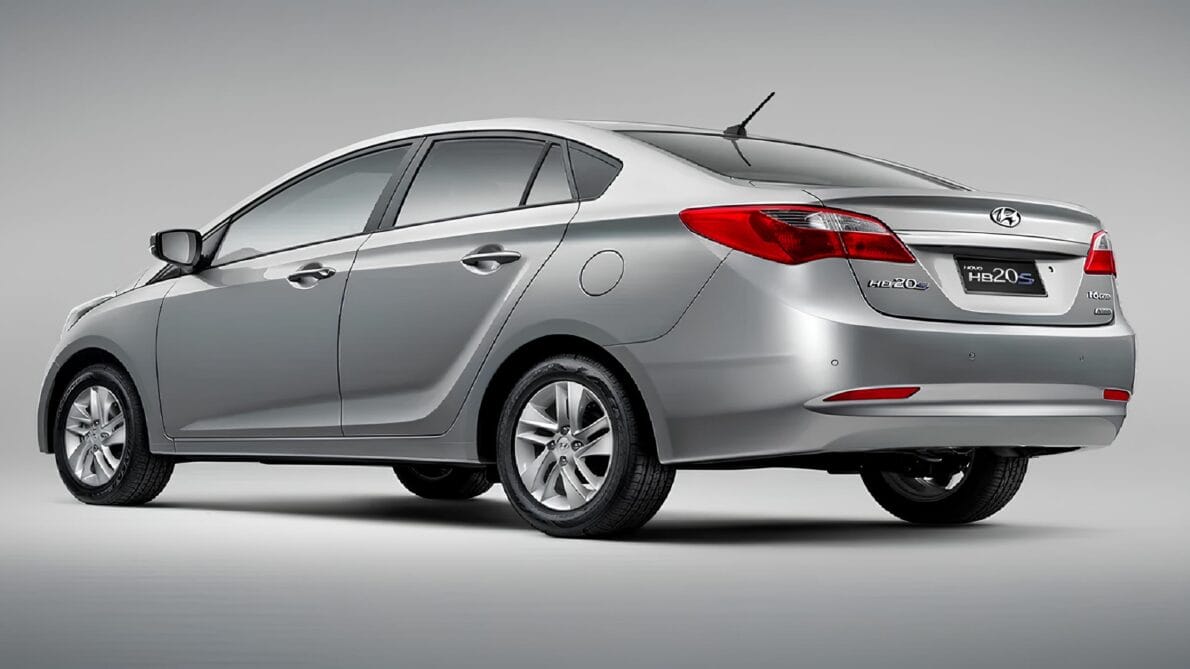


The Hyundai HB20S Is Gaining Attention in the Used Car Market and Can Be Found for Under R$ 50 Thousand. Discover the Key Features of the Used 2014 Hyundai HB20S and Whether It Is Still Worth Investing in This Model.
Launched in 2013 as the second model manufactured by Hyundai in Brazil, the Hyundai HB20S quickly stood out in the competitive compact sedan segment. At the time, it faced strong competitors such as the second-generation Chevrolet Prisma, Fiat Grand Siena, Ford Ka+, Renault Logan, and Toyota Etios Sedan. This article provides a comprehensive analysis of the used Hyundai HB20S, focusing on the 2014 version, to help you decide if it is still worth investing in this model. Discover the strengths, possible challenges, and everything you need to know before buying a used HB20S.
Used HB20 2014 Is One of the Best-Selling Models on the Market
Since its launch, the Hyundai HB20S has been among the best-selling compact sedans in Brazil. In 2023, the model ranked second in the segment, with 30,281 units registered, only behind the Fiat Cronos (50,755 units). From January to June 2024, the HB20S has sold 14,081 units, according to Fenabrave.


Design, trunk size, and performance of the HB20 engine are some of the most notable features.
-
Does a Flag on Your Car’s Hood Overheat the Engine? Expert Reveals the Overlooked Danger for Drivers

-
How to Identify and Remove Superficial Scratches Before Spending on Car Bodywork

-
Electric Car with Extended Range: Company Patents Hybrid Transmission System Using Gasoline Engine for Backup
-
GM Developed the Chevette to Rival the Beetle, Launched it in Brazil Before Europe, Sold 1.6 Million Units, and Left a Generation with Gas Station Trauma


Owners also praise the mechanical robustness and the good acceptance of the sedan in the used car market. Measuring 4.23 meters in length, 1.68 m in width, 1.47 m in height, and 2.50 m in wheelbase, the Hyundai HB20S has a trunk capacity of 450 liters and weighs less than 1,100 kg, even in the more equipped versions.
The Hyundai HB20S was the first sedan manufactured in Brazil with a three-cylinder engine. The 1.0-liter aspirated flex engine produced up to 80 hp of power and 10.2 kgfm of torque. In the more equipped versions, the HB20S is powered by a 1.6 flex aspirated four-cylinder engine with 128 hp and 16.5 kgfm of torque.
How Much Does the 2014 Hyundai HB20S Cost in the Current Market?
The used Hyundai HB20 was sold in various versions, which broadens its options in the market. However, focusing on the 2014 version, the model can be found at the following prices:
- C.Plus/C.Style 1.0 Flex 12V Manual 4P: R$ 41,181;
- World Cup 1.0 Flex 12V Manual: R$ 42,501;
- World Cup 1.6 Flex 16V Manual: R$ 45,122;
- C.Plus/C.Style 1.6 Flex 16V Manual 4P: R$ 46,713;
- Premium 1.6 Flex 16V Manual 4P: R$ 48,433;
- C.Style/C.Plus 1.6 Flex 16V Automatic 4P: R$ 49,268;
- Premium 1.6 Flex 16V Automatic 4P: R$ 50,510;
- World Cup 1.6 Flex 16V Automatic: R$ 51,684.
The sedan is a car with an appealing look and good drivability, with a spacious trunk and reliable mechanics.
Replacement parts for the Hyundai HB20S are easily found in virtually all well-equipped workshops, which carry out maintenance on the model without difficulties. Another positive point is the good liquidity in the used market, undoubtedly making it a good choice.
Owner’s Opinion on the Hyundai HB20S
According to opinions from Hyundai HB20S owners, one of the strengths of the model is the low level of noise and vibration. The engine stands out for being quieter and vibrating less than others in its category. Additionally, the car’s interior is pleasing in almost every aspect. Although it is smaller than most competitors, the HB20S 2014 still offers good interior space.
The trunk, although slightly smaller, is functional, but the closing system with articulated rods can be a downside.
The dashboard, on the other hand, is tasteful, attractive, and functional, with an intuitive interface for most functions. However, connecting to Bluetooth can be a bit complicated. Another positive aspect is fuel efficiency, with ranges of 555 km in urban areas and 640 km on highways, making it an efficient option for different types of use.