Portuguese
  Spanish


Case of Qandi Gul exposes how hunger, displacement, and lack of income pushed Afghan families to extreme agreements involving children, while mothers and local leaders tried to undo negotiations turned into debts difficult to pay in communities marked by misery.
The father of Qandi Gul, a 10-year-old Afghan girl, agreed to give her away in a marriage agreement without informing his wife, amid the hunger and lack of income affecting displaced families in western Afghanistan.
Reported by the Associated Press on December 31, 2021, the case occurred in the Shedai camp, near Herat, where residents lived in simple mud houses after years of war, drought, pandemic, and economic collapse.
According to the AP, the man received an initial payment and told the family he needed the money to feed the other five children, a justification that revealed the daily pressure on families without stable income and insufficient access to food.
-
6-Year-Old Finds Ancient Neanderthal Axe on English Beach, Discovers Its Significance Three Years Later

-
Over 500,000 Wild Boars Culled in Eight Months, but Industry Estimates 1.25 Million, Raising Concerns About Crop Damage, Threatened Livestock, and Health Risks in Rural Brazil

-
Chinese Spacecraft Releases Mysterious Object in Orbit, Sparking Global Debate on Space Technology and Earth Monitoring

-
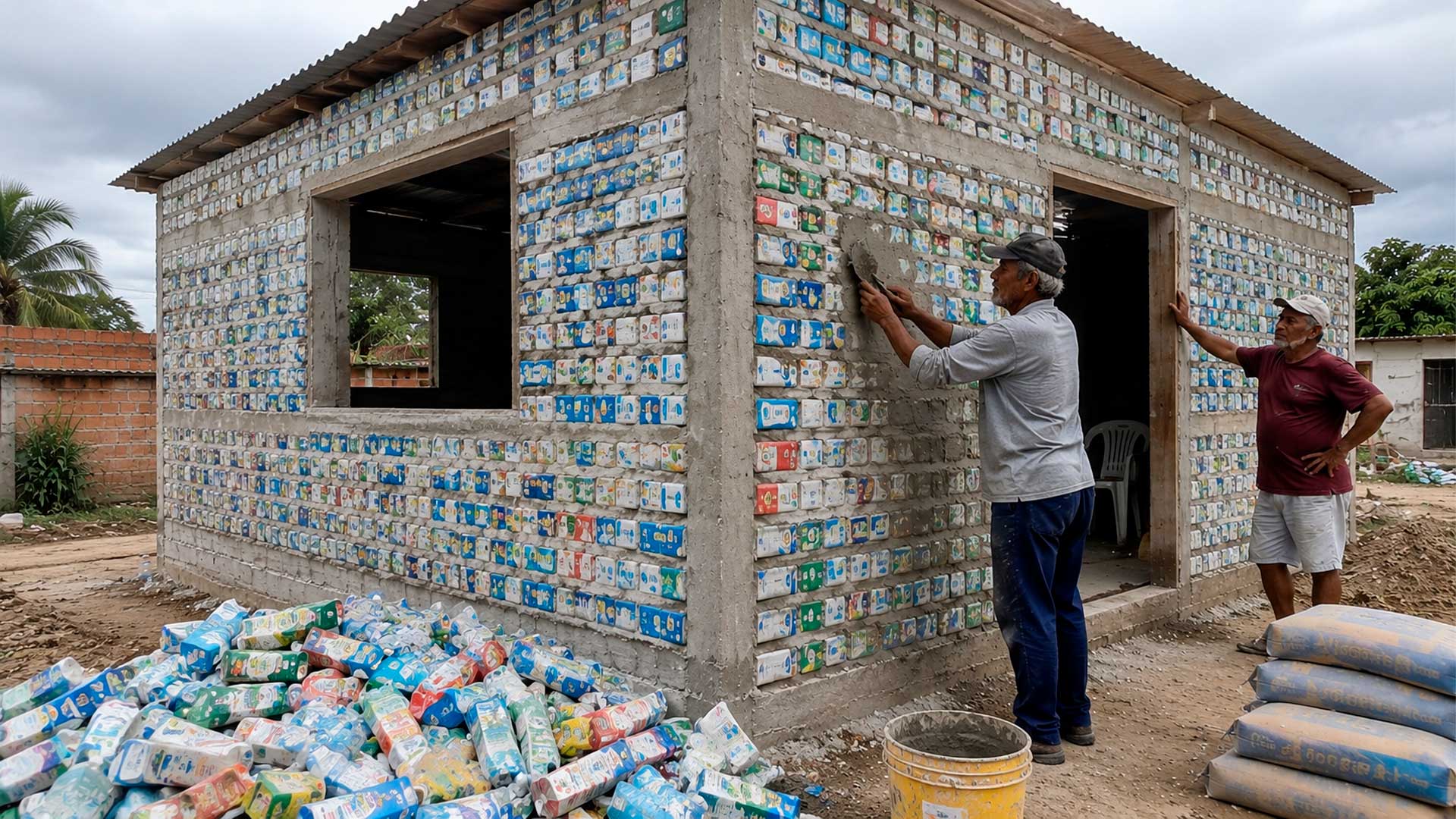
Retired Builder Constructs House Using Over 4,000 Milk Cartons in Brazil, Engineer Estimates Structure Could Last 100 Years



Unaware of the negotiation, Aziz Gul, the child’s mother, sought her brother and community leaders upon discovering that Qandi had been promised, trying to prevent her daughter from being taken from home to fulfill the agreement made by the father.
Marriage agreement turned into debt for the family
The solution found by local leaders was treated as a kind of “divorce” for Qandi, but the decision did not end the problem, because the family would have to return 100,000 afghanis, an amount described as equivalent to about US$ 1,000.
Unable to gather the amount, Aziz Gul remained trapped by the debt even after mobilizing relatives and elders to protect her daughter, in a situation that turned the attempt to annul the marriage into a debt almost impossible to pay.
In practice, the girl was not only at the center of a decision made without the mother’s participation, but also came to represent a financial obligation for a family that already did not have enough food.
The phrase attributed to the father by the AP summarizes the survival logic surrounding the case: he said he sacrificed one daughter to save the other children, a statement that shows how hunger advanced over families without immediate alternatives.
Economic crisis worsened extreme decisions in Afghanistan
In the Associated Press report, the case of Qandi Gul appears within a broader scenario of extreme poverty, where other Afghan families have started negotiating children or accepting advance payments for future marriages.
In some situations, the girls temporarily stayed with their parents, while the future obligation remained valid, allowing the initial payment to be used to buy food, medicine, or pay urgent debts.
After the Taliban regained power in August 2021, the crisis in Afghanistan deepened, and an economy already weakened by decades of conflict and severe drought lost an important part of foreign aid.
In the Shedai camp, the AP recorded displaced residents in simple dwellings, with limited access to food, work, and basic services, a scenario that helps explain why extreme family agreements gained ground.
Humanitarian organizations had already warned of the risk of increasing child marriages in the country, and UNICEF reported that partners recorded 183 child marriages and 10 cases of child sales between 2018 and 2019 only in Herat and Badghis.
Mother tried to prevent daughter from being taken
The resistance to the agreement came from Aziz Gul, who had also married as a teenager and sought support within her own community upon discovering that her daughter could be taken to fulfill the negotiation.
According to the AP, she turned to relatives and local leaders in a social environment marked by strong male power in family decisions, which made the attempt to protect Qandi even more difficult.
This mobilization revealed a less visible layer of the problem because, even when the mother rejected the marriage and got help to block the daughter’s departure, the annulment remained conditioned on the payment of the debt.
After the discovery of the agreement, the father left the house, according to the report, for fear of being reported to the authorities at a time when the Taliban government had announced a ban on forced marriages.
Even so, the existence of a formal rule did not prevent vulnerable families from continuing to be subjected to informal arrangements in areas where hunger, indebtedness, and lack of effective protection weigh on the lives of children.
Child marriage is a risk amplified by poverty
UNICEF estimates that 28% of Afghan women between 15 and 49 years old were married before the age of 18, and states that girls are more exposed to child marriage in contexts of poverty, insecurity, and instability.
In Qandi’s case, hunger was presented by the father as the immediate reason for accepting the payment, but the direct consequence fell on a 10-year-old child, promised in a negotiation discovered by the mother only afterward.
The impact of the story is explained by the combination of lack of food, absence of income, and fragility of protection for girls in impoverished communities, where extreme poverty creates traps that persist even when there is family resistance.
While trying to keep her daughter at home, Aziz Gul remained pressured by the debt of 100,000 afghanis, an amount that kept Qandi at the center of a survival negotiation in a camp marked by displacement and misery.