Portuguese
  Spanish


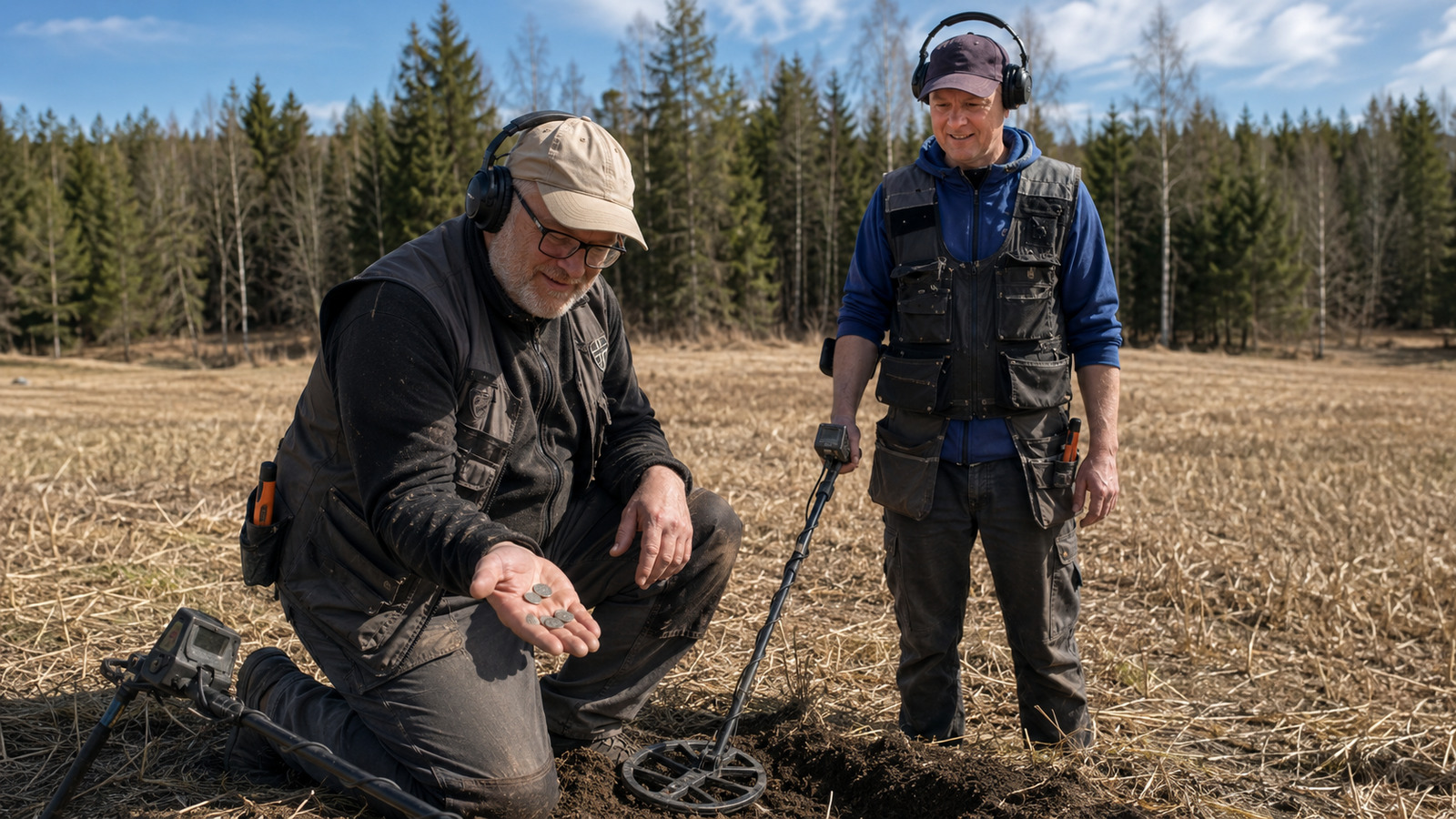

Discovery made by two enthusiasts near Rena gathers coins minted between the decades of 980 and 1040, mainly originating from England and Germany, and may be linked to the iron trade
A Viking treasure with 2,970 silver coins was found in a field near Rena, in southeastern Norway, by two enthusiasts with detectors. The discovery, reported to authorities in April, is noted as the largest find of Viking Age coins in the country since 1950 and the largest in Norwegian history.


Find began with 19 silver coins
Rune Sætre and Vegard Sørlie found the first 19 coins on April 10, in an area located about 29 kilometers north of Elverum.
Upon realizing it could be a treasure, they alerted local authorities in Innlandet County.
-
5 km Lunar Pipeline Could Supply Oxygen to Astronaut Bases, Replace Transport Robots, and Become First Major Infrastructure Project Beyond Earth

-
U.S. Attempted to Tame Hurricanes with Silver Iodide and Aircraft for Nearly 20 Years
-
Teen Inventors Win $50,000 for Pen-Sized Device Using Ultrasound to Remove 94% of Microplastics from Water

-
Ultra-Black Car Paint Absorbs 99.9% of Light, Making Vehicles Look Like “Black Holes” on Wheels





After the notification, the site began to be investigated by archaeologists. The Museum of Cultural History at the University of Oslo reported that the complete set comprises 2,970 silver coins, probably buried around 1047.
The institution described the find as an “unparalleled coin treasure in the Norwegian context.” For Hanna Geiran, director-general of the Directorate for Cultural Heritage, the discovery holds national and international significance.
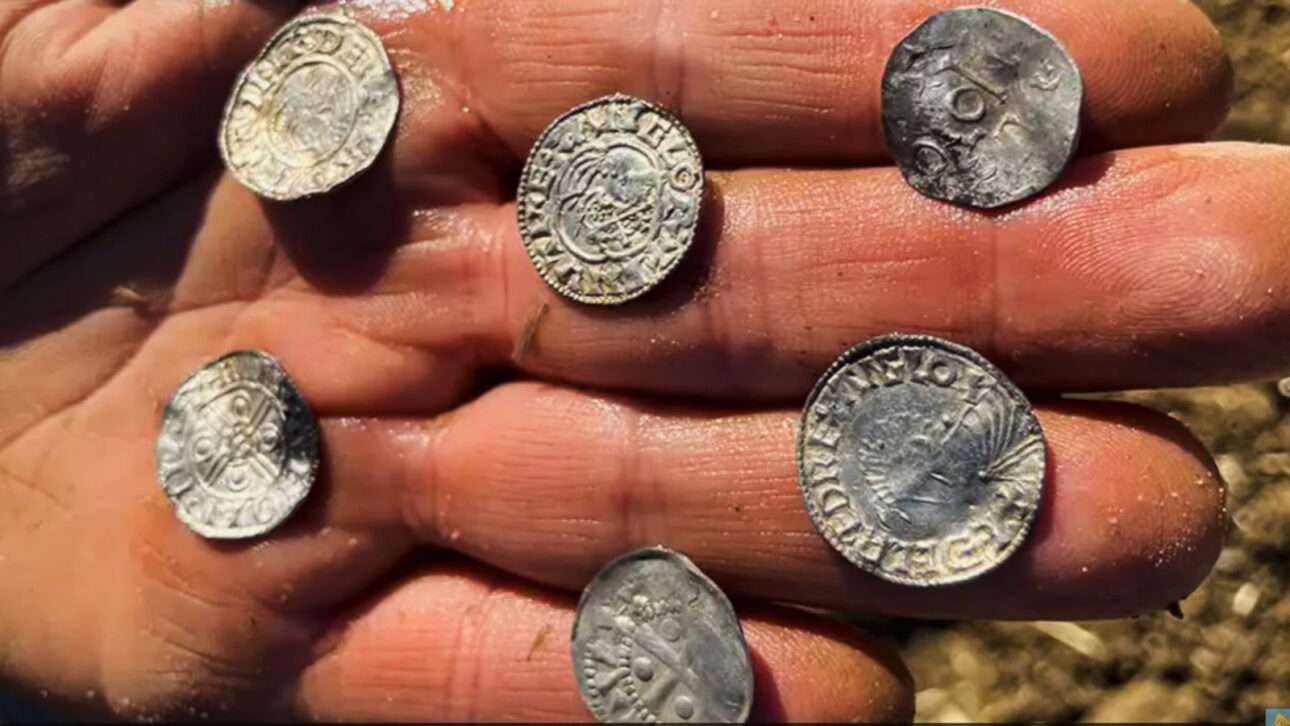
Coins show foreign strength in the Viking economy
The pieces were minted between the decades of 980 and 1040. Among the names recorded on the coins are Ethelred II, Otto III, Harald Hardrada, and King Canute.
Most of the coins came from England or Germany. According to authorities, this reveals the strong presence of foreign currency in the Norwegian economy at the end of the Viking Age.
Professor Svein Gullbekk, from the Museum of Cultural History, stated that the circulation of foreign currency in Norway was dominated by Harald Hardrada, between 1046 and 1066, during which he established a national currency.
According to Gullbekk, the treasure was deposited at the beginning of this process. Therefore, the collection helps to show an important transitional moment in Norway’s monetary history.
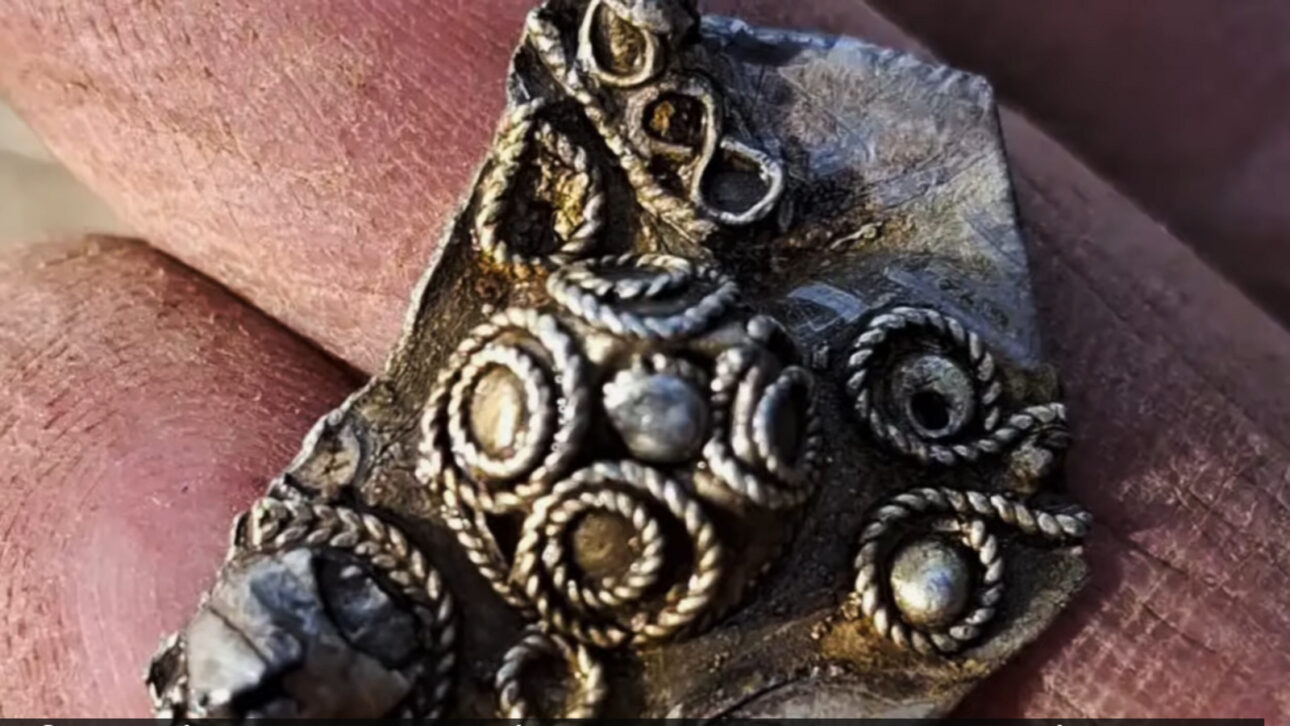
Treasure may be related to iron trade
There is still no definitive explanation for why the coins were buried. Researchers, however, point to a possible connection with the iron trade that was active in the region during the Viking Age.
Archaeologist Jostein Bergstøl, from the Museum of Cultural History, stated that there was enormous iron production in the area from the 900s until the late 1200s.
The ore was extracted from swamps and the processed iron was exported to Europe.
For Bergstøl, the large volume of coins may represent wealth accumulated through this trade.
The hypothesis helps connect the find not only to the circulation of money but also to regional economic activity.

Detectorists followed the correct procedure
Authorities highlighted the attitude of the two enthusiasts after the discovery. By notifying the responsible bodies, they helped preserve the site and allowed the archaeological investigation to be conducted safely.
May-Tove Smiseth, an archaeologist from the Innlandet County Authority, stated that the case is an example of how this type of situation should be handled.
The discovery adds to other recent finds linked to the Viking Age. In 2025, archaeologists in northern Germany found a Viking treasure of about 1,000 years, following a detectorist’s alert. In Sweden, authorities also announced a Viking tomb with “Christian connotations” near Linköping.
This article was prepared based on information from Fox News Digital and the Museum of Cultural History at the University of Oslo, with data, numbers, and statements preserved as per the consulted material.