Portuguese
  Spanish


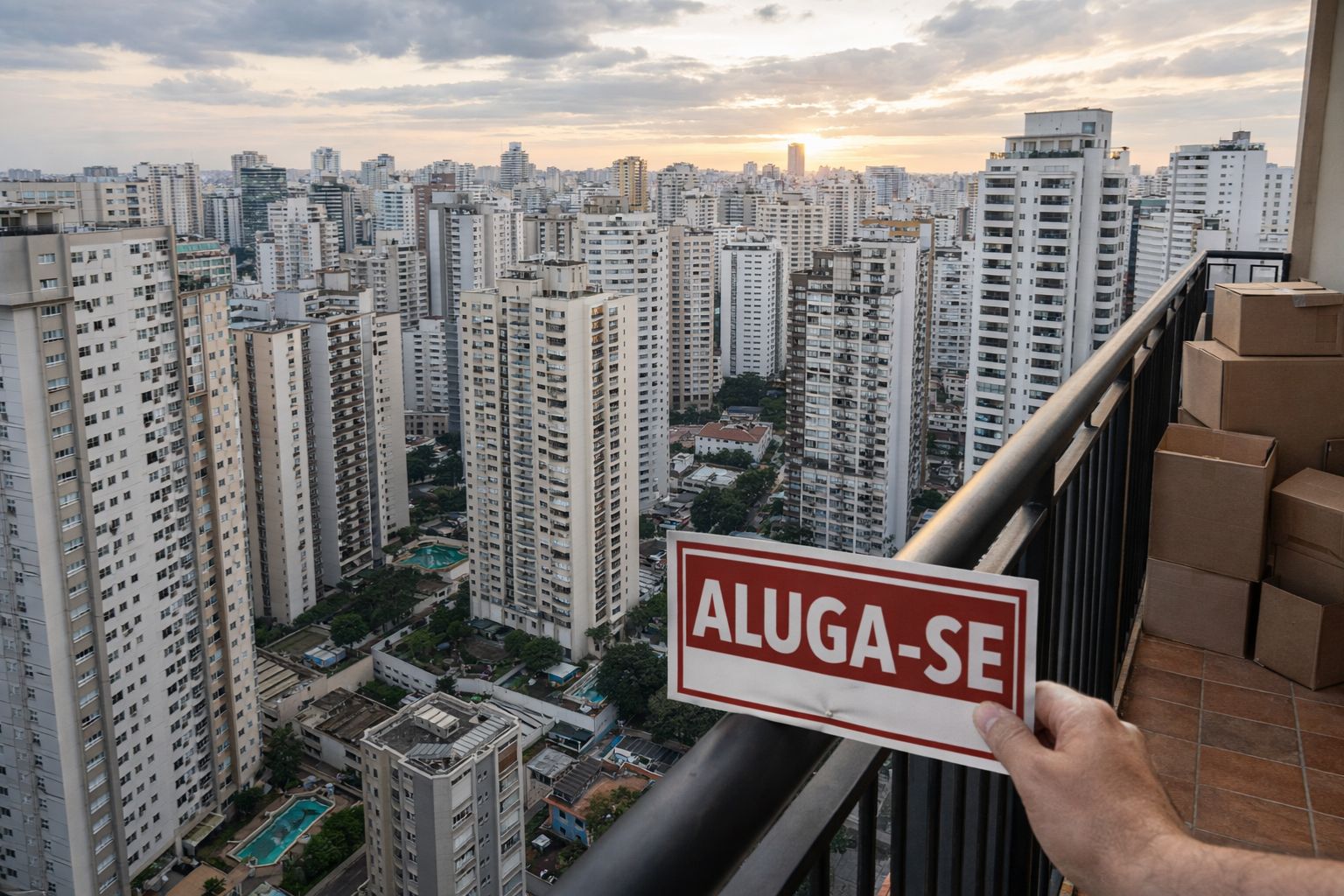

The Continuous PNAD from IBGE reveals that the fully paid home ownership dropped from 66.8% to 60.2% of households between 2016 and 2025, while rents jumped from 18.4% to 23.8%, an increase of 54.1%. With the Selic at 15% per year, real estate credit became more expensive and many families migrated to renting. In the capitals, apartments are already the majority in Porto Alegre and almost half in Vitória.
The dream of home ownership is becoming increasingly distant for Brazilians, and the numbers from IBGE leave no room for optimism. The Continuous National Household Sample Survey (Continuous PNAD), released this Friday (17), shows that Brazil surpassed 79 million households in 2025, but the growth came with a profound change in the occupancy profile: fewer people living in fully paid homes and many more people paying rent. The share of fully paid homes dropped from 66.8% to 60.2% between 2016 and 2025, while rented households jumped from 18.4% to 23.8% during the same period, a 54.1% increase representing 18.9 million households living in rental.
The explanation lies in the economy. With the Selic rate at 15% per year in mid-2025, real estate credit became significantly more expensive, making it difficult for millions of families who rely on financing to buy a property to access home ownership. Many postponed their purchases, others gave up and migrated to renting. The analyst of the Continuous PNAD, William Kratochwill, confirmed the trend by explaining that “the increase in income over the years has been consistent, but perhaps not enough for people to access the housing system.” The result is a Brazil where home ownership becomes a privilege for those who already have it or for those who can afford installments that compete with entire salaries.
The rise of rent that distances Brazilians from home ownership
According to information from the G1 portal, the numbers are clear: Brazil currently has 18.9 million rented households, compared to 12.3 million in 2016. This 54.1% growth over nine years indicates that an increasing portion of the Brazilian population cannot access home ownership and is allocating a significant part of their monthly income to rent payments, without accumulating wealth. With each month of rent paid, the family transfers wealth to the property owner without receiving anything in return other than the temporary right to reside.
-
A 180-meter ship with a deck the size of a football field was christened to carry 25,000 tons of giant energy modules around the world.

-
To erect the “Baleia” building on the richest avenue in Brazil, he bought 35 houses, paying with trips to Disney, a truck, and even an apartment, waited over 20 years, and today the complex is valued at R$ 2.5 billion.
-
The land belonged to her great-great-grandfather and was worth R$ 25 per square meter during the pandemic; the couple sold 250,000 m² for the nearly R$ 30 billion project that is transforming the “neighbor of Jericoacoara,” and today a house in the region goes for R$ 4.2 million.

-
Labor shortage reaches the truck drivers’ area: Brazil is already facing a deficit of 120,000 drivers, 65.1% of transport companies feel the impacts, and Mercedes-Benz strengthens training in the face of the new generation of technological trucks.



The rise in rental prices is even more visible in the capitals. Palmas leads with 47.3% of households rented, almost half of the total, followed by Florianópolis (36%), Goiânia (35.3%), and Brasília (34.5%). In large metropolitan areas, the trend is confirmed: in São Paulo, the proportion of rented households rose from 26.4% to 29.9% between 2016 and 2025. In Rio de Janeiro, it increased from 20.3% to 28.2%. In Belo Horizonte, it went from 19.5% to 29.6%. Even in Belém, where home ownership was widely dominant, the proportion of rentals nearly doubled, rising from 11.1% to 21.2%.
How the Selic at 15% Makes Home Ownership Almost Unreachable
Real estate financing is the most common path to home ownership in Brazil, and when the basic interest rate rises, this path narrows drastically. With the Selic at 15%, real estate credit interest rates follow suit and increase monthly payments, making it unfeasible for many families to commit to a 20 or 30-year obligation with amounts that can exceed half of household income. The result is predictable: those who cannot finance, rent.
Data from the Continuous PNAD shows that properties still under payment rose by 15.9% between 2024 and 2025, indicating greater dependence on real estate financing. Paradoxically, the rise in the Selic makes financing more expensive precisely at the moment when more families turn to it, creating a cycle where the search for home ownership becomes more difficult the more people try to access it through credit. For those who already have an active financing, the rise in interest means larger payments and extended terms, compromising financial capacity for decades.
The Verticalization That Is Changing the Face of Brazilian Capitals
As home ownership becomes more distant, the physical profile of housing is also changing. Porto Alegre already has a majority of apartments, with 52.1% of households verticalized in 2025, followed by Vitória (49.9%) and Belo Horizonte (45.1%). Capitals that were predominantly horizontal just a few years ago are undergoing rapid transformations: João Pessoa jumped from 30% to 45.9% of apartments, Aracaju went from 26.8% to 39.6%, and Brasília from 26.7% to 38.5%.
Verticalization reflects the logic of the real estate market. “20 or 30 families are placed on a plot where previously only two houses fit”, explained researcher Kratochwill, illustrating how buildings allow for more housing to be concentrated in urban areas where space is limited and the square meter is expensive. For developers, buildings offer greater profitability than horizontal constructions, which reinforces the expansion of this model. In Brazil as a whole, the share of residents in apartments rose from 11.6% in 2016 to 15% in 2025.
The Concentration of Properties That Further Distances Home Ownership
A concerning fact revealed by the Continuous PNAD is that the growth of apartments is associated with a concentration of real estate wealth. Many of the new apartments built in the capitals are not occupied by their owners but are intended for the rental market, which means that the same person can own several properties and rent them to families who cannot afford to buy their own.
“A large part of these new apartments belongs to someone who does not use them as housing and is renting them out,” explained Kratochwill, adding that this scenario indicates that the wealth associated with property ownership ends up being “in the hands of proportionally fewer people”. In practice, the real estate market is creating an increasing divide between owners who accumulate properties and tenants who pay rent without the prospect of becoming owners, making homeownership an increasingly distant goal for those starting from scratch.
What the data means for the future of housing in Brazil
The trend identified by the Continuous PNAD shows no signs of reversal in the short term. As long as the Selic rate remains high, real estate credit will continue to be expensive, and the migration to renting is expected to persist, increasing the proportion of rented households and further reducing the share of fully paid homes in the total number of Brazilian dwellings. The Minha Casa, Minha Vida program set records for launches and sales in 2025, but primarily serves lower-income families and does not address the structural problem of the middle class, which is squeezed between insufficient incomes and prohibitive interest rates.
For millions of Brazilians, homeownership has ceased to be a short-term goal and has become a decades-long project, dependent on a combination of rising income, falling interest rates, and property prices that stop rising faster than wages. The data from IBGE is a snapshot of a country where living has become more expensive, more vertical, and more dependent on renting than at any time in recent history.
IBGE data shows that homeownership is becoming increasingly distant for Brazilians, with rents skyrocketing and the Selic at 15%. Have you managed to buy your home or are you stuck renting? What is missing for Brazilians to access housing? Share in the comments.