Portuguese
  Spanish


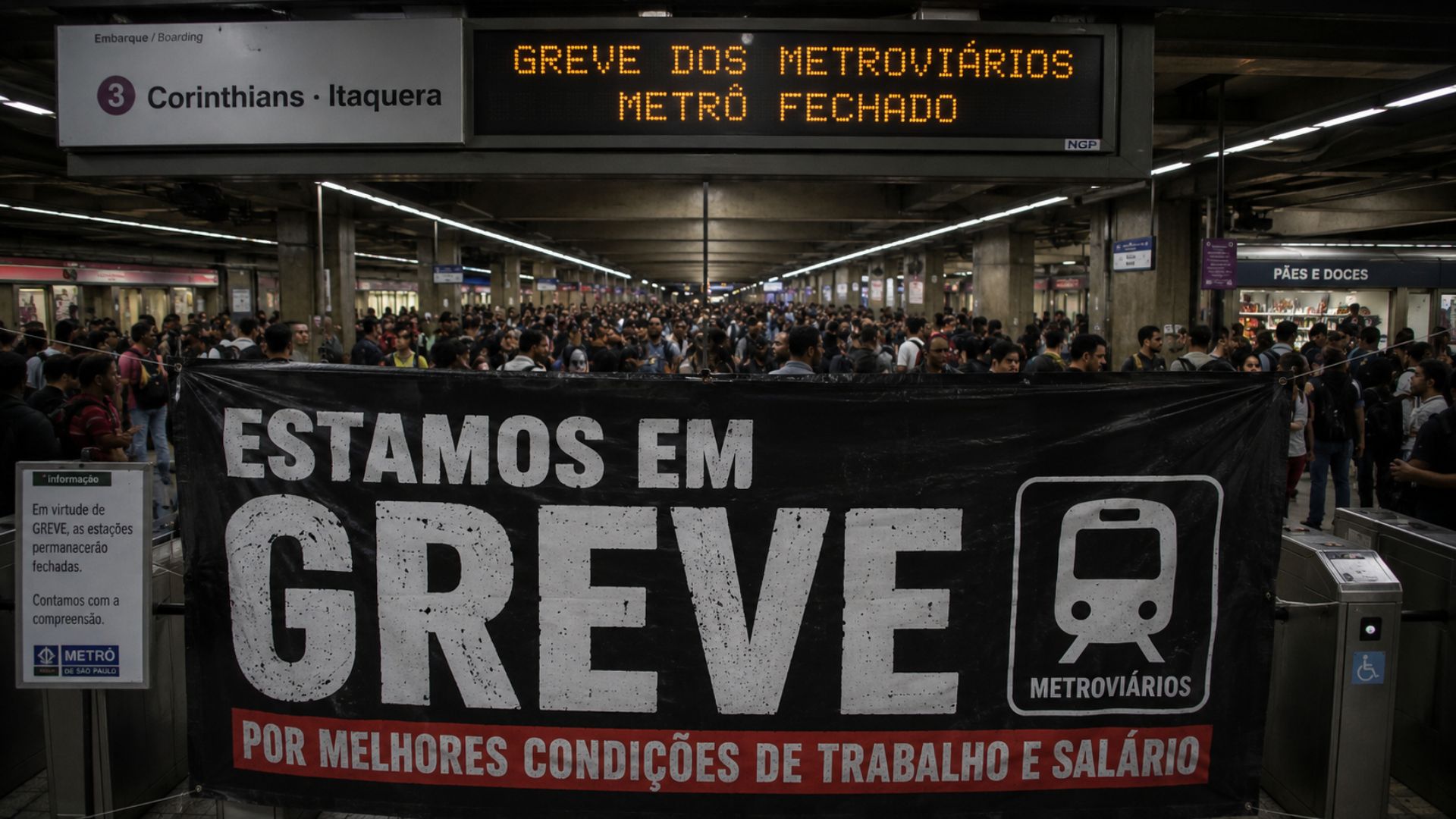

The Subway Workers’ Union meets on Tuesday night (12), in the East Zone of São Paulo, to decide whether to declare a strike. If approved, the subway workers’ strike begins at 0h on Wednesday (13) and is expected to affect lines 1-Azul, 2-Verde, 3-Vermelha, and 15-Prata.
Millions of public transport passengers in São Paulo may face a chaotic morning this Wednesday (13). The possible subway workers’ strike depends on the outcome of a general assembly scheduled for Tuesday night (12), at the headquarters of the São Paulo Subway Workers’ Union, in Belém, in the East Zone of the capital.
According to Veja, the meeting is scheduled for 6 PM and should define whether the category goes on strike starting at 0h on Wednesday. If approved, the disruption will affect the main lines operated directly by the state company and will pressure the state government to negotiate an agenda that includes public tenders, health plans, career plans, and profit-sharing.
Which subway lines would be affected by the strike
The eventual movement only affects the lines directly managed by Metrô de São Paulo. On the list are Line 1-Azul, Line 2-Verde, Line 3-Vermelha, and Line 15-Prata, which together transport most of the system’s users.
-
Brazil’s 2026 Tax Refund: Record 9.58 Million Filers in Largest Payout Ever, But a Key Detail on Priority Recipients Draws Nationwide Attention

-
Itaú Alters Hybrid Work Model, Increasing Office Days from 2028, Prompting Employees to Adjust to New Routine
-
Facing Labor Shortage, Japan Plans to Invest $34 Million to Attract Foreign Workers in Construction, Healthcare, Industry, and Commerce

-
Brazilian City Makes Remarkable Leap, Becomes 4th Wealthiest in the Country with GDP of R$ 134.1 Billion



There are also mentions of a possible impact on Line 17-Ouro, which is also under the responsibility of the state company. Lines granted to private initiative, however, are not part of the movement.
Line 4-Amarela and Line 5-Lilás, operated by concessionaires, should operate normally. CPTM trains, those from the ViaMobilidade consortium, and TIC Trens are also not included in the union’s agenda presented so far.
When and where will the assembly that decides the strike be held
The assembly was called for this Tuesday, May 12, starting at 6 PM. The meeting takes place at the headquarters of the São Paulo Subway Workers’ Union, in the Belém neighborhood, East Zone of the São Paulo capital.
It will be up to the category present to vote for or against the declaration of the strike. If the majority approves, the subway workers’ strike officially begins at 0h on Wednesday (13), with immediate effect on the lines operated by the state company.
The decision is awaited by users and the São Paulo administration, which may try a last-minute agreement to avoid the impact on public transport in the capital and the metropolitan region.
What the category demands from the state government
The assembly’s agenda goes far beyond salary readjustment. The union states that the reduction in the number of employees over the last ten years has increased the workload and demands the opening of public tenders for replacement.
Another critical point is the Metrus health plan. The entity opposes the increase in the discount applied to workers, a change it considers detrimental to the category.
Also on the agenda are the revision of the salary progression plan, with the so-called “steps” extended to all employees, and negotiations on this year’s profit-sharing. In a statement, the union affirms that the strike “can be avoided” if the state government and Metrô management meet the demands presented by the category.
Free turnstile challenge proposed by the union
In an attempt to pressure the state government without hindering user circulation, the Subway Workers’ Union launched what it calls the “free turnstile challenge.” The proposal is a direct alternative to the strike.
According to the entity, if the government agrees to waive fare collection on the lines operated by the state company, workers would maintain the system’s operation on the day of the possible strike. Passengers would not pay for the fare, but trains would continue to circulate normally.
The measure has not yet received a formal response from the state government or Metrô management. If it is rejected, the union expects the category to approve the strike at the assembly.
Why staff reduction is at the center of the dispute
The argument that the staff has been reduced is one of the most sensitive points of the negotiation. For the union, the decrease in the number of active professionals has compromised working conditions and may affect operational safety.
The category argues that public examinations are the only way to replenish operation, maintenance, and service teams. Without new hires, the entity states that the workload continues to grow.
The topic also connects to the discussion about career plans. The demand for extended salary progression for all seeks to correct distortions accumulated over years without structural adjustments to internal rules.
What to expect in the coming hours
The outcome of Tuesday’s assembly is the central point for defining the public transport scenario in São Paulo over the next 48 hours. The vote concentrates the expectations of users, companies, and public authorities.
If an agreement is reached in the final hours before the meeting, the movement may be suspended. However, the state government’s refusal to discuss the agenda tends to push the category towards approving the strike.
If a subway workers’ strike is confirmed, passengers will need to seek alternative transportation options early Wednesday morning, with greater pressure on buses, transport apps, and private subway lines that do not join the movement.
The discussion about a new public transport strike in the country’s largest city challenges a difficult equation: the right to mobilize workers and the direct impact on millions of people who depend on the subway every day to get to work, school, or the hospital.
And you, what do you think about this situation? Do you think the strike is justified given the demands presented by the union? Do you believe the state government should accept the “free turnstile challenge”? Leave your comment, tell us how the possible strike affects your routine, and tag someone who needs to follow this issue.