






 Portuguese
  Spanish
  5 min of reading
  0 comments


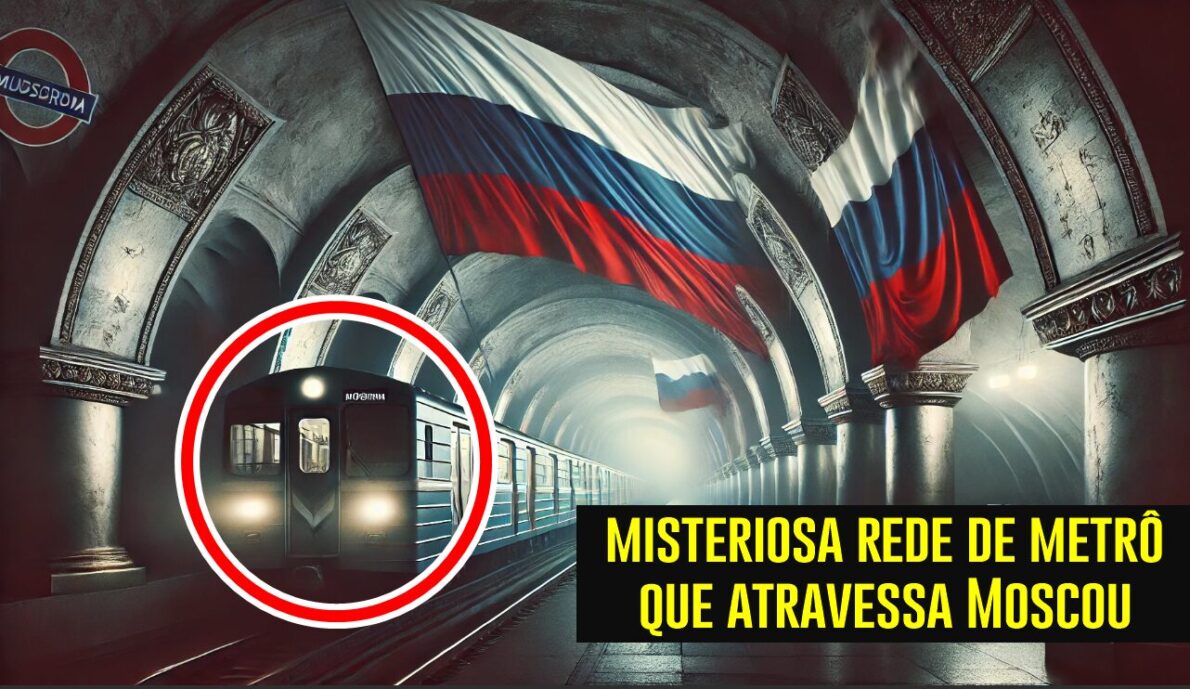
During Stalin’s Rule in the 1950s, a Mysterious Metro Network Began to Be Built in Moscow
The Moscow Metro is famous for its beautiful and luxurious stations, considered true works of art. However, few people know about the possible existence of a parallel and secret metro network, shrouded in mystery and speculation. This underground line, codename D-6, was supposedly built during Stalin’s time, during the Cold War, and remains an enigma for many.
The Origin of D-6: A Secret Metro Network from the Stalin Era
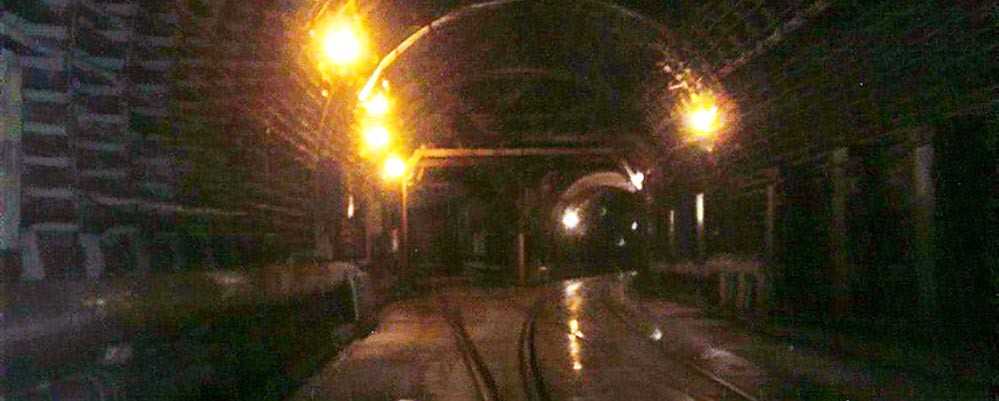
The construction of the secret metro network is said to have started in the 1950s when Joseph Stalin ruled the Soviet Union with an iron fist. The context of the Cold War and the need to protect the Soviet leadership in the event of a nuclear attack may have motivated the creation of this project.
The name “Metro-2” is also used to refer to this system, and it is speculated that it is located between 50 and 200 meters below the surface.
-
Survivor of 1966 SS Daniel J. Morrell Shipwreck in Lake Huron Recounts 38-Hour Ordeal in Extreme Cold

-
The Greatest Hoax in World Cup History? The Film That Denied Brazil’s 1958 Victory and Exposed How Fake Evidence Can Seem Convincing on TV
-
Fake South Korean Online Stores Offer Shopping Thrill Without Spending Money or Receiving Products
-
The War of Jenkins’ Ear: How a Severed Ear Sparked One of the 18th Century’s Most Unusual Conflicts


Over the years, the existence of D-6 has been largely considered an urban legend, debunked by many. However, in 1991, a report from the United States Department of Defense, titled “Military Forces in Transition,” mentioned the secret network, bringing new light to the issue.
“The Soviets built a deep underground both in urban Moscow and outside the city. These facilities are interconnected by a network of deep metro lines that provide a quick and safe means of evacuation for the leadership.”
The leadership can move from their offices in times of peace through hidden entrances in protective shelters below the city. There are significant deep underground command posts in the Moscow area, one located in the Kremlin.
The Soviet press noted the presence of a huge underground bunker for leadership adjacent to Moscow State University. These facilities are intended for national command authority in times of war. It is estimated that they are between 200 m (660 ft) and 300 m (980 ft) deep and can accommodate about 10,000 people.”
The document pointed out that the USSR had constructed a deep underground complex, interconnected by a metro line, which would allow the Soviet leadership to move safely during wartime.
Official Evidence and Reports from Russian Authorities
The first public confirmation of the D-6 network did not come from Russian sources but rather from this American document. According to the report, the network connected the Kremlin to deep underground command posts, some with capacity to accommodate up to 10,000 people.
There was also the possibility of evacuating the leadership through hidden entrances, directly linked to offices in Moscow.
However, the first official Russian information about Metro-2 only emerged in 2004, when Vladimir Shevchenko, former advisor to Gorbachev, Yeltsin, and Putin, acknowledged the existence of the underground line.
Nevertheless, he downplayed its importance, stating that the underground communications had been greatly exaggerated. According to Shevchenko, there was indeed a single-track railway connecting the Kremlin to a dacha of Stalin in Volynskoye, but it was no longer in use.
In 2007, the Russian news agency Tass briefly mentioned the D-6 network, confirming that it was under the control of the FSB, the Russian intelligence service.
The then director of the Moscow Metro, Dmitry Gaev, suggested that the tunnels could be used to relieve the city’s transportation system. However, the decision would rest with the authorities responsible for national security.
The Specifications of D-6: Equipment and Structure
nashtransport.ru ).
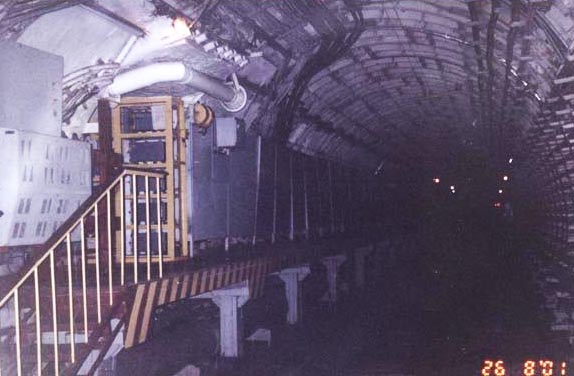
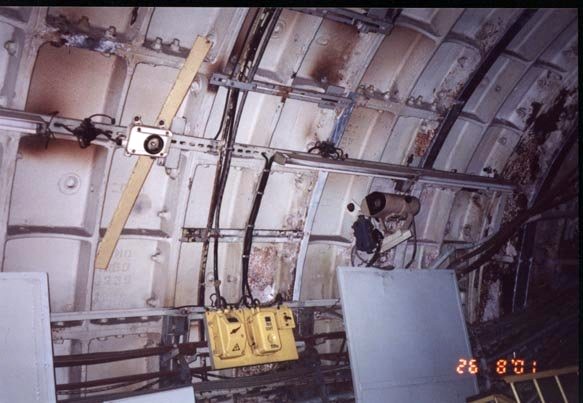
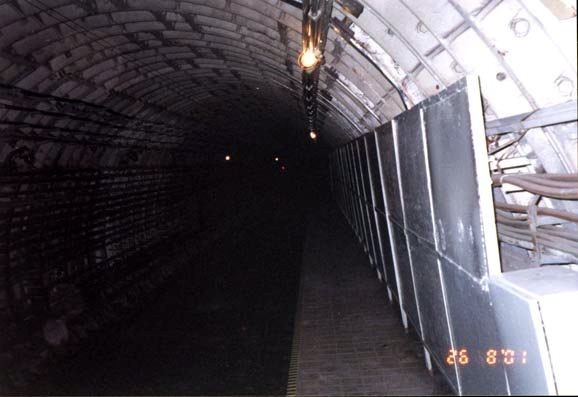
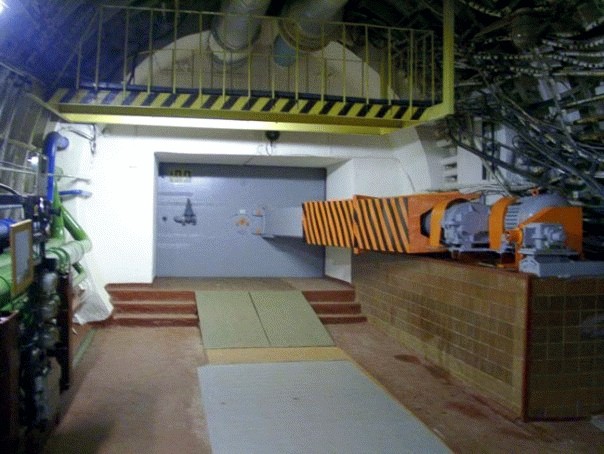
Little is known about what actually exists within this mysterious network. Some photos supposedly linked to D-6 were released in 2012 on the website nashtransport.ru, which specializes in Russian transportation.
The images show tunnels and armored gates that would serve to protect access and sections of the tunnels, turning them into nuclear shelters in emergencies.
The rolling stock used in the D-6 network has also been detailed by experts. Among the vehicles, electric battery locomotives and Ezh6 metro cars, manufactured by Metrowagonmash, stand out.
According to reports, in 2003, the Russian government ordered diesel trains specifically for this line, with engines located beneath the floor and compliant with Euro-3 standards.
The Future of D-6: Use or Abandonment?
nashtransport.ru ).
Currently, little is known about the operational state of D-6. In interviews with former Russian government officials, such as Mikhail Poltoranin, former minister under Boris Yeltsin, the secret line is described as an extensive network of tunnels created to protect the country’s nuclear forces and shelter the Soviet leadership in the event of war.
Poltoranin stated that the network has branches extending to the outskirts of Moscow, allowing Soviet command to distance itself from the epicenter of a nuclear attack.
Additionally, Svetlana Razina, spokesperson for the Moscow Metro, stated in 2008 that drivers were recruited to operate secret routes in the underground network, although few were selected.
She also mentioned that these tunnels were used by short trains, composed of battery electric locomotives and a single passenger car.
A Mystery That Continues
nashtransport.ru ).
Metro-2, or D-6, remains one of the greatest mysteries related to Russia’s infrastructure. Although some authorities have acknowledged its existence, the network continues to be shrouded in secrecy and speculation. The absence of official maps and restricted access to these tunnels makes it almost impossible for the public to know where they are located and what their actual extent is.
Photos published on specialized websites suggest that the network is composed of hermetic gates, similar to those found in other metro networks built during the Soviet era. These gates are designed to create airtight sections capable of withstanding nuclear attacks and sheltering thousands of people in case of need.
Although some experts advocate for using these tunnels to alleviate Moscow’s transportation system, the final decision remains in the hands of the country’s security authorities. However, with advancements in defense technologies and changes in the geopolitical landscape, D-6 may ultimately become just a relic of the Cold War.
The history of D-6 and its possible future usefulness is a topic that sparks the interest of many. If you want to learn more about Moscow’s underground infrastructure or other mysteries related to Russia, stay tuned for our reports! After all, secrets like Metro-2 can reveal much about the past and future of global security.





Be the first to react!