





 Portuguese
  English
  Spanish
  3 min of reading
  0 comments


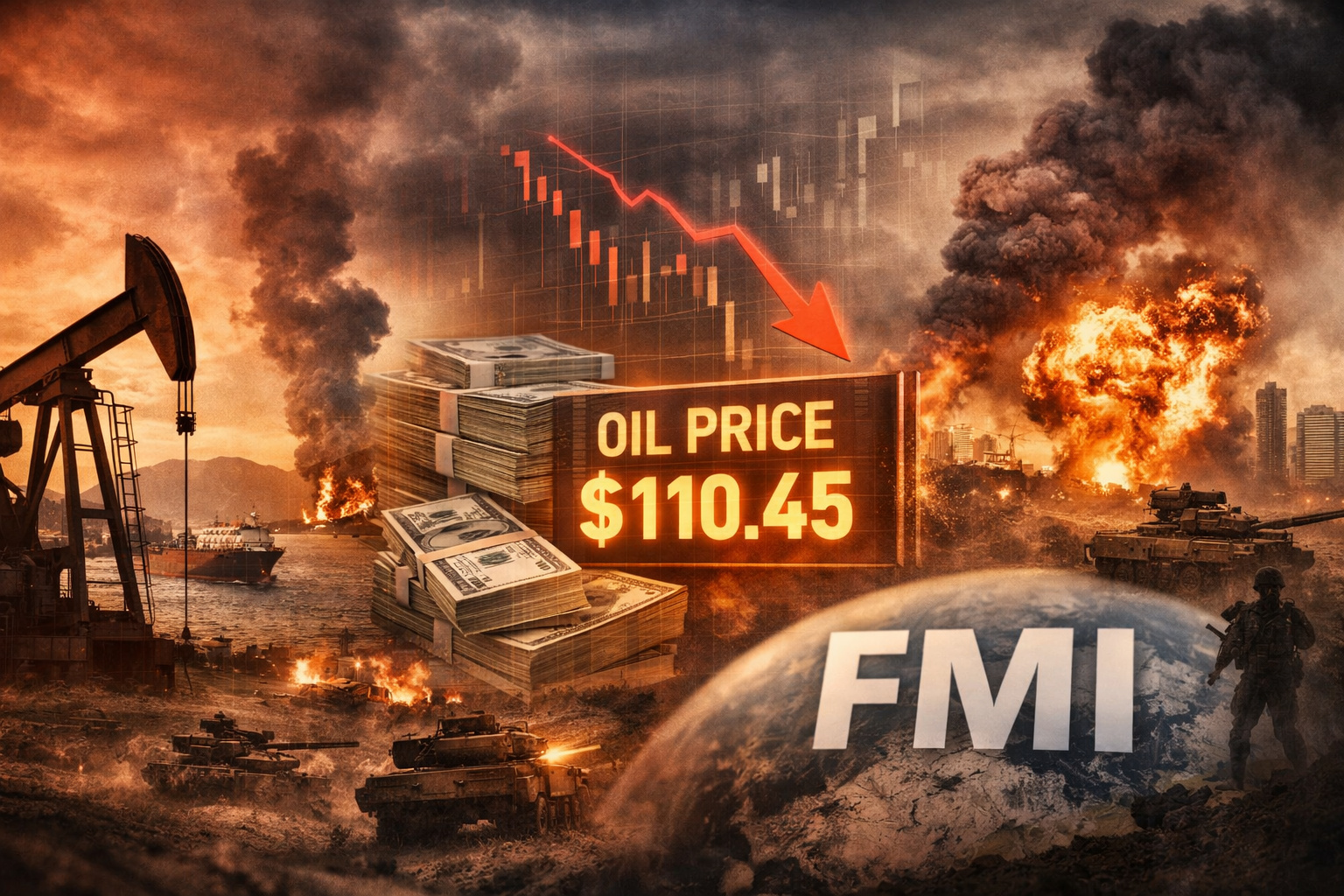
According to the latest analysis, the global scenario already shows signs of fragility. Moreover, geopolitical instability tends to further pressure markets, especially the energy sector, which is directly impacted by conflicts in the region.
Conflict pressures energy market and raises global alert
Currently, the main point of concern is the supply of oil. This is because the Middle East concentrates a significant portion of global production, and any disruption can have immediate effects on prices.
In this context, the Strait of Hormuz emerges as a strategic factor. If there are blockades or restrictions on passage, the global flow of oil may be compromised. Consequently, commodity prices tend to rise rapidly, impacting economies worldwide.
According to the IMF, this scenario could trigger a series of chain reactions. On one hand, exporting countries may benefit momentarily. On the other, nations dependent on energy imports would face higher costs and increased inflationary pressure.
-
Farmer drills well in Ceará in search of water, accidentally finds crude oil and sees million-dollar discovery hindered by a rule that completely changes the future of the site.

-
Family finds oil on a 49-hectare site in Ceará, but exploration has no timeline or guarantee of happening

-
When drilling an artesian well, a farmer wanted water but found oil: ANP confirms that the dark liquid found by a farmer on a site in Ceará is crude oil.

-
European stocks rise with oil drop after Trump’s remarks on Iran as investors monitor global tension




Economic growth may slow significantly
In light of this scenario, the Fund projects different possibilities for the global economy. In a more stable environment, growth in 2026 could remain close to 3.1%. However, if tensions escalate, this rate could drop to around 2.5%.
Furthermore, in a more critical scenario, the possibility of a global recession cannot be ruled out. In this case, inflation would also rise, exceeding levels considered safe by major economies.
According to the report, this type of shock — caused by more expensive energy — has a direct impact on economic activity. This happens because it affects both consumption and investments, reducing the growth rate.
Rising oil prices are expected to impact inflation and cost of living
At the same time, the increase in oil prices tends to generate broad effects on the economy. Initially, fuels become more expensive. Subsequently, transportation costs rise, which in turn increases the prices of products and food.
As a result, inflation gains strength. Consequently, central banks may be forced to maintain high interest rates for longer, which further complicates economic recovery.
Moreover, industrial sectors and supply chains also suffer significant impacts. This is because the rising cost of energy reduces profit margins and may lead to a slowdown in production.

IMF to revise projections in light of global scenario
In this context, the Managing Director of the IMF, Kristalina Georgieva, has already indicated that global growth forecasts may be revised downward. According to her, the combination of geopolitical tensions and persistent inflation represents a significant challenge for the global economy.
Furthermore, the report highlights that prolonged conflicts tend to generate more lasting impacts than traditional financial crises. In this sense, the effects may extend over several years, affecting everything from international trade to the level of global investment.
Dependence on fossil fuels increases risks
Finally, the current scenario reinforces the vulnerability of the global economy to dependence on fossil fuels. Although the energy transition is underway, oil still plays a central role in the functioning of economies.
Thus, any instability in supply tends to generate broad consequences. Therefore, experts point out that diversifying energy sources could be a decisive factor in reducing future risks.
Outlook remains uncertain
Despite the uncertainties, the IMF emphasizes that the outcome of the crisis will primarily depend on the duration of the conflict and the behavior of oil prices. If there is a rapid stabilization, the impacts may be limited.
On the other hand, if the war prolongs, the negative effects on the global economy are likely to intensify. In this scenario, the possibility of recession shifts from being just a risk to becoming a concrete reality.






Be the first to react!