Portuguese
  Spanish


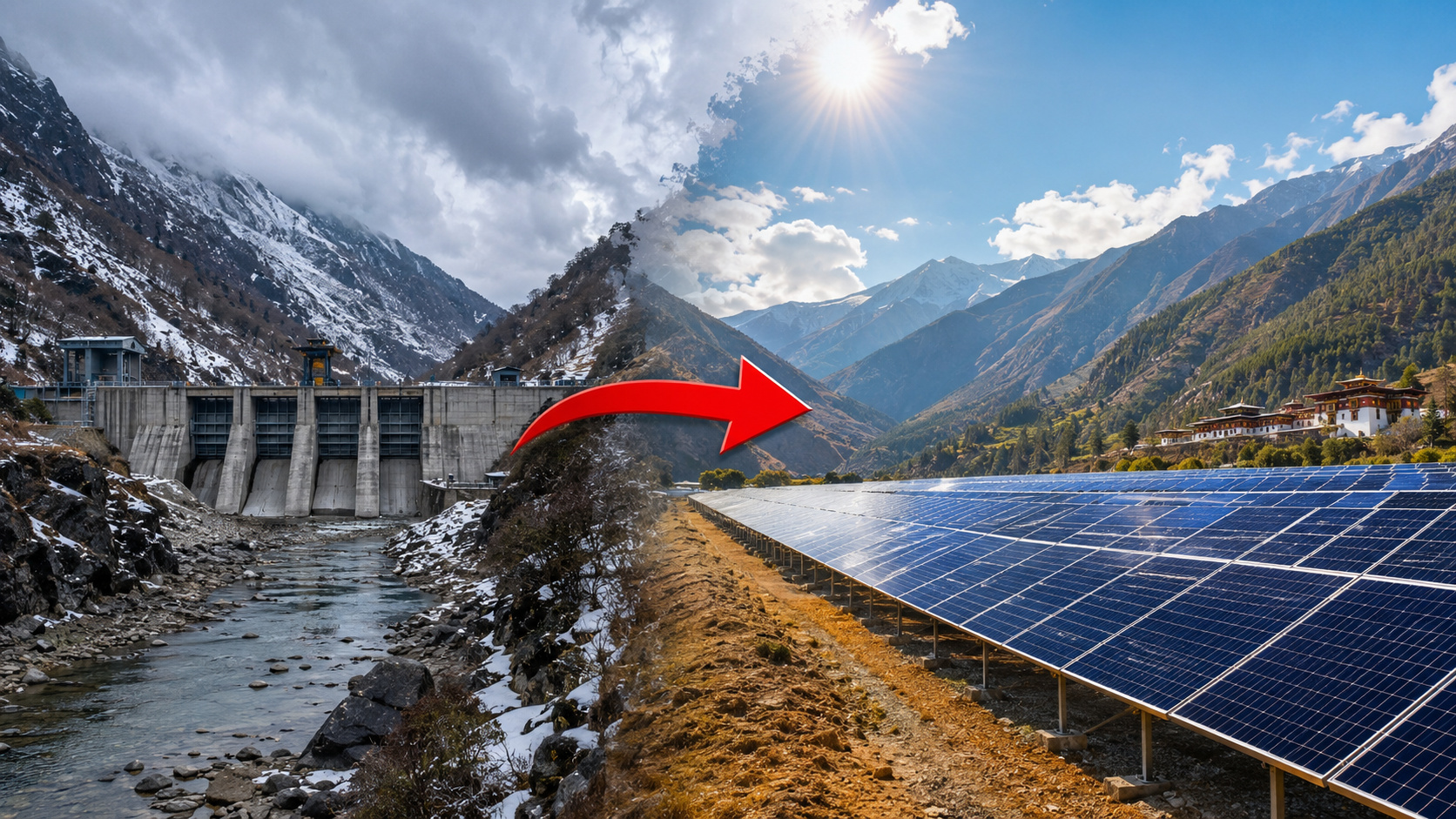

Bhutan has put solar energy to work alongside hydropower, in a public plant between mountains, with 17.38 MWp and expected to generate 25 million kWh per year in the country known for the power of its rivers
Bhutan installed a public solar plant between mountains to boost electricity generation during the period when its hydropower plants produce less, during winter.
The information was released by the Ministry of Energy and Natural Resources of Bhutan, a public body of the Bhutanese government. The first phase of the Sephu solar plant began operation on July 19, 2025, with 17.38 MWp capacity.
The case draws attention because the country is known for the energy of its rivers. Even so, it started using the sun as a reinforcement to address a simple vulnerability: when there is less water in the rivers, the hydropower plants deliver less energy.
-
In Colombia’s desert, 30 families receive 80 m² homes with solar panels, waterless toilets, and rainwater collection systems amid water and energy shortages.

-
Solar Energy Booms in Brazil: Over $60 Billion Invested, 68.8 GW Capacity, 2 Million Jobs Created, Now Second in National Power Grid
-
Engie Secures 10-Year Use of 625 MWh in Batteries to Store Excess Solar and Wind Energy in Spain by 2028
-
Giant Batteries Take Center Stage in Chile Auction as Company Offers 960 GWh of Solar Energy for Nighttime Use, Aiming to Stabilize Solar Power Supply


Bhutan’s first public solar plant shows why even river-rich countries need to diversify energy
Bhutan has a strong relationship with hydropower, which is electricity generated by the force of water. In simple terms, water moves equipment inside the plant and this turns into electrical energy.


The problem is that this source depends on the volume of the rivers. In winter, the rivers carry less water and the production of hydropower plants falls. Therefore, solar energy in Bhutan plays a strategic role.
The Sephu plant does not appear to replace the hydropower plants. It comes in as a complement, that is, as an extra help to reduce the pressure on a source that depends directly on water.
Sephu solar plant has 17.38 MWp and is expected to generate about 25 million kWh per year
The first phase of the Sephu solar plant has 17.38 MWp. This acronym indicates the maximum capacity of the panels in good sunlight conditions.
This number shows the size of the installed power in the project. The greater this capacity, the greater the potential generation under suitable conditions.
The forecast is to generate about 25 million kWh per year. The kWh is the same measure used on the electricity bill. Therefore, this data shows the amount of energy the plant can deliver over a year.
Solar energy in winter helps when rivers lose strength and hydroelectric plants produce less
The most curious part of this story is the timing of its use. Solar energy was introduced as a reinforcement precisely for the winter, when the country’s hydroelectric plants experience a drop in production.
This happens because less water in the rivers means less force to generate electricity. The sun, on the other hand, can complement the system during this period and help maintain more stability.
The Ministry of Energy and Natural Resources of Bhutan, a public body of the Bhutanese government, detailed that the green generation of the project should reinforce firm energy in winter and complement hydroelectric generation.
Project installed on state land occupies about 44 acres among the mountains of Bhutan
The Sephu solar plant occupies about 44 acres of state land. The installation is located in a mountainous region, which reinforces the contrast between the country’s landscape and the use of solar panels.
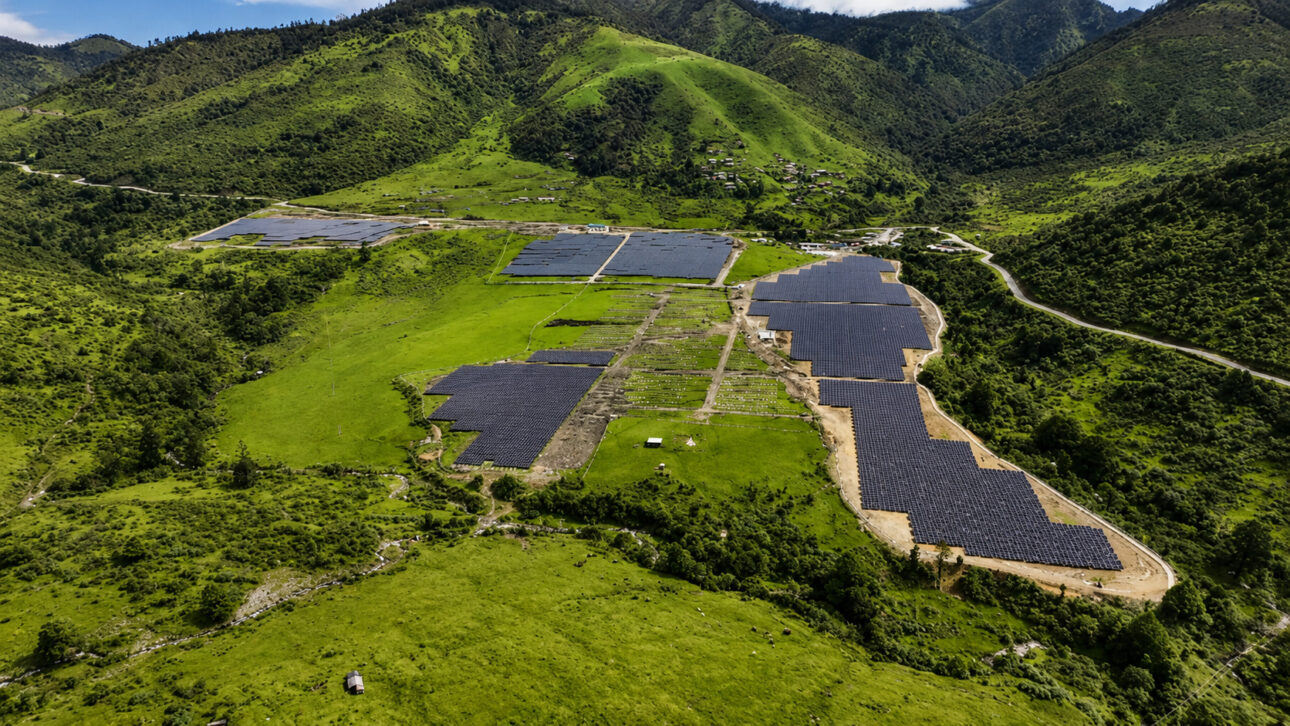
This detail helps explain why the project attracts attention outside Bhutan. The country, often associated with rivers and dams, now shows that solar generation can also be part of the energy matrix.
In practice, the project indicates a change in strategy. Energy security does not depend only on producing a lot but on having different sources for different times of the year.
What changes in practice for Bhutan’s electrical system
The operation of the first phase does not change the entire electrical system of the country at once. The impact is in adding a new renewable source to a matrix already heavily linked to water.
This reinforcement can help during the most sensitive period for hydroelectric plants. When the rivers produce less, solar generation comes in as support and reduces dependence on a single source.
What is understood is that even an energy source considered strong and clean, like hydroelectric power, can have limitations. Therefore, combining sun and water can make the system more secure.
Renewable energy becomes stronger when a country does not rely on a single source
The story of Bhutan shows that diversifying energy is not only a necessity for countries without water. Even where there are rivers and mountains, the climate and seasons can change electricity production.
Solar energy has an important advantage in this case. It can be installed as a reinforcement and work alongside other sources without requiring the country to abandon its hydroelectric plants.
The Sephu solar plant also shows how the energy transition can happen practically. The goal is not to replace everything but to use each source where it helps the most.
The first phase of the Sephu solar plant put 17.38 MWp into operation in Bhutan and opened up space for a new combination of sun, rivers, and mountains.
The country known for the strength of its hydroelectric plants now uses solar energy to face the winter, a period when the rivers carry less water and hydroelectric generation loses strength.
If even a country marked by rivers and dams needs the sun to reinforce its energy, what does this reveal about the future of hydroelectric plants in other parts of the world? Comment and share.