Portuguese
  Spanish


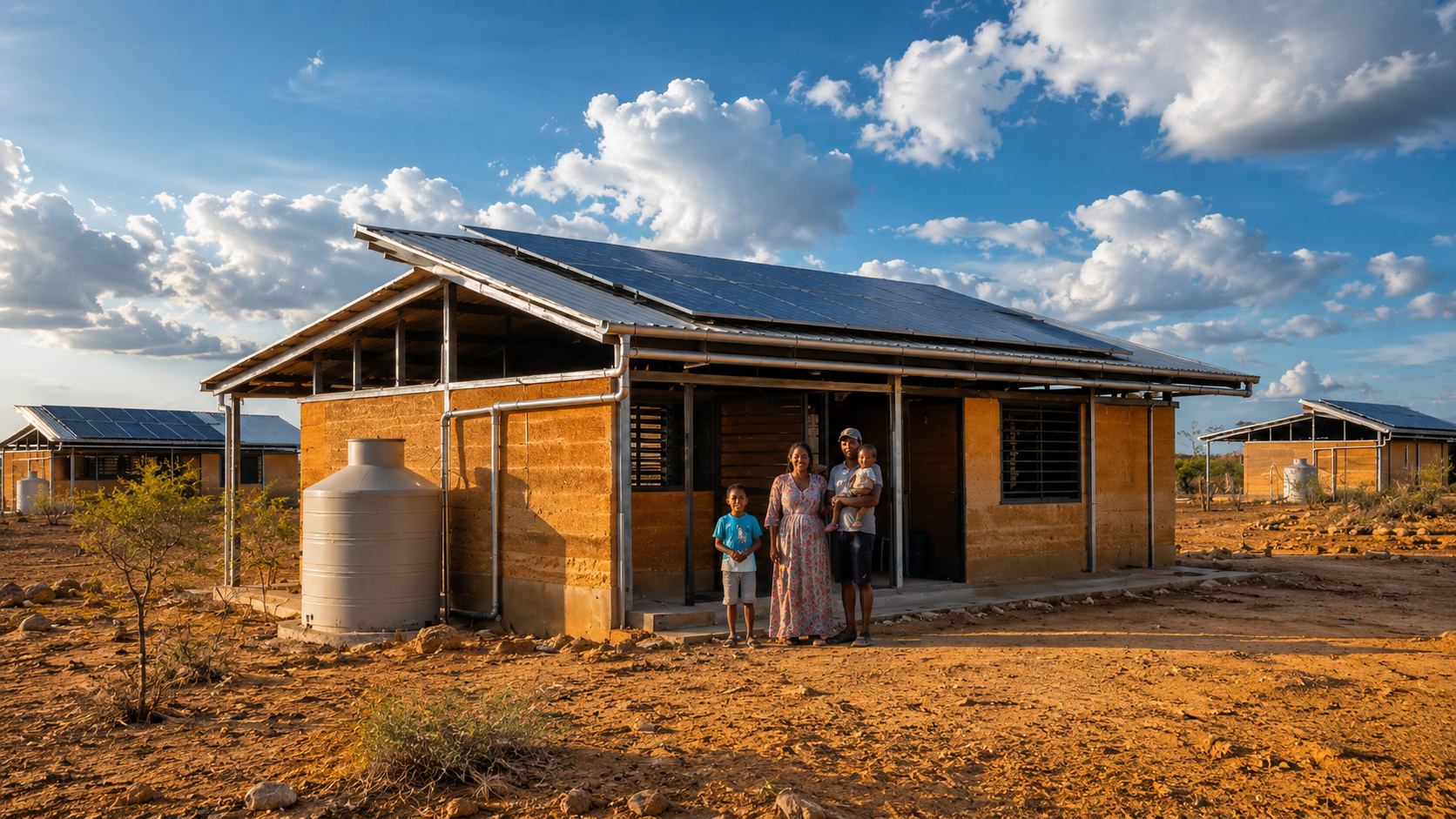

The sustainable houses of Alta Guajira combine rainwater harvesting, solar energy, and dry toilets to reduce basic difficulties, but show that adapted housing depends on maintenance, family participation, and access to equipment.
Thirty sustainable houses of 80 m² were built and delivered to Wayuu families in Uribia, in Alta Guajira, northern Colombia. The units use solar panels, dry toilets, and rainwater harvesting, resources designed for a region marked by drought, heat, and isolation.
Each house was planned for groups of 7 to 10 people and is located on family-owned land. The first phase involved construction and delivery between July 2024 and July 2025, thus all 30 units have already been completed.
The information was released by Cementos Argos, a private company that presented the project file. The Miiroku brings together housing, water, energy, and sanitation in a single proposal for Wayuu communities.
-
Engie Secures 10-Year Use of 625 MWh in Batteries to Store Excess Solar and Wind Energy in Spain by 2028

-
Giant Batteries Take Center Stage in Chile Auction as Company Offers 960 GWh of Solar Energy for Nighttime Use, Aiming to Stabilize Solar Power Supply
-
After a Year of Success in Switzerland, Solar Railway Attracts Italy’s Interest for Clean Energy Transformation
-
Robots Clean Solar Panels in Desert Power Plants Without Water, Preventing Energy Losses


A house made to face drought, heat, and isolation
Alta Guajira faces extreme drought, high temperatures, and long distances to basic services. The situation limits access to water, energy, and sanitation for some families in the region.
The houses were designed to reduce some of these difficulties within the housing itself. Each unit combines solar energy, rainwater collection, and dry toilets, without relying solely on a traditional service network.


The sustainable house project also included hiring local workers, purchasing materials from the region, and ongoing training. This helps to integrate construction into the routine and customs of the families living in the territory.
Rainwater harvesting can reach up to 2,000 liters per rainy month
The system installed in the houses collects and purifies rainwater. The capacity can reach up to 2,000 liters per family each month of the rainy season.
This volume is linked to the months when there is rain in the region. Therefore, it does not represent a fixed amount for the entire year, but creates an important alternative in a place where water is scarce.
Rainwater harvesting shows that a house in a dry area needs to be planned beyond walls and roof. Access to water becomes a central part of sustainable homes.
Dry toilet does not use water for flushing and requires daily care
The dry toilet operates without water for flushing. The choice reduces the use of a limited resource in a region where many families also face a lack of sanitation.
This type of toilet is not an improvised solution. It requires guidance for use and constant care, which is why the project included training with the communities.
Cementos Argos, a private company that presented the project profile, recorded dry toilets and solar energy in 100% of the constructed units.
Steel structure and earth coating combine safety and local customs
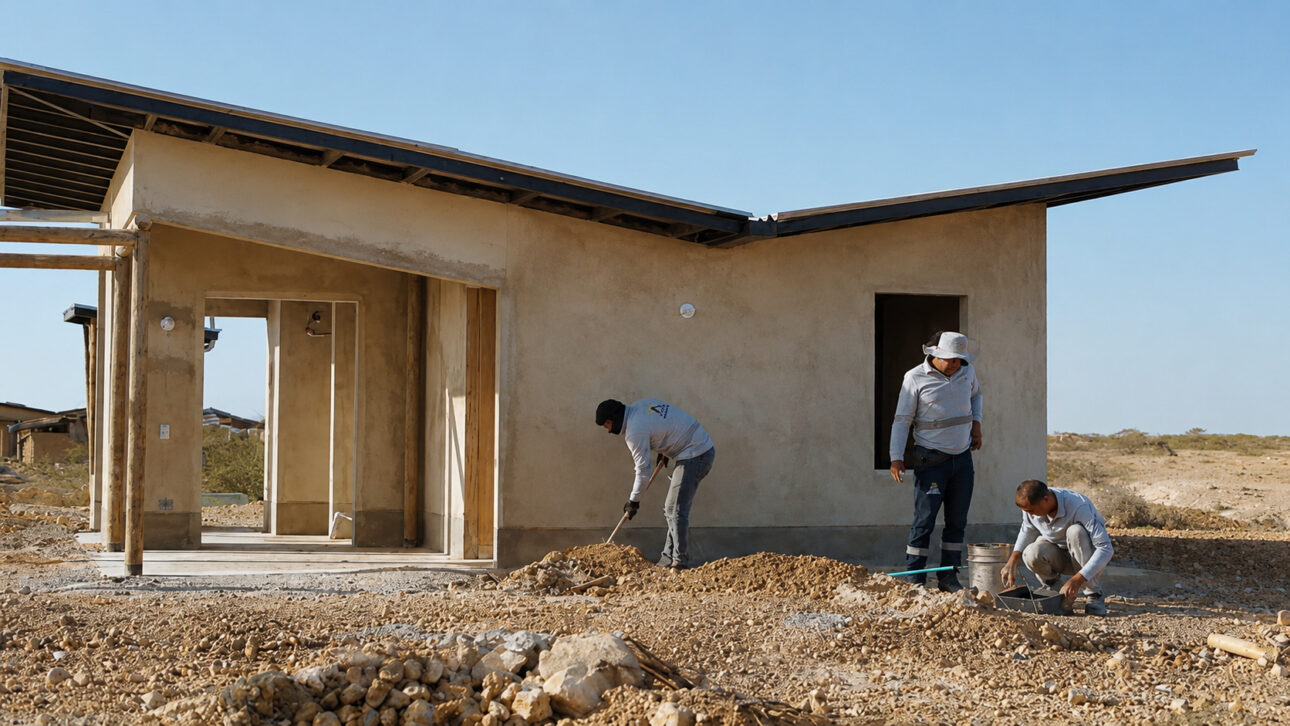
The houses combine an industrialized steel structure with traditional knowledge of the Wayuu communities. The union seeks to deliver more safety to the construction without neglecting techniques related to the territory.
The earth coatings underwent tests in the laboratory and in the field to improve mixtures already used in the region. In simple terms, the earth was adjusted to work better on the walls of the houses.
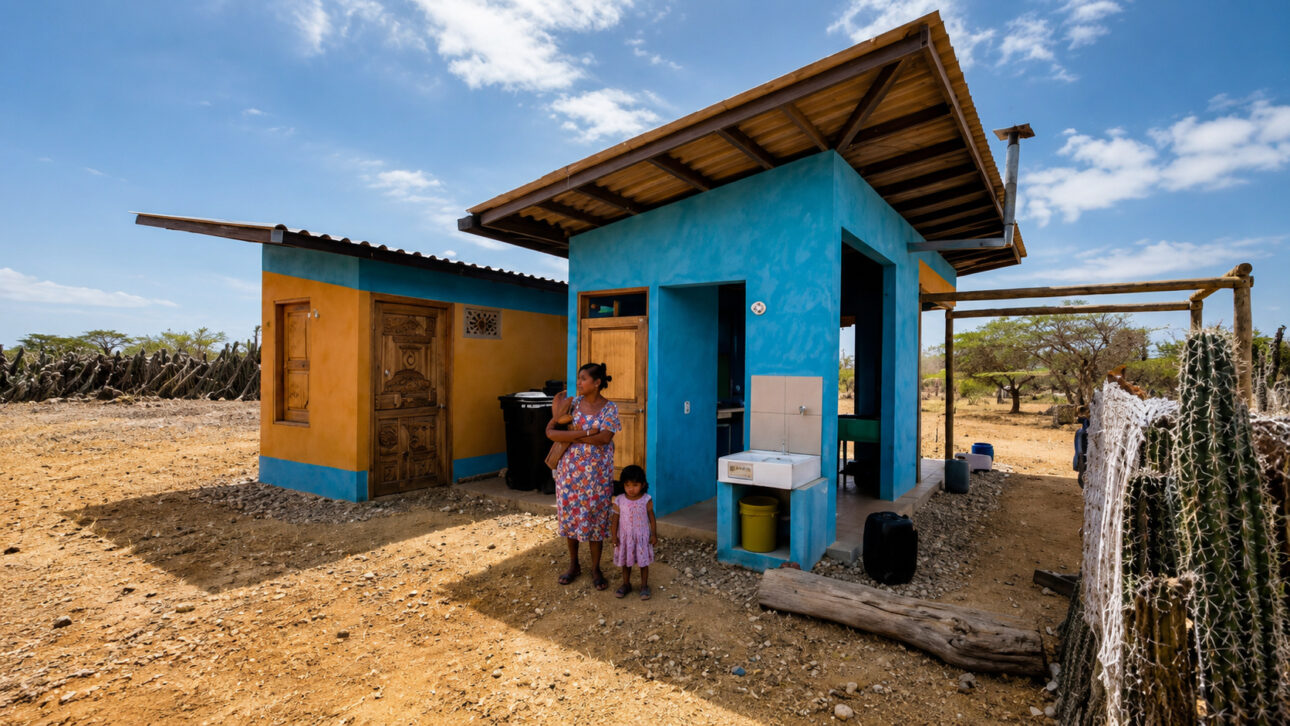
The choice sought to combine speed in construction, resistance, and respect for the way families live. The housing was not designed as a one-size-fits-all construction.
Transporting materials to isolated areas was also part of the challenge
The difficult access made the transportation of materials, tools, and equipment an important stage of the project. In Alta Guajira, the distance and lack of basic services increase the difficulty of building and maintaining a house.
The transportation of supplies was carried out with the participation of the communities. This relationship helps explain why a solution for sustainable houses needs to consider not only delivery but also the use and care after construction.
Solar panels, water collection, and dry toilets require equipment that needs to continue functioning over time. Therefore, training and family participation make a difference in the outcome.
The Brazilian semi-arid region can learn without copying the Colombian house
The Colombian experience should not be automatically copied to any city or rural community in Brazil. Each region has its own rainfall volume, water access, available materials, and specific needs.
The main point is to plan sustainable houses to deal with the local climate. Rainwater harvesting, solar energy, and dry toilets can help, but they need proper design, maintenance, and participation from the people who will live there.
In Uribia, the 30 houses show that water, energy, sanitation, and space for larger families can be considered together. The solution does not eliminate all the region’s problems, but it improves basic conditions within the home itself.
In your opinion, which resource should reach an isolated community first, water, energy, or sanitation, to truly improve the lives of families? Leave your comment and share this publication.