Portuguese
  Spanish


In a mangrove community in Basilan, in the southern Philippines, a solar-powered machine transforms solar energy into ice to preserve fish, reduce losses, decrease dependence on ice bought from afar, and help fishing families sell fish better in the market
In the southern Philippines, fishermen without electrical grid access have started using solar energy to produce almost 1 ton of ice per day. The solution helps prevent fish from spoiling before reaching the market.
The information was released by UNDP Philippines, the UN development program in the country. The machine was delivered in Barangay Lawi Lawi, in the municipality of Lantawan, in the province of Basilan, on February 12, 2026.
The impact is that sunlight generates energy, the energy powers the machine, the machine produces ice, and the ice preserves the fish. For those living far from the electrical grid, this can mean less fish loss and more income from sales.
-
Brazil, known for its river-powered energy, installs solar plant in mountains to boost winter electricity production

-
In Colombia’s desert, 30 families receive 80 m² homes with solar panels, waterless toilets, and rainwater collection systems amid water and energy shortages.
-
Solar Energy Booms in Brazil: Over $60 Billion Invested, 68.8 GW Capacity, 2 Million Jobs Created, Now Second in National Power Grid
-
Engie Secures 10-Year Use of 625 MWh in Batteries to Store Excess Solar and Wind Energy in Spain by 2028


Community where 90% of the population depends on the sea now has ice made with solar energy
Barangay Lawi Lawi is located in Basilan, in the southern Philippines, in a coastal area where fishing supports a large part of the families. The community does not have common access to electricity, making fish preservation a daily challenge.
The most important data shows the strength of this dependency: 90% of the population heavily relies on marine resources for food and income. In such a place, ice is not a luxury. It is an essential part of the work for those who fish.
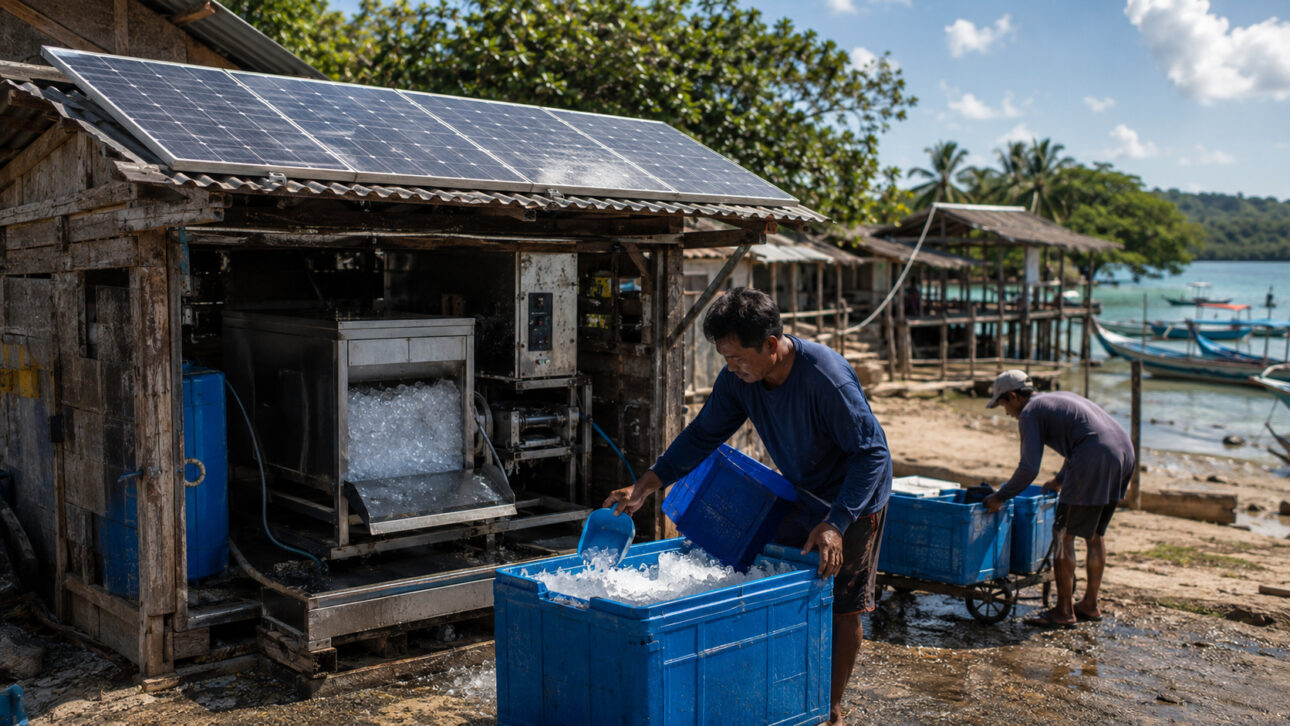
Before the arrival of the solar machine, fishermen had to buy ice in large quantities from nearby cities. This travel increased costs and also left the fish more vulnerable to heat.
With the new structure, ice is available closer to the community. This helps preserve the fish for longer and reduces the risk of the fish losing quality before sale.
Solar-powered machine can produce almost 1 ton of ice per day
The ice block machine uses solar energy to operate. This means it harnesses sunlight to generate the electricity needed for ice production.
The reported capacity is almost 1 ton of ice blocks per day. This number refers to the daily volume that the structure can deliver to support fishermen in Lawi Lawi and neighboring communities.
UNDP Philippines, the UN development program in the country, detailed that the solution reduces reliance on more expensive and distant ice, as well as cuts losses after fishing.
In practice, the technology solves a basic problem. When fish runs out of ice, it can spoil before being sold. When ice is nearby, the fisherman gains more time to bring the product to market.
The sun turns cold in a simple solution for isolated fishermen
The scene seems curious, but it makes sense. Instead of using solar energy just to light lamps or charge equipment, the community uses the sun to produce cold.
This cold appears in the form of ice blocks. The blocks go into boxes, boats, and fish storage points. Thus, the fish is protected for longer during the journey to sale.
The idea shows a less common side of solar energy. It is not only for homes, businesses, or large power plants. In Basilan, solar energy has become a direct tool against food waste.
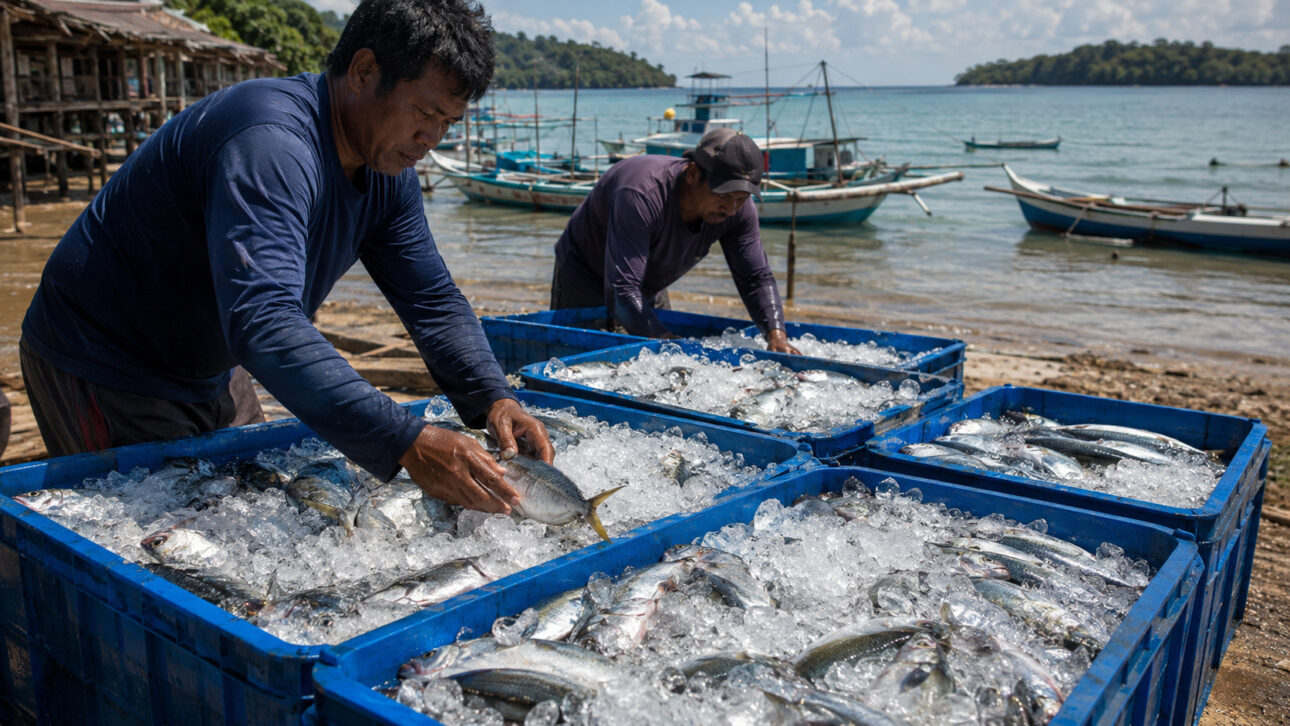
The benefit also reaches the pocket. Less spoiled fish can mean less loss for families who rely on fishing as their main source of livelihood.
Project in Basilan also involves mangrove, patrol boat, and coastal protection
The delivery of the solar machine came along with an action aimed at coastal protection. The local administration also received a vessel for teams working in the defense of marine resources.
The region faces problems such as dynamite fishing, mangrove cutting, and improper waste disposal. Mangrove is vegetation that grows near saltwater and helps protect the coast, as well as providing shelter for marine species.
Barangay Lawi Lawi is one of the 19 coastal communities in the municipality of Lantawan. The local coast stretches almost 3 kilometers and includes a mangrove forest of 40 hectares.
The ice machine was installed along the coast, in an area accessible on foot for residents. This makes it easier for those who need ice close to home and the boats.
Local association received the structure and three communities in Basilan participate in the model
The machine was delivered to the Kasalamatan Agri Fisheries Association, an association in Barangay Lawi Lawi linked to the local community. The group was responsible for the care of the structure.
Lawi Lawi is one of the three communities in Basilan selected to test income solutions related to fishing. The others are in the municipalities of Sumisip and Tipo Tipo.
The project is part of Model Lives, an initiative focused on livelihood solutions for coastal communities in Basilan. Livelihood, in this case, means the set of activities that help families sustain themselves.
This point is important because the machine does not appear in isolation. It is linked to a larger effort to unite income, fishing, and coastal protection in communities that live very close to the sea.
For those who fish, ice close to home can change the sales routine
The biggest effect of the machine is on the routine. The fisherman does not need to rely solely on ice bought from afar to preserve the fish after capture.
When ice becomes more accessible, the fish can reach the market in better condition. This improves the chance of sale and reduces the waste of a food that requires quick care after leaving the sea.
The solution also reduces the pressure on trips to get ice in other cities. For an isolated community, each avoided trip can mean less cost and more time for work.
The story of Lawi Lawi shows how a simple technology can have a concrete impact. In this case, solar energy, ice, and fishing come together to tackle a problem that affects food, income, and community life.
In the southern Philippines, sunlight has ceased to be just a source of electricity and has started to help directly in the conservation of fish. For families who live from fishing, this means more security when taking the fish to market.
If a solar-powered machine can reduce losses in an isolated community in the Philippines, which fishing regions in Brazil could also gain more income with a similar solution? Share your opinion.