Portuguese
  Spanish


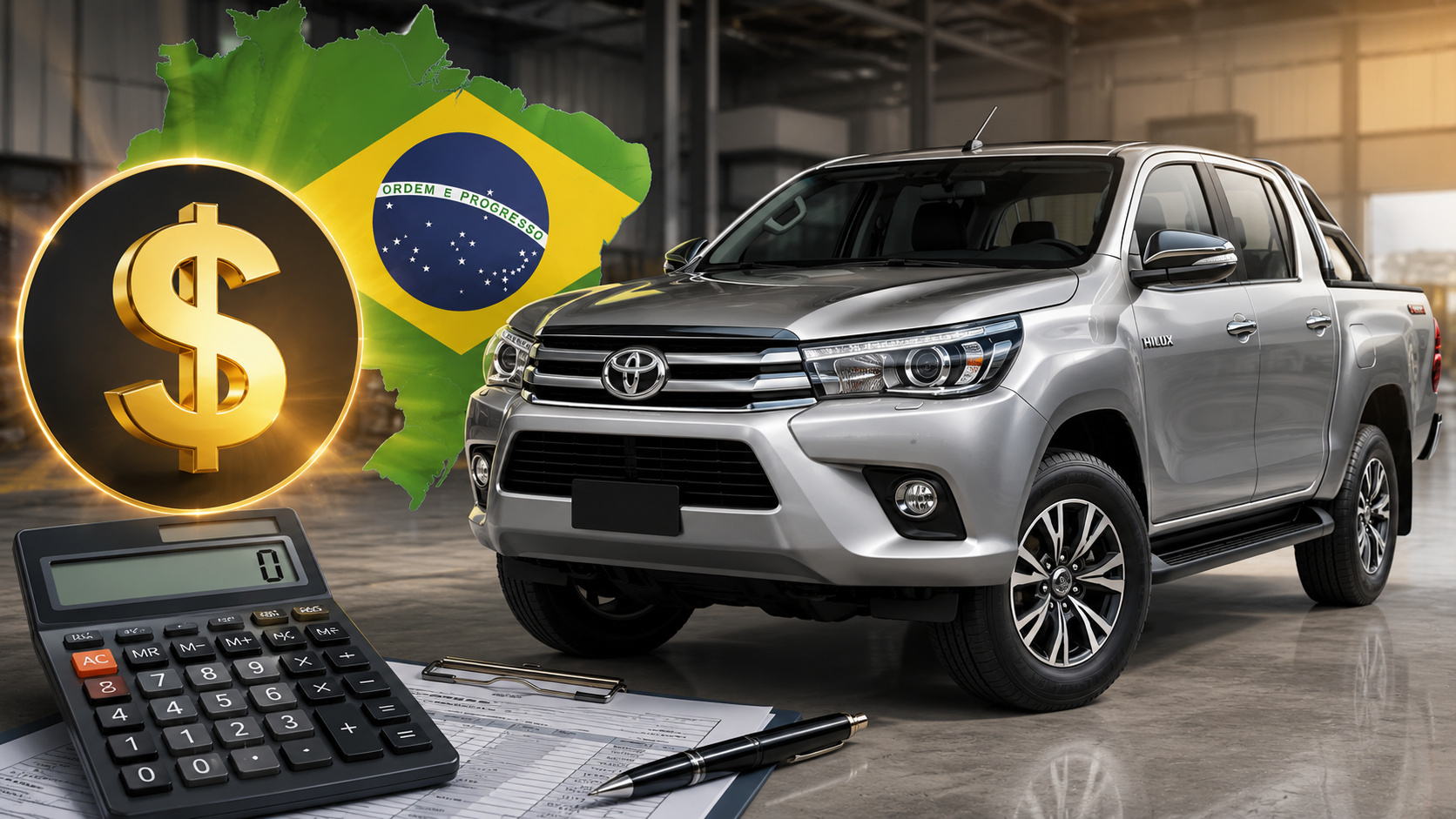

Toyota Hilux of R$ 250 thousand could cost around R$ 127 thousand without taxes in a simulation on the tax burden in Brazil.
The Toyota Hilux has become one of the biggest symbols of the price surge in the Brazilian automotive market. The mid-size pickup, which for years was associated with agribusiness, heavy work, and family use, has started to occupy a price range that is already approaching compact real estate in some cities in the country.
In 2026, the Hilux SRX Plus 2.8 turbodiesel 4×4 automatic entered the Brazilian market with an official price of R$ 346,890, according to Toyota.
But how much of this value actually belongs to the pickup? In an editorial simulation based on an approximate tax burden of 35% embedded in the final price, the Hilux could drop to something close to R$ 225 thousand without the portion corresponding to taxes.
-
1983 Chevrolet Runs Over 100,000 km Without Gasoline, Powered by Wood Chips, Reaches 125 km/h in Airport Test

-
Workshop Converts Giant Tractor Tire Tricycle into a Three-Wheel Drive Hybrid with 36,000-Watt Electric Motor Capable of Climbing Hills

-
Sales of Brazil’s Cheapest Electric Car Halted Before First Deliveries: E-Motors Suspends Emova Easy Due to Import Tax Increase and Rising Freight Costs

-
Nissan Discontinues Qashqai SUV Amid Cost-Cutting, Chinese Competition, and Product Line Review

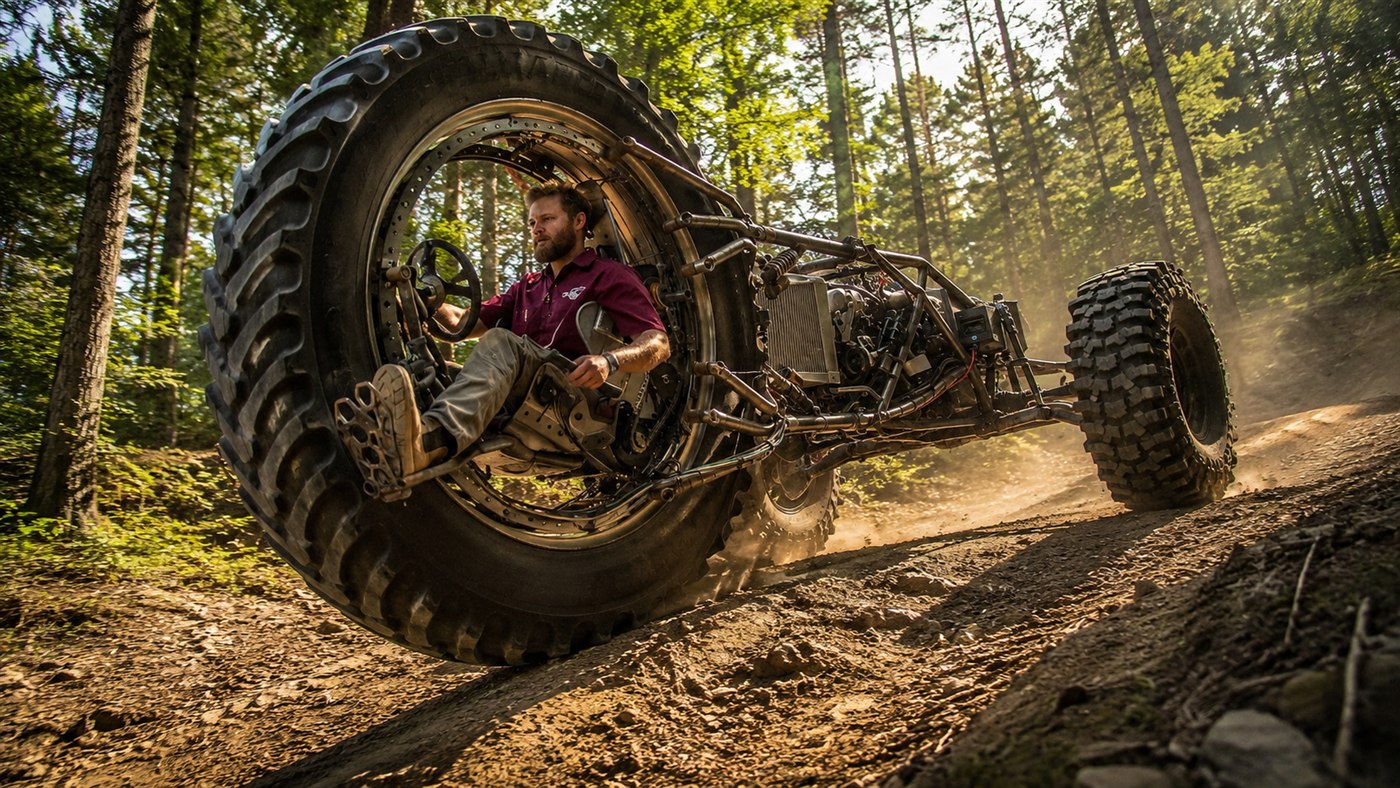


Toyota Hilux SRX Plus 2026 already costs more than R$ 346 thousand in Brazil
The Hilux SRX Plus represents one of the most complete versions of Toyota’s mid-size pickup in the country. The model uses a 2.8 turbodiesel four-cylinder engine, capable of delivering up to 204 hp and about 50.9 kgfm of torque, combined with a 6-speed automatic transmission and 4×4 all-wheel drive.


Besides the mechanics aimed at heavy use, the pickup offers a wide range of equipment, including the Toyota Safety Sense system, autonomous braking, adaptive cruise control, multimedia with 360° camera, electric seats, electronic assistance, and a more aggressive visual package.
Even so, the number that continues to draw the most attention is the price. A top-of-the-line Hilux exceeding R$ 340 thousand shows how pickups have ceased to be just work vehicles and have started to compete with premium SUVs and luxury models.
Simulation places Hilux near R$ 225 thousand without estimated tax burden
To calculate how much the Hilux could cost without taxes, this article uses an editorial simulation based on an approximate tax burden of 35% on the final value of the vehicle.
In Brazil, the tax burden on mid-size diesel pickups is around 48% to 52% of the vehicle’s final price (summing up taxes like IPI, ICMS, PIS, and COFINS applied in cascade throughout the production and sales chain).

Considering Toyota’s official prices and the FIPE Table for the 2026 models, see an estimate of how much a brand new Hilux would cost without the incidence of these taxes:
Price Estimate (With vs. Without Tax)
| Hilux Version (2026 0km) | Current Average Price (With Tax) | Estimated Price Without Tax (~50% less) |
| Hilux Double Cab SR (Entry) | ~R$ 254,200 | ~R$ 127,100 |
| Hilux Double Cab SRV (Intermediate) | ~R$ 314,690 | ~R$ 157,345 |
| Hilux Double Cab SRX (Top of the line) | ~R$ 346,890 | ~R$ 173,445 |
| Hilux Double Cab SRX Plus | ~R$ 357,890 | ~R$ 178,945 |
Calculation does not mean that Toyota would officially sell the Hilux for R$ 225 thousand
The simulated value does not mean that the Hilux would automatically be sold for R$ 127 thousand or R$ 225 thousand in a tax-free scenario.
Besides taxation, the price includes industrial costs, logistics, importation of components, manufacturer’s margin, dealership margin, freight, financial expenses, technological development, and operational costs.
There are also indirect taxes distributed throughout the production chain, which prevents converting the account into an absolute or definitive value.
Hilux became a high-standard pickup truck in Brazil
The price growth of medium pickups went far beyond the common inflation of the sector. The current Hilux does not only compete for work utility customers. It also caters to consumers who use the pickup as a family vehicle, image car, and even a status symbol.

The result is a profound change in positioning. The truck that was once only seen on farms, construction sites, and dirt roads has started to occupy spaces in high-standard condominiums and urban centers.
This transformation helps explain why top-of-the-line versions easily surpassed the R$ 300 thousand barrier.
Turbo diesel engine, 4×4 traction, and electronic package elevated the level of the Hilux
The current Hilux is far from the old generations focused almost exclusively on mechanical robustness. The pickup gained an advanced safety package, electronic driving systems, and greater internal sophistication.
The SRX Plus model offers assistance such as lane departure alert, automatic emergency braking, adaptive speed control, blind spot monitoring, and panoramic view camera.
At the same time, it maintained attributes that made the Hilux famous: strong turbo diesel engine, off-road capability, mechanical resistance, and ability to withstand severe use.
Trucks in Brazil carry a high tax burden
Medium turbo diesel pickups coexist with a heavy tax structure in the Brazilian market. The final price incorporates taxes such as IPI, ICMS, PIS, and Cofins, in addition to indirect costs spread throughout the automotive chain.
Industry experts point out that the tax burden on vehicles in Brazil can vary significantly depending on category, engine type, fuel, and level of component nationalization. In some cases, the total tax burden can exceed 40% of the final value.
In practice, this means that a significant portion of the amount paid by the consumer does not correspond solely to the vehicle itself, but to the set of taxes and accumulated costs until the product reaches the dealership.
Hilux without tax shows how the perception of price changes completely
The exercise of imagining the Hilux close to R$ 225 thousand completely changes the market perception. The truck would still be expensive but would no longer occupy the psychological territory of a vehicle almost inaccessible to a large part of the population.
This contrast helps explain why so many consumers have come to feel that cars and pickups have “moved up a category” in Brazil, even when they continue to belong to the same segment.
The Hilux has become an emblematic case because it combines three strong elements: desire, robustness, and an extremely high price.