Portuguese
  Spanish


Shenzhou-23 Mission took unprecedented rice seeds to the Tiangong station, where China will monitor two generations of the grain in orbit to investigate how prolonged microgravity can affect its genetics, environmental adaptation, and ability to maintain biological identity outside Earth
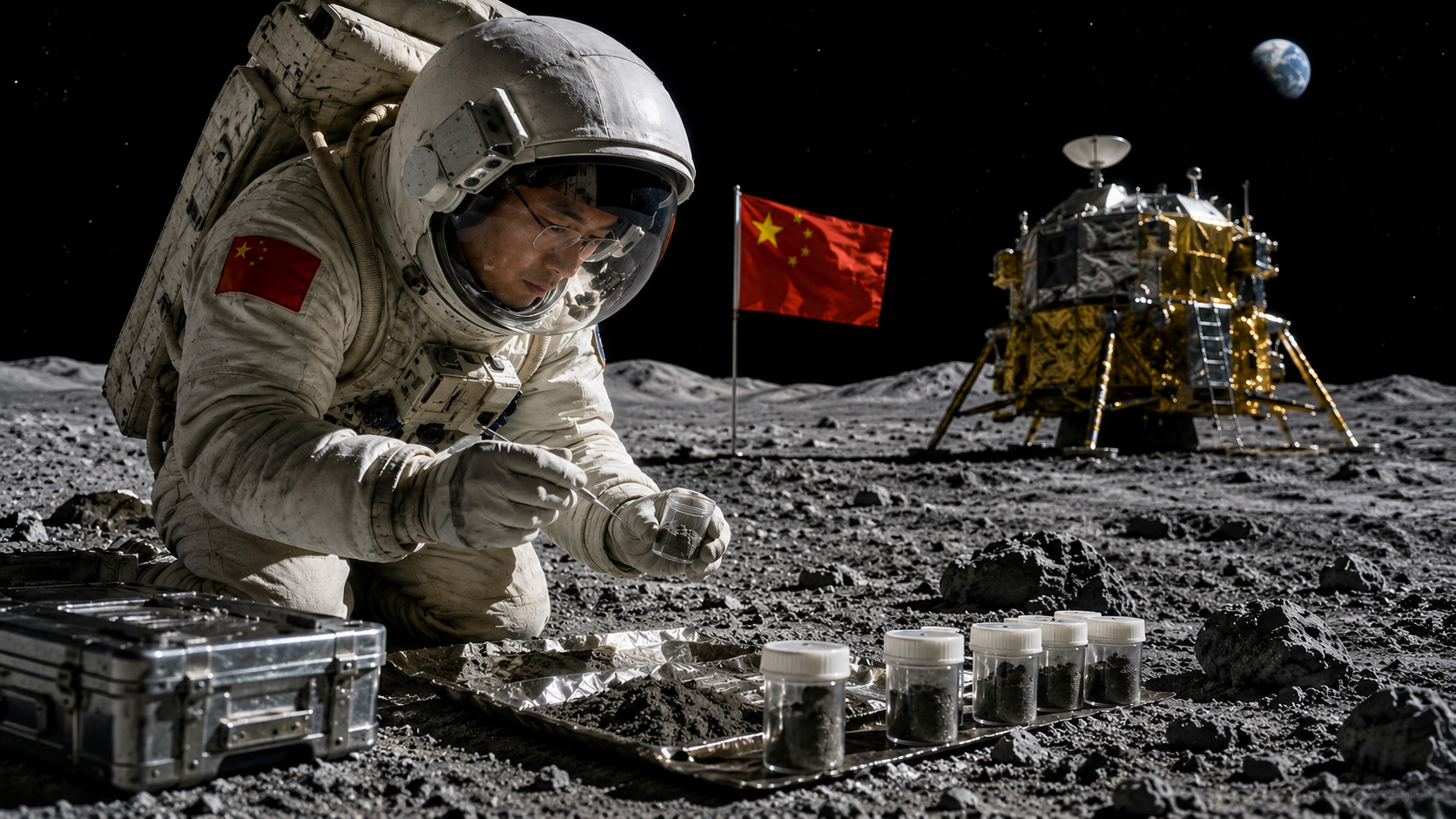
China has initiated one of the most ambitious agricultural experiments ever conducted in orbit. In the early hours of Monday (25), the spacecraft Shenzhou-23 docked at the space station Tiangong, about 400 kilometers from Earth’s surface, with three astronauts and 54 kilograms of scientific experiments.
The mission took rice seeds with no history of space flight for an unprecedented test. Now, Chinese researchers want to cultivate two consecutive generations of the grain in space and observe how prolonged microgravity interferes with the plant’s genes.
Experiment targets rice genetics in orbit
The research received the technical name “Study of the molecular mechanisms of multi-generation genetic stability of rice and the regulation of its environmental adaptability in space”. According to Cang Huaixing, a researcher at the Center for Space Utilization Technology and Engineering, the study seeks to clarify the effects of microgravity on the genetic stability of rice.
-
Rural Worker Spotted “Flying” on a Drone in Brazil

-
Turkish Cave Suggests Neanderthals and Homo Sapiens Shared Cultural Traditions for Millennia; Discovery Unveils Similar Tools, Hunting Techniques, and Shells at a Major Prehistoric Site
-
Burkina Faso Bans NGOs from Photographing Vulnerable People Without Consent and Outlaws Fundraising Campaigns Exploiting Suffering
-
Giant Earthworms up to 2 Meters Long Secretly Sustain Fertility in the Amazon Rainforest


The initiative also continues studies initiated by China in 1987. In 2022, during the Shenzhou-14 mission, scientists completed the first life cycle of rice in orbit. At that time, the seeds germinated, grew, flowered, and produced new seeds in 120 days, with sprouts up to 30 centimeters.
Grain supports part of China’s food security
The experiment gained relevance because rice plays a central role in China’s diet. Currently, the country leads the world in grain production and consumption, with an approximate consumption of 210 million tons.

Along with India, China accounts for 57% of consumption and 59% of global rice production. According to the United States Department of Agriculture USDA, without the Chinese strategic reserve, the global stock-to-use ratio would drop to 19.7%, close to the 17% limit associated with food security by the FAO.
China has been cultivating rice for about 9,000 years
The Chinese connection with rice spans a long agricultural history. Excavations along the Yangtze River indicate that the country has been cultivating the grain for at least 9,000 years.
In the current province of Zhejiang, the people of Hemudu, around 5,000 B.C., were already building granaries to store grains. They also used bone tools to work flooded areas. Since then, rice has organized landscapes, agricultural calendars, and social structures of villages.
Tiangong becomes an agricultural laboratory off Earth
The Shenzhou-23 mission tries to answer a question that remained open after 2022: what happens to the descendants of rice cultivated in space? To monitor this process, one of the astronauts will stay 12 consecutive months on the Tiangong station, enough time to observe two complete generations.
The results may interact with previous research on seeds irradiated in space missions. These studies have already contributed to the development of the so-called sea rice, aimed at saline and alkaline soils. In four years, these varieties occupied 6.67 million hectares that were previously unproductive.
The Tiangong station, whose name means Heavenly Palace, now functions as an unlikely scientific rice field. China, which domesticated rice in the Yangtze plains, takes the grain off Earth in search of answers about food, adaptation, and agricultural future.
After all, if rice has crossed 9,000 years of history in China, how far can it go in the next generations?