






 Portuguese
  Spanish


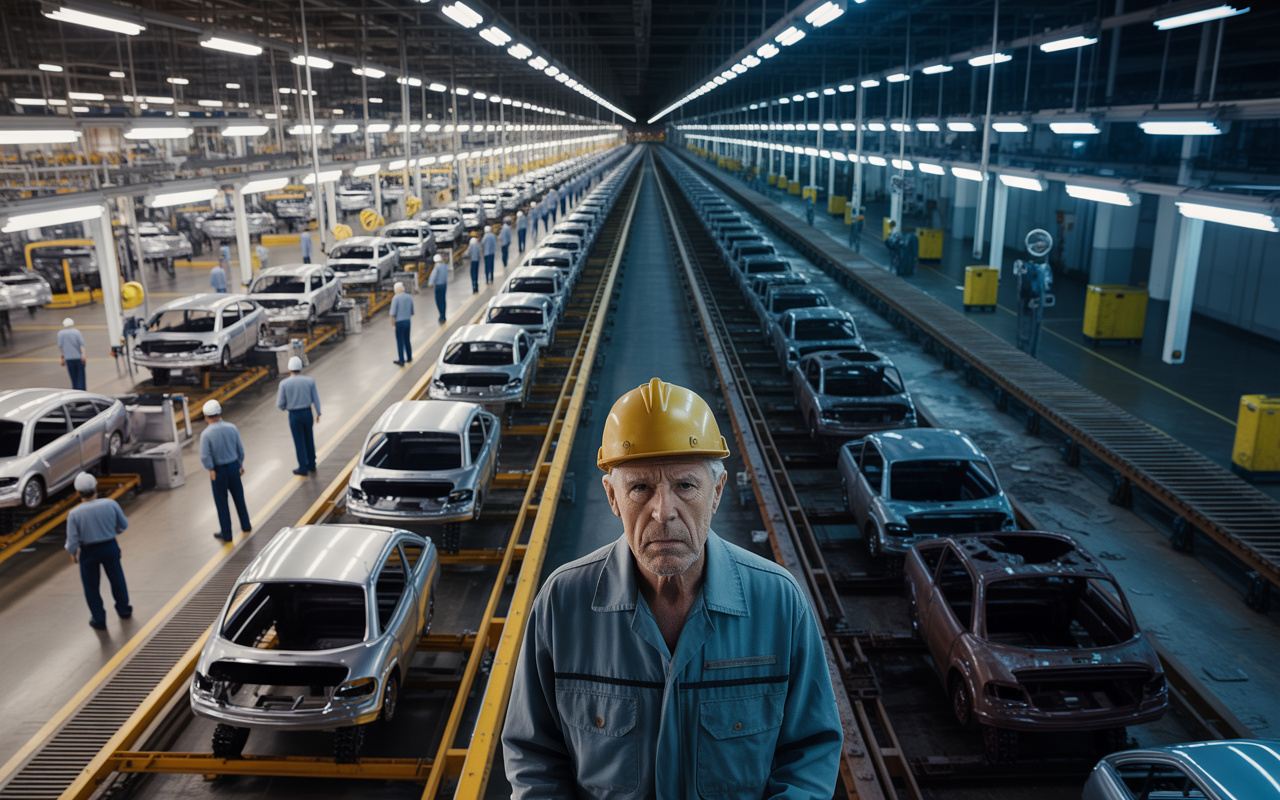


The Automotive and Metallurgical Industry Faces Record Labor Shortage: Factories Rehire Retirees and Struggle Against the Aging Workforce Amid Sector Modernization.
The Brazilian industrial sector is experiencing a little-discussed phenomenon that threatens its productive capacity: the accelerated aging of the workforce. According to data from Dieese and Anfavea (National Association of Motor Vehicle Manufacturers), the average age of professionals in the metallurgical and automotive industry jumped from 36 to 44 years in just a decade, while the number of young apprentices entering factories has fallen by more than 40% since 2015.
This generational gap has caused a domino effect. With the retirement of experienced technicians and the shortage of new qualified professionals, automakers and steel mills face a growing deficit in essential roles — from machine operators and welders to production engineers. The result is delays in assembly lines, increased training costs, and emergency rehiring of retirees.
The Return of Veterans to the Production Lines
The rehiring of retirees has become a reality in several industrial plants in the interior of São Paulo, Minas Gerais, and Paraná — regions that concentrate most of the automotive production in the country. Companies like Volkswagen, Stellantis, and Tupy have created specific programs to bring back workers over 60 years old who have decades of technical experience.
-
1983 Chevrolet Runs Over 100,000 km Without Gasoline, Powered by Wood Chips, Reaches 125 km/h in Airport Test

-
Workshop Converts Giant Tractor Tire Tricycle into a Three-Wheel Drive Hybrid with 36,000-Watt Electric Motor Capable of Climbing Hills

-
Sales of Brazil’s Cheapest Electric Car Halted Before First Deliveries: E-Motors Suspends Emova Easy Due to Import Tax Increase and Rising Freight Costs

-
Nissan Discontinues Qashqai SUV Amid Cost-Cutting, Chinese Competition, and Product Line Review





These professionals, previously seen as replaced by new generations, are now considered key pieces in knowledge transfer. “It is not uncommon to see retired technicians returning as mentors or production consultants. They ensure that the lines do not stop and train the few young people who still arrive,” explains a labor relations specialist from USP.
The Decline of Young People’s Interest in the Industry
Meanwhile, the interest of new generations in the industrial sector is plummeting. Data from IBGE shows that less than 8% of Brazilian youth between 18 and 24 years old say they want to pursue a career in industrial technical areas. Many cite strenuous work, long shifts, and stagnant wages as discouraging factors.
Furthermore, the so-called “digital economy” has attracted young people to more flexible and tech-oriented professions — such as programming, marketing, and design. This mismatch between the profile of the new generation and the demands of traditional industry has created what experts call a “technical vocation blackout”, a phenomenon that is already worrying even industrialized countries like Japan and Germany.
Automotive and Metallurgical Industry Struggles to Modernize the Sector
In the face of the workforce renewal crisis, major manufacturers have been accelerating investments in automation and digitization of assembly lines. Welding robots, smart sensors, and predictive maintenance systems are replacing part of the operational roles, but experts warn that the lack of qualified human labor continues to be the main bottleneck.
According to the National Confederation of Industry (CNI), about 75% of Brazilian companies report difficulty hiring professionals with technical expertise and knowledge in mechatronics, robotics, and industrial control. Even with technological modernization, machines still depend on technicians who know how to operate and interpret them.

Retraining Programs Attempt to Reverse the Situation
To tackle the deficit of professionals, institutions like Senai and the S System have launched emergency retraining programs. In 2024 alone, Senai trained over 400,000 technicians in industrial areas, a record number, but still insufficient to meet national demand.
Companies have also created internal corporate schools, inspired by Asian models, with curricula focused on immediate practical application on the shop floor. Despite the efforts, the pace of professional replacement remains far below what is needed to sustain the current production rate.
The Uncertain Future of Brazilian Industry
Economists warn that if nothing is done, the lack of generational replacement could affect Brazil’s competitiveness on the global stage. With the transition to electric vehicles and green reindustrialization, the demand for professionals specialized in automation, clean energy, and advanced metallurgy is expected to grow even more.
Anfavea estimates that by 2030, 200,000 new hires will be needed in the automotive chain alone. The problem is that the country produces less than half of that number each year.
“It is not just a matter of jobs, but of industrial sovereignty. Brazil could lose its place on the global production map if it cannot replace its qualified workers,” warns Rafael Cagnin, an economist at IEDI.
A Portrait of Urgency and Opportunity
The labor shortage in the automotive and metallurgical industries reflects a larger challenge: the need to reinvent technical education and value industrial work. Amid silent factories and increasingly present robots, the future of national production may depend on a new pact between technology, youth, and qualification — before the assembly lines come to a complete halt.








A culpa também é dessas empresas, que começaram a contratar dois funcionários pela metade do valor de um bom funcionário, só que o salário é pouco pelo que se é exigido ou pelo tempo que tem que ter de estudo e experiência para consolidar um bom trabalho.
As empresas plantaram o que estão colhendo hoje. Assim como os supermercados, que querem pagar pouco e reclamam de não ter funcionários.
Trabalhava em uma montadora de automóveis e ganhava em média 3.000,00 isso com horas extras.
Sempre procurei fazer o melhor, mas mesmo assim me demitiram por acharem que eu estava ganhando um absurdo e poderiam contratar outra pessoa para ganhar bem menos.
Agora acho bem feito eles estarem com dificuldades para conseguirem pessoas para trabalhar nas linhas de produção.
O castigo vêm a cavalo.
Aqui se faz, aqui se paga.
A notícia devia ser assim: Por falta de um salário decente e patrões que querem escravos, está faltando interessados nas vagas.