Portuguese
  Spanish


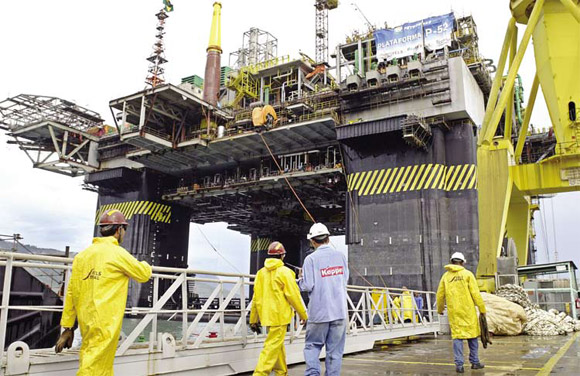

Shipbuilding Industry Shows Signs of Recovery, According to Experts, It Will Be a More Efficient Industry Less Dependent on Oil.
After a long period of crisis, the Brazilian shipbuilding industry is projecting a recovery starting in 2020. The sector, which lost 330,000 direct and indirect jobs in five years, is trying to reduce its dependence on oil exploration and reactivate dozens of idle shipyards. In Rio, 50,000 jobs will be created with the decommissioning of 21 platforms in the Campos Basin.
Cranes idle, platforms and the shipyard yard without movement, it seems there is a lack of work even for the employees who survived the wave of layoffs. The most recent occurred in August, affecting the Atlântico Sul shipyard in Recife, where more than 3,000 employees were laid off.
-
Lenovo Unveils Legion Y700 Tablet with RGB Backlighting, 5G, and SIM Card Support
-
Lenovo Unveils Legion Y700 Tablet with RGB Backlighting, 5G, and SIM Card Support
-
Northern Brazilian City Prepares Task Force to Mitigate El Niño Impacts with Stockpiled Fish, Drone Monitoring, Firefighting, and Water Supply Reinforcement in Remote Areas

-
Brazil to Issue “Panda Bonds” in China, Aiming to Raise Up to 5 Billion Yuan at Lower Interest Rates Than Dollar Debt

The shipbuilding industry, which generated 410,000 direct and indirect jobs in 2014, now employs just over 80,000 people in the country.
Rio de Janeiro accounts for 40% of the Brazilian shipbuilding industry; therefore, it was the state that felt the effects of the crisis the most. Currently, out of the 19 major shipyards, only the naval complex in Itaguaí has any vessel under construction.
It currently has five submarines, including the first nuclear-powered submarine of the Brazilian navy, one of the largest defense projects in the country. The other shipyards have been deactivated or survive solely on ship repairs.
Today, only one-third of what used to be produced is being made, with a nearly 50% reduction in the workforce, and there is only one ship undergoing repairs in a shipyard that has space and capacity for ten, said Luiz Almeida, Shipyard Superintendent.
The recent history of the Brazilian shipbuilding industry is closely linked to oil exploration and production.
The sector was revitalized in the early 2000s with the policy of prioritizing the construction of ships, rigs, platforms, and support vessels for Petrobras.
According to Sinaval, which brings together companies in the sector, the number of job vacancies in shipyards plummeted from 82,000 in 2014 to 17,000.
The crisis coincided with the evolution of Operation Car Wash. The revelation of corruption cases involving Petrobras, construction companies, and suppliers led to the cancellation of billion-dollar contracts.
Another factor that negatively impacted was the fluctuation of oil in the international market, which peaked when the price of a barrel hit $116 in February 2013 and plunged into crisis when the value collapsed to $30 in early 2016. Today the price stands at just under $60.
The forecast is that the sector will take another 2 years to recover from the decline; according to experts, it will be a shipbuilding industry that is more efficient and less dependent on oil.
“Although we believe we can resume activities in the shipyards of Rio de Janeiro, it is very likely that we will not reach that peak or require that number of people working, due to advancements in technology.” said the oil and gas manager at Firjan, Karine Fragoso.
With the discovery of new wells and Petrobras’ auctions and important measures being taken, it is believed that by mid-2020 we will be “navigating in calmer waters”.
Petrobras Starts Selling 11 Production Fields in Shallow Waters of the Campos Basin