Portuguese
  Spanish


Inflation once again put pressure on Brazilian families’ budgets in April. According to data released by the Brazilian Institute of Geography and Statistics (IBGE), the National Consumer Price Index (IPCA) registered an increase of 0.67% in the period, driven mainly by the rise in prices of the Food and beverages group.
Although the index showed a slowdown compared to the 0.88% registered in March, accumulated inflation for the year already reaches 2.60%, while the result for the last 12 months reached 4.39%. Furthermore, the rise in food prices keeps the market attentive to the impacts on consumption, interest rates, and the Brazilian economy.
Food and beverages lead inflation increase
The Food and beverages group had the greatest influence on April’s IPCA.
Furthermore, the increase in basic product prices continued to directly pressure the population’s cost of living.
-
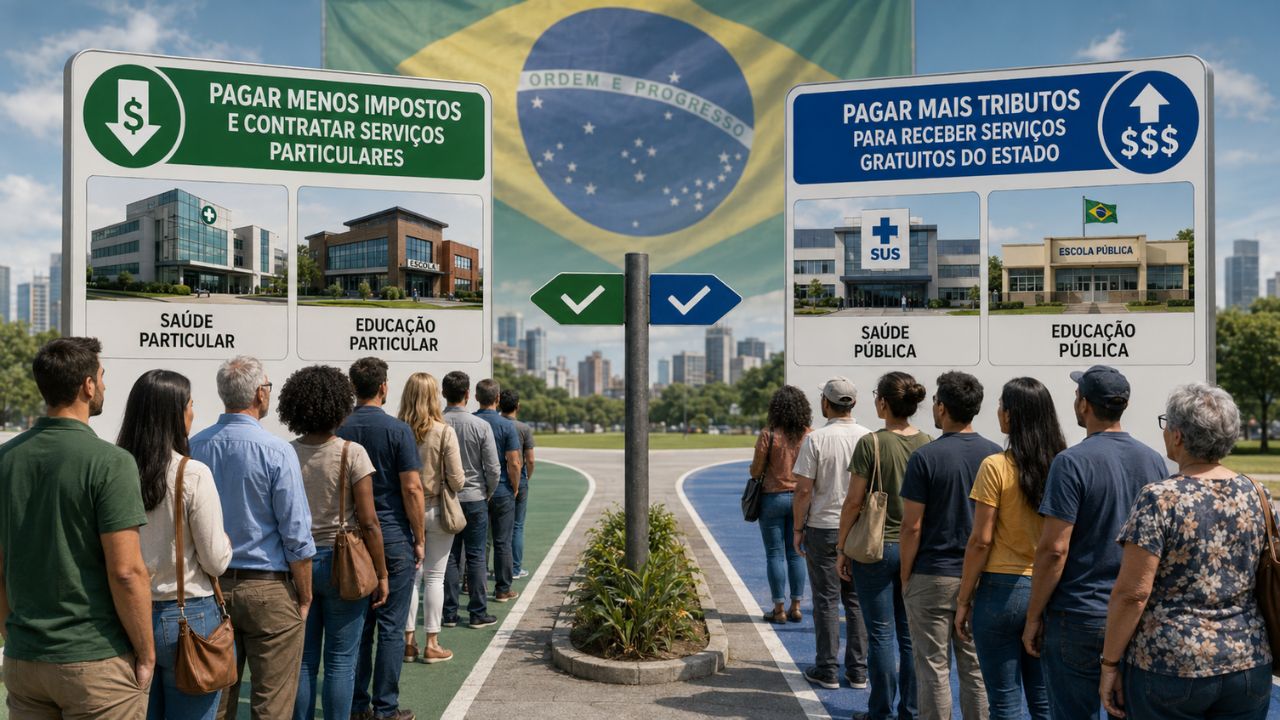
Half of Brazilians Prefer Lower Taxes with Private Health and Education, While 44% Opt for Higher Taxes for State-Provided Services, Datafolha Survey Reveals

-
Brazil’s Most Expensive Toll Rises to R$ 40.60 on Route from São Paulo to the Coast, Nearly Matching Bus Fare to Santos

-
As Brazil Expands Social Welfare, Survey Reveals 40% Blame Poverty on Laziness, While 58% Cite Lack of Opportunities

-
China Tightens Control on Antimony, Driving Prices from $22,000 to Nearly $40,000 per Ton as U.S. Rushes to Bolster Strategic Reserves



Experts state that food has a strong weight in family budgets, especially among lower-income consumers.
In this context, any increase in this segment generates an immediate impact on inflation and consumption.
What is IPCA
The IPCA, calculated by IBGE, is considered the main official inflation indicator in Brazil.
The index measures price variations of products and services consumed by Brazilian families.
Furthermore, the indicator serves as a reference for economic decisions, monetary policies, and the definition of the basic interest rate.
Experts monitor the IPCA to assess the behavior of the economy and the population’s purchasing power.
Inflation slows down, but remains high
Although April’s index slowed down compared to March, the scenario still raises concerns in the financial market.
Furthermore, accumulated inflation over 12 months remains above the center of the target set by the Central Bank.
Experts state that a punctual slowdown does not necessarily mean a definitive relief in prices.
Therefore, investors remain attentive to the upcoming economic indicators.
The impact of inflation on daily life
Inflation directly affects consumers’ daily routines.
When prices rise, families need to spend more to maintain the same consumption pattern.
Furthermore, basic products such as food, beverages, and essential items end up weighing even more heavily on the household budget.
In this scenario, an increase in the cost of living reduces the population’s purchasing power.

The weight of food in the economy
Food has a great influence on Brazilian inflation indices.
Furthermore, climatic factors, logistical costs, agricultural production, and international fluctuations can quickly affect prices.
Experts state that the food sector is usually one of the most sensitive to economic variations.
For this reason, price increases in supermarkets frequently generate concern among consumers and investors.
Accumulated inflation for the year reaches 2.60%
With April’s result, accumulated inflation for the year reached 2.60%.
Furthermore, the accumulated index over 12 months reached 4.39%, reinforcing a scenario of attention for economic authorities.
Experts state that the inflation trajectory will continue to be one of the main factors monitored by the Central Bank in the coming months.
In this context, decisions on interest rates remain directly linked to price behavior.
How inflation influences interest rates
The advance of inflation usually impacts the country’s monetary policy.
When prices rise above expectations, the Central Bank may keep interest rates high to try to curb consumption and slow down inflation.
Furthermore, higher rates influence credit, investments, and economic activity.
Experts state that inflation and interest rates remain central elements for the Brazilian economy.
Financial market monitors upcoming data
Investors closely follow the economic indicators released by IBGE.
In addition, inflation results help the market project scenarios for interest rates, economic growth, and consumption.
Banks, companies, and analysts use this data to adjust financial expectations and investment strategies.
In this scenario, the behavior of the IPCA has a strong influence on the markets.
The impact on household consumption
With higher prices, consumers tend to reduce spending and prioritize essential items.
Moreover, high inflation decreases purchasing power and affects sectors linked to retail and services.
Experts state that more expensive food usually causes an even greater impact among lower-income families.
Therefore, the cost of food remains one of the population’s main economic concerns.
Inflation in Brazil in recent years
Brazil has been facing significant fluctuations in inflation rates in recent years.
Furthermore, internal and external factors influenced the prices of energy, food, fuel, and services.
Among the main factors are:
- Global rise in commodities
- Exchange rate fluctuations
- Logistics costs
- Climatic issues
- Unstable international scenario
All these elements directly affect inflation behavior.
The role of IBGE
The Brazilian Institute of Geography and Statistics is responsible for collecting and disseminating the country’s main economic indicators.
In addition, the agency monitors prices in different Brazilian regions to calculate the IPCA.
Experts state that the data released by IBGE are fundamental for decisions made by the government, companies, and the financial market.
In this context, the institute plays a strategic role in national economic analysis.
What most concerns economists
Although the slowdown in April is considered positive, economists still express concern about the persistence of inflation in essential sectors.
Furthermore, food behavior continues to be closely monitored.
Among the main points monitored are:
- Food prices
- Interest rate policy
- Household consumption
- Economic growth
- International scenario
All these factors are expected to influence future inflation results.
The relationship between inflation and purchasing power
When inflation rises, money loses value over time.
This means that consumers can buy fewer products and services with the same income.
Moreover, wages often do not keep pace with price increases at the same speed.
Experts state that persistent inflation can widen economic inequality and reduce quality of life.
The Brazilian economic scenario
The IPCA result reinforces that the Brazilian economy continues to face significant challenges.
Furthermore, high inflation demands attention from monetary and fiscal authorities.
Experts believe that the coming months will be decisive for evaluating the pace of price deceleration and possible impacts on interest rates and economic growth.
In this context, consumers and businesses continue to monitor the evolution of the national economic scenario.
What to expect from inflation in the coming months
Analysts believe that inflation will continue to be one of the central themes of the Brazilian economy in 2026.
Furthermore, the behavior of food, fuel, and services should influence the next IPCA results.
Among the most observed factors are:
- Climate and agricultural production
- Interest rate
- Domestic consumption
- International scenario
- Commodity prices
All these elements should directly impact inflation rates.
Inflation remains in the spotlight
Even with a slowdown in April, inflation continues to pressure the budget of Brazilian families and keep the financial market on alert.
Furthermore, the rise in food prices reinforces concerns about the cost of living and the purchasing power of the population.
While the Central Bank monitors price behavior, consumers continue to feel the effects of inflation in their daily lives.
Finally, the result released by the IBGE shows that inflation control will continue to be one of the main challenges for the Brazilian economy in the coming months.