






 Portuguese
  Spanish
  4 min of reading
  0 comments


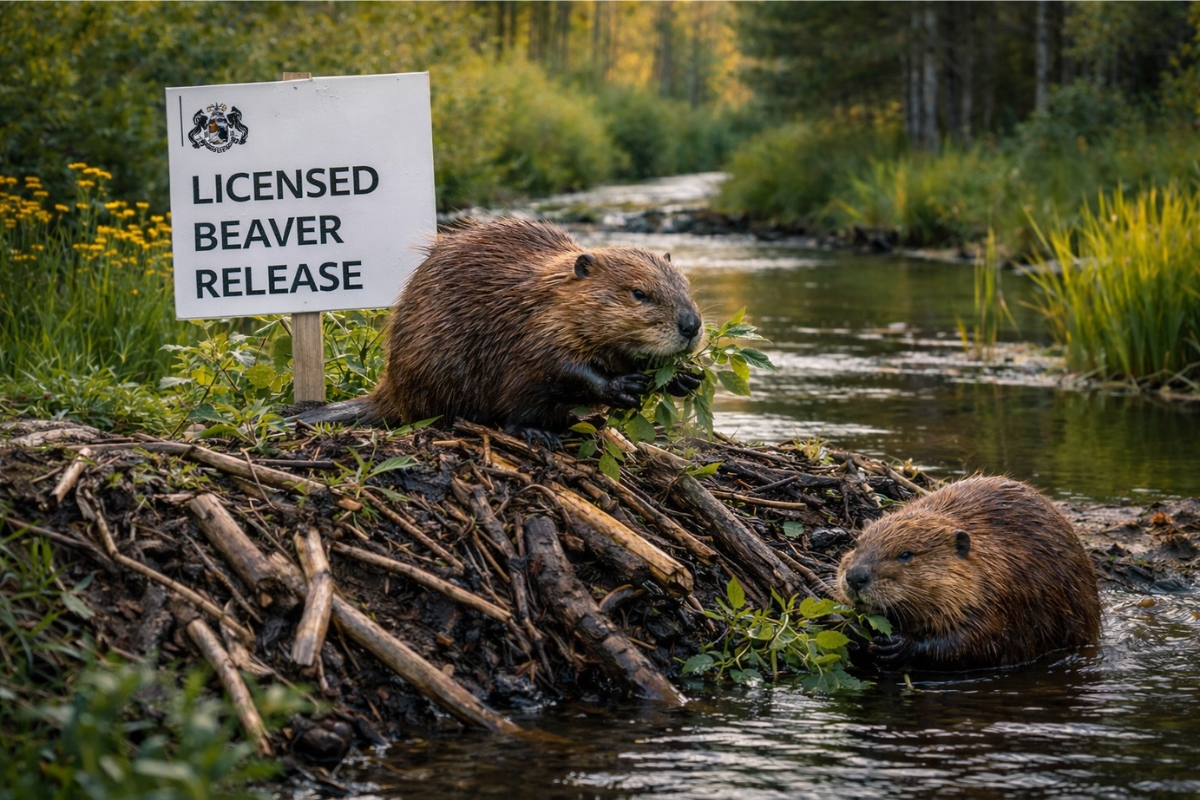
The New Rule Opens Space For Licensed Reintroductions And Puts The Beaver At The Center Of River And Wetland Restoration In England
England has paved the way legally for the reintroduction of beavers with licenses, after a long period of disputes and uncertainties about how to handle the animal in the wild.
The change reorganizes how the country treats rivers, floodplains, and biodiversity, as the beaver not only occupies the environment, it transforms it.
In practice, the issue moves from the realm of informal controversy into the field of official control, with clear rules, responsibilities, and management to reduce conflicts.
-
Survivor of 1966 SS Daniel J. Morrell Shipwreck in Lake Huron Recounts 38-Hour Ordeal in Extreme Cold

-
The Greatest Hoax in World Cup History? The Film That Denied Brazil’s 1958 Victory and Exposed How Fake Evidence Can Seem Convincing on TV
-
Fake South Korean Online Stores Offer Shopping Thrill Without Spending Money or Receiving Products
-
The War of Jenkins’ Ear: How a Severed Ear Sparked One of the 18th Century’s Most Unusual Conflicts


England Unlocks The Reintroduction And Places The Beaver Within The Law
License authorization changes the landscape for environmental projects that aim to return the beaver to areas where it no longer existed.
This way, the animal’s presence no longer depends on isolated initiatives and instead follows a formal path, with assessment and control.
The beaver will be treated as part of an official ecological recovery strategy, focusing on rivers and wetlands.
The Beaver Does Not Just Live In The River, It Redesigns The River With Dams And Channels

The beaver acts as an ecosystem engineer, altering the environment through structures that affect water flow.
By reducing the current speed, it creates flooded areas and sections with slower water, changing the site’s dynamics.
This type of transformation can favor habitats and enhance conditions for different forms of life around the river.
The Image Turnaround, From Problem Animal To Environmental Tool
For years, the beaver was associated with the risk of damage and conflicts, especially in rural areas and places with agricultural use.
Now, licensed reintroduction opens space for a different interpretation where the animal is seen as a restoration tool.
The shift is significant because the beaver does not just provide presence; it delivers environmental transformation.
What The License Changes For Conservation Projects And For Those Living Near Rivers

Licensing makes the process more predictable and establishes a formal path to approve and monitor reintroductions.
This helps to distinguish locations where the beaver can bring benefits from areas where impacts may be difficult to control.
The measure also creates a balance between ecological recovery and the need to protect human routines and structures.
How Control Works When The Beaver Begins To Cause Real Impact
The procedure stipulates that reintroduction must be accompanied by a management and monitoring plan.
The idea is to allow ecological gains while maintaining tools to act when there are undesirable effects.
This format reduces the risk of allowing the problem to grow unaddressed, especially in sensitive areas.
Where Conflicts Arise: Flooding, Trees, And Productive Areas On The Frontline
The most common conflicts involve flooding, impacts on agricultural areas, and damage to trees in locations near rivers.
Situations related to drainage and channels also arise because the beaver can alter water behavior.
Therefore, the issue requires practical attention, as the animal can generate benefits in one area and problems in another.
What Can Happen Now With More Beavers Returning To Nature
With The Legal Path Opened, monitored projects may become more common in regions where river recovery is a priority.
The presence of the beaver can accelerate changes in the environment, creating wetlands and redesigning sections of the territory.
At the same time, progress relies on effective management, as the balance between benefit and conflict is part of the challenge.
England opens a new chapter by allowing licensed reintroductions and placing the beaver at the center of an ecological restoration strategy.
The change affects rivers, wetlands, and biodiversity, and also redefines how the country deals with a species that actively alters the landscape.
Institutional information is available at Natural England, on the Beavers in England page of the UK government.





-

-

-

16 people reacted to this.