Portuguese
  Spanish


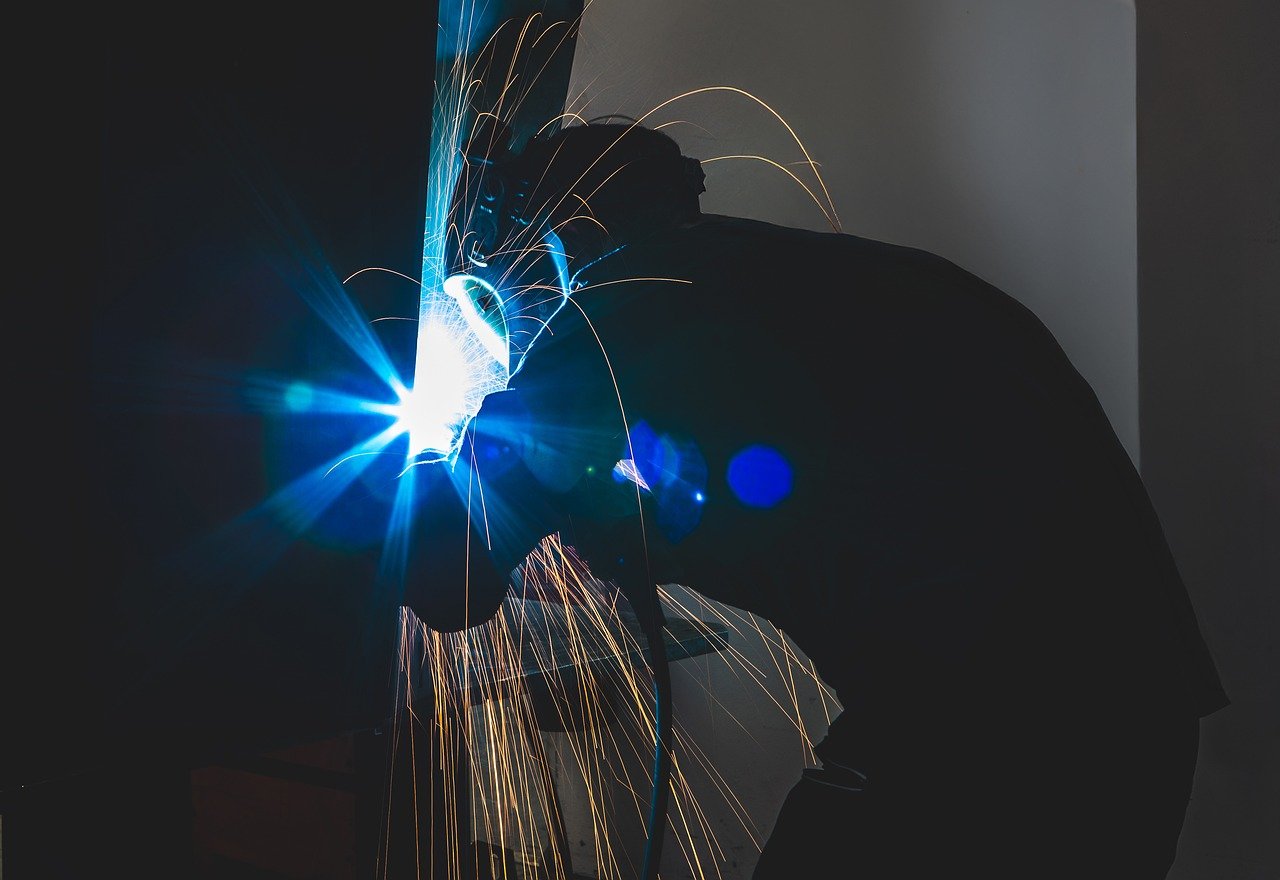

China Develops Process to Produce Steel 3,600 Times Faster and Without Coal. Technique Promises Revolution in Industry and Progress in Sustainability. See How It Works
For centuries, steel production has followed the same path: blast furnace, coal, and a lot of time. The traditional process uses crushed iron ore, which is heated to over 1,300 °C in ovens powered by coke — a derivative of coal. This combination generates a chemical occurrence essential for extracting iron from the ore.
But this method comes at a high cost. Steel production takes between five and six hours. Additionally, it is extremely polluting. The steel industry accounts for about 7% to 9% of global carbon dioxide emissions, according to the World Steel Association. Now, a new technique developed in China promises to change this scenario.
Steel Production in Six Seconds, Without Coal
Professor Zhang Wenhai and his team have discovered a new method for steel manufacturing. The process completely eliminates the use of coal and reduces production time to just three to six seconds. That’s right: seconds, not hours.
-
Engineers Develop Fridge-Sized Machine to Produce 95-Octane Synthetic Fuel from Air and Water, Aiming to Sustain Combustion Engines Without Oil

-
Two-Armed Robot Uses AI to Reassemble Destroyed Pompeii Frescoes, Solving an “Impossible” Puzzle
-
New Law in Brazil Requires Breaks for Type 1 Diabetes Management at Work, School, and Public Exams

-
Scientists Confirm “Greening” of Antarctica: Ice on the World’s Coldest Continent Turns Green as Mosses Multiply Over Tenfold in Four Decades


The innovation occurs with the use of ultrafine iron ore powder. This powder is directly injected into the furnace via a vortex launch. When launched in a superheated environment, the material undergoes an almost immediate chemical occurrence. The iron particles melt into small droplets and fall to the base of the furnace, ready to become steel.
Flexible and Strategic for China
Another positive point of the technique is its specificity. It works with iron minerals of different qualities, both low and high-grade. This has a significant strategic impact for China.
Today, the country relies on imports of high-grade ore, mainly from Australia, Brazil, and African countries. With the new method, China can take advantage of its own reserves, which generally have lower quality. This could reduce external dependency and strengthen steel production domestically.
Less Energy, Less Emission
In addition to being faster, the technique is also cleaner. By eliminating coal, the process consumes up to a third less energy. This change aligns with China’s environmental goals, which aim to achieve carbon neutrality by 2060.
The reduction in energy use and the elimination of fossil fuels make the new method more sustainable. This innovation could also influence other sectors that depend on steel, such as construction, the automotive industry, and major infrastructure projects.
Global Leadership in Transformation
China is already the largest steel producer in the world. More than half of the world’s steel comes from there. With this new technology, the country can further strengthen its leadership. But now, with an important differentiation: sustainability.
If the technique is successfully scaled, it could influence other countries. The steel industry is one of the most polluting on the planet. A change of this magnitude could have a global impact, with other producers adopting similar practices.
The cascading effect could decouple steel production from intensive carbon use. This would be a significant step toward a greener economy.
The Chinese advance shows that even heavy industrial sectors can change. Innovating, adapting, and evolving are real possibilities when there is need and vision for the future.
Of course, transforming this experiment into large-scale production will not be simple. There are economic, technical, and regulatory challenges. But the discovery already opens up a new possibility. A cleaner and faster pathway to one of the most used materials in the world. China, with this new technique, may be leading the way.
With information from Jason Deegan.