






 Portuguese
  Spanish
  4 min of reading
  0 comments


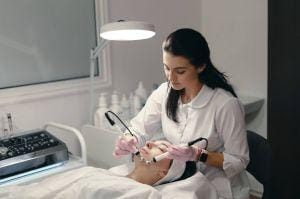
Technological Innovations in Aesthetic Medicine Drive Non-Invasive Aesthetic Treatments, Such as Laser Hair Removal and Mechanical Lymphatic Drainage.
The use of technology is transforming the aesthetics sector, offering new possibilities with less invasive treatments. Patients are increasingly interested in options such as botulinum toxin and hyaluronic acid, attracted by the effectiveness and shorter recovery time of these procedures. This growing interest is reflected in the global aesthetic medicine market, which was valued at US$ 82.46 billion and is projected to grow at a compound annual growth rate (CAGR) of 8.3% between 2024 and 2030.
Technological advancements have been fundamental to this expansion, enabling the development of innovative solutions that enhance patient experience. Procedures such as laser treatments and dermocosmetic therapies have become more accessible and effective, increasing demand for these interventions. As new technological innovations continue to emerge, the expectation is that the adoption of technology in aesthetics will only increase, further driving sector growth.
The data was collected by Grand View Research, a market research company that attributed the sector’s growth mainly to constant technological advancements, especially in non-invasive procedures. The search for safer and more efficient solutions for skin, face, and body care has increased significantly.
-
Brazilian Company Launches Retro Smartphone with 48 MP Camera, T9 Keyboard, and Privacy Features for Social Media-Free Use

-
Self-Taught Chinese Farmer Builds 5-Ton Submarine from Scrap, Launches It in Anhui River
-
Invisible Induction Technology Enables Wireless Power for Blenders, Coffee Makers, and Air Fryers, Reducing Countertop Cables

-
Smart Outdoor Lighting Transforms Gardens into Living Spaces with Weather Resistance and App-Controlled Scenes




Increase in Demand for Aesthetic Procedures
According to information from the Brazilian Society of Dermatology (SBD), there was a 390% increase in the demand for aesthetic procedures during the first quarter of 2022 compared to the same period the previous year. This impressive number reflects the growing search for non-invasive aesthetic treatments, which do not require cuts or general anesthesia.
These treatments offer several advantages to patients, such as reduced recovery time and greater affordability, as they are generally more cost-effective than surgeries. There is a wide range of methods available to meet diverse needs.
Popularity of Non-Surgical Procedures
According to the International Society of Aesthetic Plastic Surgery (ISAPS), the most popular non-surgical procedures in the last year were botulinum toxin injections, the use of hyaluronic acid, hair removal treatments, non-surgical skin tightening, and non-surgical fat reduction. A notable example is cryolipolysis.
Cryolipolysis utilizes controlled cooling technology that specifically targets fat cells in treated areas, helping to reduce localized fat in difficult areas such as the abdomen and thighs. The SBD points out that the average fat reduction after a single procedure can reach 25%.
Lasers Revolutionize Dermatological Treatments
Technology has also made significant leaps in the field of non-invasive dermatological procedures. The use of lasers and ultrasound to improve skin texture, reduce wrinkles, and promote facial rejuvenation is widely practiced, according to the Institute of Health Education and Specialization (IESE).
These techniques are recommended for removing tattoo pigments, sunspots, and dark circles, and are also effective in reducing stretch marks, cellulite, and skin sagging. A particular standout is the Spectra, which uses high-intensity and ultra-fast laser beams to treat excessive pigmentation on the skin without heating the area.
Benefits of Laser and Other Technologies
Among the benefits of using lasers are the treatment of active acne and melasma. Additionally, laser technology is widely used in laser hair removal procedures, according to the SBD. Although thick and dark hair responds better, the various technologies available allow for the treatment of almost all hair types, with the exception of white hair, and on all skin types.
Massages and the Influence of Technology
Technological advancements have also been applied to enhance the devices used in mechanical lymphatic drainage. Similar to manual drainage, this technique aims to promote muscle relaxation, combat cellulite and localized fat, treat fluid retention, and help reshape the silhouette.
According to the SBD, mechanical drainage differs in its use of equipment that provides rolling, pressure, and suction, optimizing results. In manual drainage, the tactile skill of the professional is something that cannot be replaced by electronic equipment.
Technologies Facilitate Lymphatic Drainage
Technology is not limited to techniques and treatments themselves; it also brings benefits to professionals and clients. There are applications that teach how to perform massages and platforms that connect massage therapists to individuals seeking personalized services. Searching for ‘where to get relaxing massage in São Paulo’ in search engines can help find professionals and nearby locations.
Virtual Reality and Massage
Another innovative aspect is the application of virtual reality in massage clinics. In 2019, the relaxation center Esqapes Immersive Relaxation, located in Los Angeles, introduced the use of VR headsets that transport customers to selected landscapes, providing a multi-sensory experience with integrated headphones and scents.
This innovation offers a massage experience in relaxing virtual environments, such as tranquil landscapes with natural scents. Additionally, massage chairs that help relieve tension can also be found in malls and gyms. Finally, professionals can upgrade their knowledge in new technologies by taking a massage course in São Paulo or other regions.
Source: © Ana Beatriz


Be the first to react!