






 Portuguese
  Spanish
  5 min of reading
  0 comments


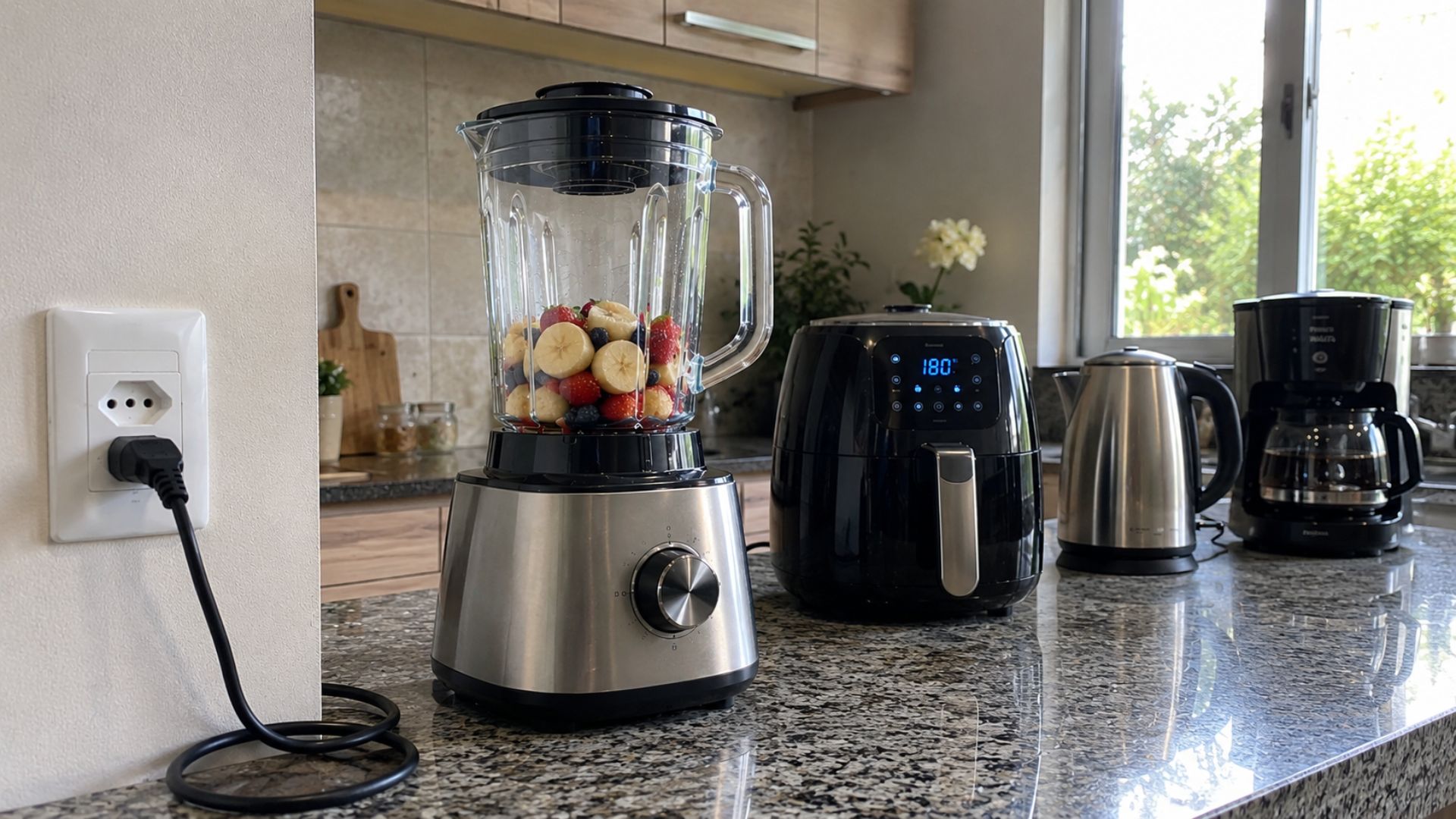
The Ki Cordless Kitchen Standard allows small appliances to be powered by induction, as long as the devices are compatible and positioned over transmitters installed under the countertop or integrated into cooktops.
Wireless power technology for kitchens advances with the proposal to power small appliances directly from the countertop, without relying on visible cables during use.
-
Smart Outdoor Lighting Transforms Gardens into Living Spaces with Weather Resistance and App-Controlled Scenes

-
Green dot on top of smartphone intrigues users, signals privacy alert in Android 12 that experts say shouldn’t be ignored.

-
Humanoid Robot Climbs 6,263-Meter Volcano in Ecuador, Sets Sights on Everest Challenge

-
Physicist Harvests Water from Fog in the World’s Driest Desert, Turning Mountains into Water Traps




Developed by the Wireless Power Consortium, the Ki Cordless Kitchen system uses inductive transmission and is designed to deliver up to 2,200 watts to compatible cooktops and appliances, according to the official page of the entity.
In practice, blenders, kettles, and other countertop equipment receive power when positioned over a transmitting area installed under the surface or integrated into a cooktop prepared for the technology.
According to the consortium, the proposal combines convenience, safety, and interoperability for appliances compatible with the Ki standard, creating a common technical base for manufacturers wishing to adopt the system.
How wireless power works in the kitchen
The operation depends on a transmitter installed under the countertop or incorporated into a compatible cooktop, capable of generating the magnetic field necessary to power the certified appliances.
As soon as the equipment is placed in the correct position, the power passes from the transmitter to a receiver installed at the base of the appliance, without the need for a cable connected to the outlet.
Although it resembles the wireless charging used in cell phones, the application in the kitchen requires more power and was designed to activate functions such as motor and heating in appliances intended for this use.
In this model, the power is not just for recharging a battery, but to maintain the direct operation of the equipment while it remains within the area compatible with the transmitter.
According to the Wireless Power Consortium, transmitters can be hidden under countertops or tables, which helps free up space and reduces the presence of wires crossing the preparation area.
With this configuration, the entity states that the system aims to make the kitchen visually cleaner, without relying on individual cables connected to each appliance used on the countertop.
Automatic shutdown increases safety
Among the most relevant features of the standard is the automatic control of power supply, created to stop operation when the appliance leaves the transmitting area.
The consortium informs that the equipment operates while it is on the transmitter and immediately shuts off when removed from this area, preventing it from continuing to operate outside the correct zone.
This feature tends to reduce common risks on countertops with many appliances connected at the same time, especially when there are loose cables near water, food, or circulation areas.
Even with this gain in practicality, safety depends on product certification and correct use indicated by manufacturers, as only compatible equipment can operate in this system.
Therefore, the promise of a countertop without visible outlets does not mean that any current appliance will function wirelessly just by being on the surface.
To receive power by induction, each appliance needs to have a base compatible with the Ki standard and recognize the transmitter installed in the furniture, countertop, or cooktop.
Midea prototypes show application of the Ki standard
Midea presented prototypes of appliances compatible with the Ki standard during CES 2023, held from January 5 to 8 of that year, in Las Vegas, United States.
In a statement published on January 6, 2023, the company reported that it would showcase, in the Wireless Power Consortium space, models such as blender and electric kettle prepared for the cable-free kitchen.
According to the company, the equipment was demonstrated in an emerging kitchen with special transmitters hidden under glass induction cooktops and non-metallic countertop surfaces.
Through this structure, power is supplied by inductive transfer, without cables connected to the appliances during use and without altering the proposal of a freer preparation area.
On the occasion, Kurt Jovais, president of Midea America Corp., stated that the company sought to offer connected solutions with utility in consumers’ daily lives.
Also during the presentation, Paul Golden, marketing director of the Wireless Power Consortium, said that the Ki standard eliminates cable clutter in small appliances and contributes to safer and more elegant kitchens.
Market still depends on certified products
Although the technology already has a defined standard and public demonstrations, its widespread arrival in homes depends on a larger chain of manufacturers, compatible furniture, adapted cooktops, and certified products.
The consortium itself informs that members can submit products for certification tests before commercial launch, a necessary step to ensure compatibility and safe operation within the standard.
This point is crucial because the proposal only works as an ecosystem, with countertop, transmitter, and appliance prepared to recognize the same technology and operate in a coordinated manner.
To ensure compatibility, power control, and safety, the components need to communicate with each other, in a dynamic similar to that adopted by the Qi standard in cell phones and wireless charging accessories.
The announced maximum power, up to 2,200 watts, indicates that the technology targets countertop appliances with significant energy demand, including equipment that depends on motor or heating.
Still, categories such as blenders, coffee makers, kettles, mixers, and air fryers will depend on specific models, developed and launched by manufacturers interested in adopting the Ki standard.
Cable-free kitchen still depends on the industry
The advancement of Ki shows that the wireless kitchen has moved beyond just a visual concept and has become part of an attempt at technical standardization for small countertop appliances.
Mass adoption, however, will depend on price, availability, certification, and manufacturers’ interest in producing appliances prepared to receive power by induction.






Be the first to react!