






 Portuguese
  Spanish
  4 min of reading
  0 comments


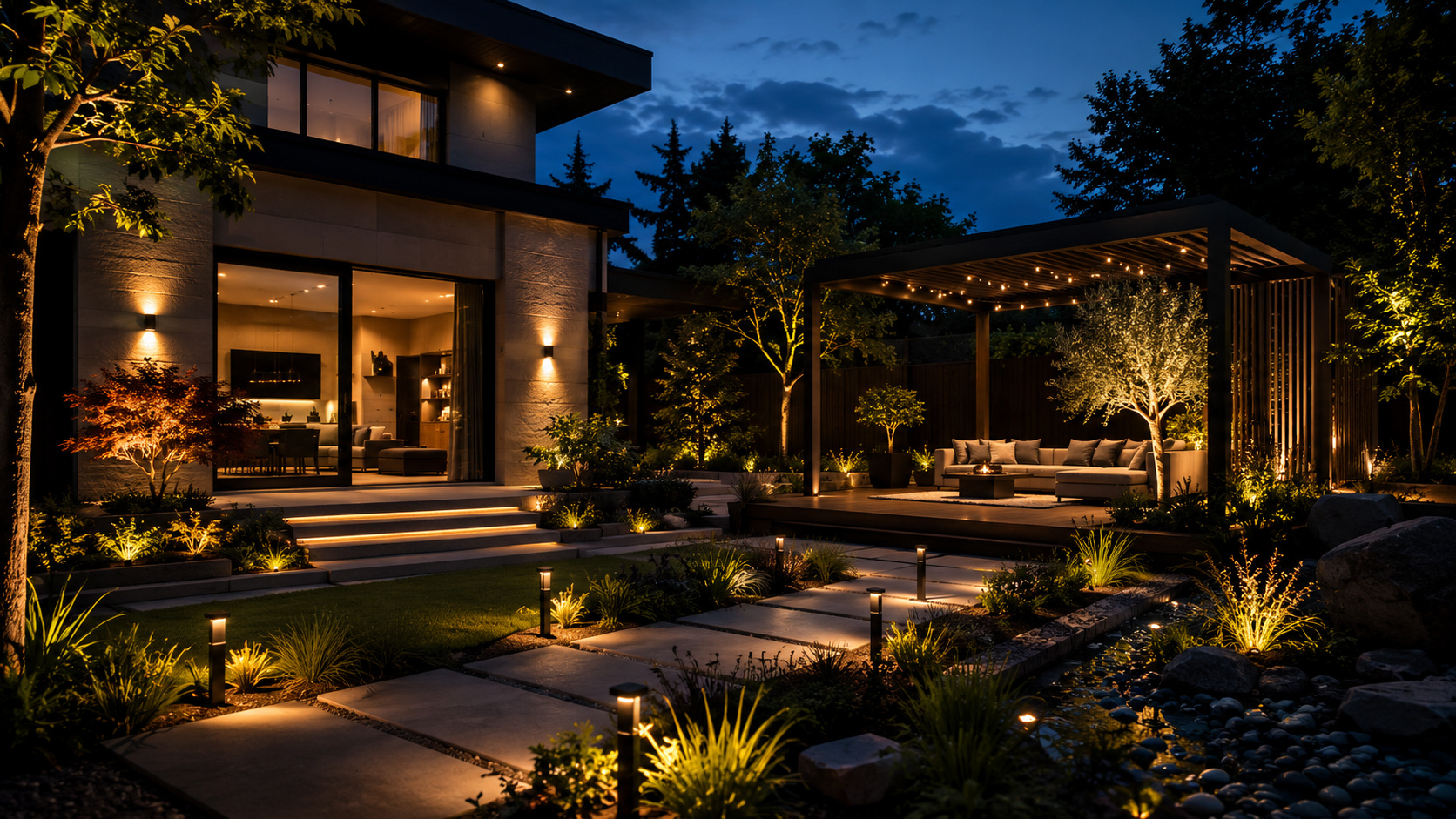
Smart lighting for outdoor areas combines mobile control, automation, sensors, and IP protection against water and dust.
Smart lighting for outdoor areas is no longer just a basic feature for illuminating paths, garages, and entrances after sunset. With the advancement of home automation, this type of solution now includes mobile control, brightness adjustment, color change, routine scheduling, and integration with sensors, expanding the role of light in gardens, yards, balconies, and gourmet areas.
In practice, this means that the outdoor area can function in different ways throughout the same day. The same lighting structure can enhance nighttime circulation, highlight landscaping elements, create cozier scenes for social use, and automate activation at access points, all with support for fixtures designed for humid or weather-exposed environments.
Smart lighting for gardens, balconies, and yards has become part of the house project
According to Philips Hue, current smart lighting systems form an ecosystem of bulbs, fixtures, sensors, and accessories that work in an integrated manner, with customization of colors, intensity, and automatic routines.
-
Green dot on top of smartphone intrigues users, signals privacy alert in Android 12 that experts say shouldn’t be ignored.

-
Humanoid Robot Climbs 6,263-Meter Volcano in Ecuador, Sets Sights on Everest Challenge

-
Physicist Harvests Water from Fog in the World’s Driest Desert, Turning Mountains into Water Traps

-
Wikipedia Blocks AI-Generated Edits, Citing Distrust in Automated Systems and Outlining Plans to Use Technology Without Losing Article Control



For the outdoor line, the proposal is to illuminate the space while creating ambiance for different occasions, which enhances the aesthetic function of these areas beyond purely functional use.
This movement helps explain why yards, decks, side corridors, and gardens have received more attention in residential projects. The brand’s own outdoor lighting page states that this type of product can guide circulation and also create atmosphere for different moments, reinforcing the idea that light has ceased to be just technical support and has become part of the environment experience.
Mobile control and automation have transformed the use of outdoor lighting at night
One of the main changes is in the control of the fixtures. Philips Hue states that the user can control the lighting via the app, automate routines, and adjust the system remotely. The platform also highlights compatibility with voice commands in part of the ecosystem, reducing the reliance on conventional switches and bringing outdoor lighting closer to the rest of home automation.
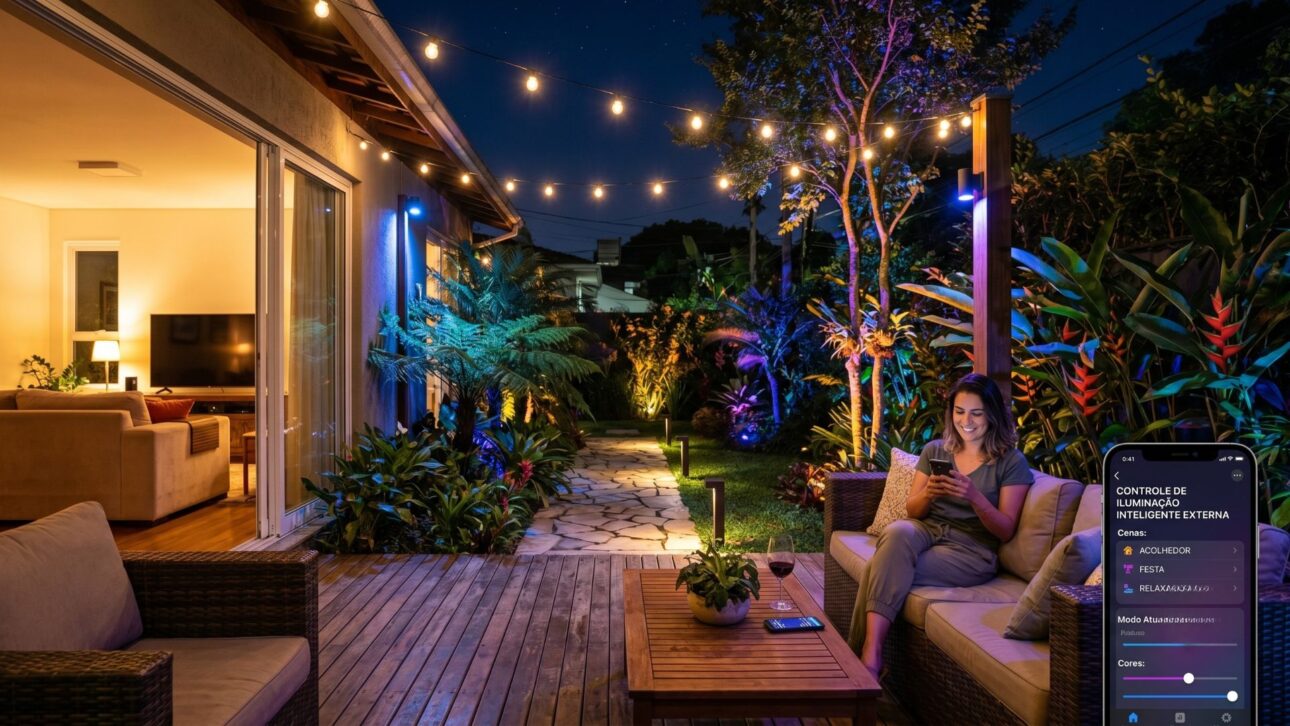
In practice, this allows scheduling times, adjusting brightness, and switching between white and colored light according to the space’s needs.
Instead of keeping all lights on with the same pattern, the resident can set specific scenes for circulation, relaxation, or social use, making the outdoor area more functional and flexible in daily life.
Rain, humidity, and dust require outdoor lights with adequate IP protection
Durability in outdoor areas depends on a technical point that has gained importance at the time of purchase: the IP protection index. According to the International Electrotechnical Commission, the IEC, the IP code classifies the degree of protection of electrical equipment enclosures against the ingress of dust and liquids. The first number measures protection against solid objects and dust; the second indicates the level of protection against water.
This detail is crucial because electrical equipment can deteriorate or fail when water and dust enter the device.
In the Philips Hue outdoor product line, classifications such as IP44, IP65, and IP67 appear, along with indications of products suitable for damp or wet areas. This shows that weather resistance has ceased to be a differential and has become a basic technical requirement in connected lighting installed outside the home.
Motion sensors enhance security and prevent unnecessary lighting
Another important advancement is the use of external sensors integrated into automation. Philips Hue reports that its sensor for outdoor use has an IP54 rating, indicating protection against dust and water splashes, and is designed to continue functioning in most weather conditions.


This type of sensor allows automatic lighting activation in passage areas, entrances, side corridors, gates, and garages.
The result combines two important gains: it improves the perception of security by illuminating strategic points when there is movement and avoids keeping the entire outdoor area lit continuously without real need.
Smart outdoor lighting blends design, comfort, and more strategic use of the home
With the evolution of these systems, the discussion has moved beyond just choosing the strongest fixture or the point with the best light reach.
Today, the focus also falls on the ability to integrate design, automation, weather resistance, and remote control into a single set.
The presence of outdoor fixtures with white light, colored light, sensors, and programmable scenes shows that technology has directly influenced how outdoor spaces are used at night.
For the resident, the change is clear: the outdoor area ceases to be just an illuminated perimeter and starts functioning as an extension of the home. When there is automation, adequate IP protection, and app control, the garden, balcony, backyard, and gourmet area gain more comfort, more convenience, and a much more sophisticated logic of use than the old lighting activated only by the switch.





Be the first to react!