






 Portuguese
  Spanish


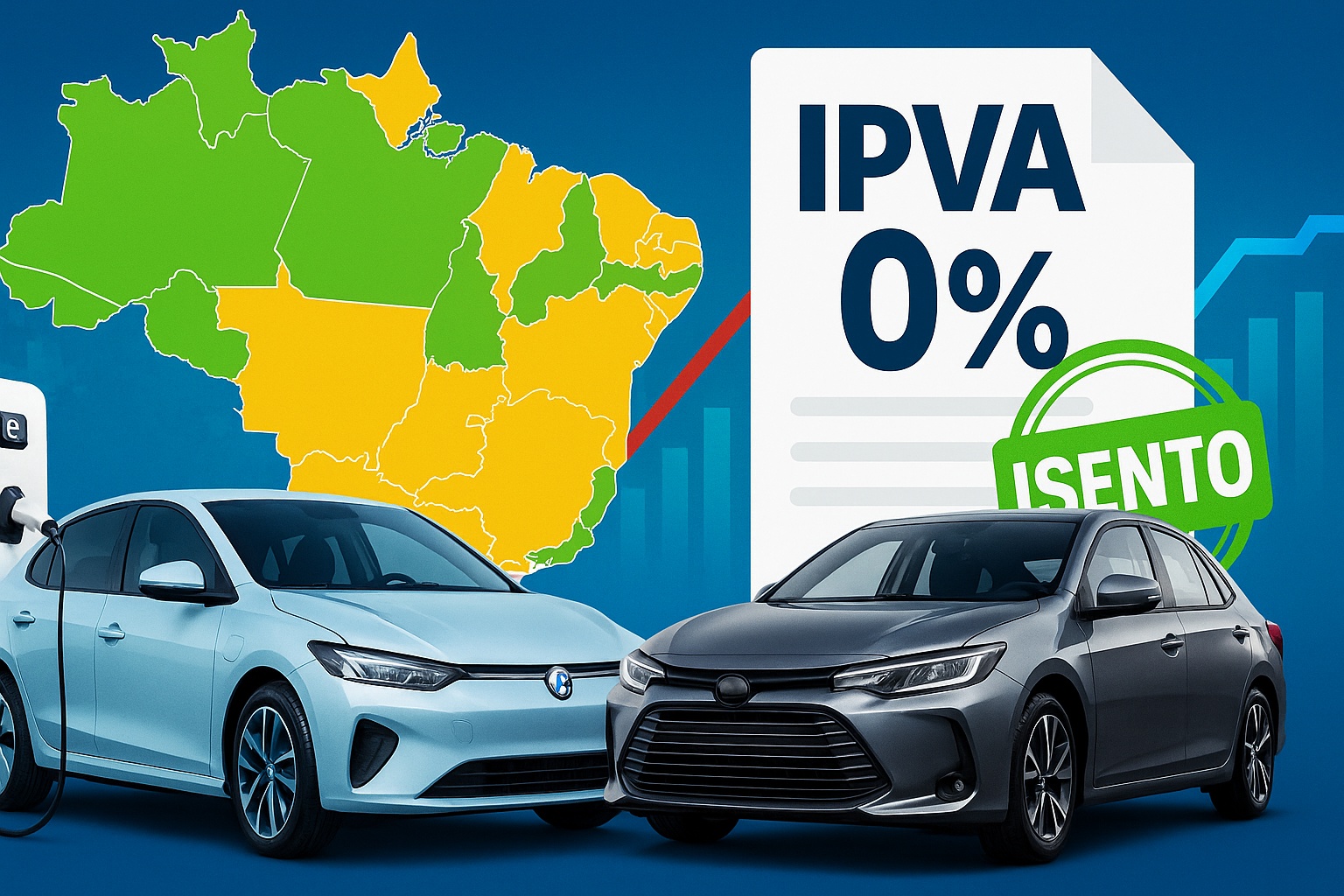


IPVA 2026 Will Have Exemption in 12 States for Electric and Hybrid Vehicles, but Drivers of Combustion Cars May Pay More.
The Vehicle Property Tax (IPVA) will take on new contours in 2026 and is already sparking debate among drivers, automakers, and state governments. What seemed like a timid trend has become a reality: 12 Brazilian states already grant exemptions or significant discounts for electric and hybrid cars, consolidating a policy of incentive for clean mobility. However, on the other side of the balance, there is growing fear that combustion vehicles — especially those with engines larger than 2.0 — will end up paying even more, as a way to offset the loss of revenue.
The change is being called a “silent revolution” by experts, as it did not arise from a national law, but from a race among states to attract investments, stimulate sales, and show alignment with global environmental goals.
The Exemption Map: Where Electric Vehicles Do Not Pay IPVA
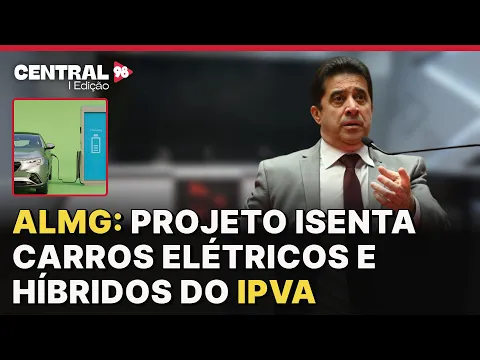

In 2025, states such as São Paulo, Rio Grande do Sul, Pernambuco, Alagoas, Maranhão, Piauí, Paraná, Sergipe, and Bahia already granted some type of benefit for electrified vehicles. In São Paulo, for example, the discount can reach up to 100% for flex hybrid models, provided that owners participate in the program for recycling old vehicles.
-
China Tightens Control on Antimony, Driving Prices from $22,000 to Nearly $40,000 per Ton as U.S. Rushes to Bolster Strategic Reserves

-
BlackRock Freezes $1 Billion in Brazilian Renewable Energy, Impacting 1.5 GW of Planned Projects and Highlighting Investor Concerns Over Infrastructure Bottlenecks Cutting Up to 25% of Solar and Wind Generation
-
Labor Shortage: Despite Record Average Salary, 90% of Brazilian Bar and Restaurant Owners Struggle to Hire Key Roles Like Sushi Chefs and Head Cooks

-
Supermarket Deli Counter Attendants in Brazil Could Earn Over $2,100 Monthly by 2026, Plus Benefits Package


In total, 12 states have already implemented differentiated rules for electric and hybrid cars in 2026, according to a survey from the Brazilian Electric Vehicle Association (ABVE). In some locations, such as Piauí, the exemption is complete. In others, like São Paulo and Paraná, the rules provide for gradual discounts or are linked to fleet renewal programs.
This policy aligns Brazil with countries that already use tax benefits to stimulate the energy transition. Germany, France, China, and Norway have similar models, although, in many cases, they also include direct subsidies for the purchase of vehicles — something Brazil has not yet adopted on a national scale.
The Weight of IPVA in State Revenue
The IPVA is one of the main sources of revenue for the states, representing on average 12% of total state tax revenue. In São Paulo, the largest automotive market in the country, the tax generated R$ 27 billion in 2024. Forgoing this resource for part of the fleet means a gap that needs to be compensated elsewhere.
And this is where the concern of drivers of combustion cars comes in. To maintain the balance of public accounts, states are already studying mechanisms to increase IPVA for larger and more polluting vehicles. Models with engines above 2.0, luxury SUVs, and pickups may be the first targets. The logic is simple: those who pollute more, pay more.
Experts point out the cascading effect: if taxes on larger cars rise, fuel taxes may also end up being adjusted as a countermeasure, increasing further the financial burden on the middle class.
The Tension Between Green Promise and Consumer’s Pocket
In theory, the advance of exemptions is a victory for the environment and for the automotive industry, which sees a boost in the sales of electrified vehicles. However, in practice, the contrast is evident: while a portion of the population celebrates the possibility of having a car without IPVA, the vast majority remains dependent on combustion vehicles and fears facing an even higher bill.
Today, electric vehicles represent less than 3% of the national fleet, which means that the tax waiver falls on a minority. Meanwhile, the more than 45 million combustion vehicles continue to be the backbone of revenue. This creates a distortion that could become unsustainable in the coming years.
ABVE President Ricardo Bastos has already warned in interviews that Brazil needs a balanced transition model: “It’s useless to stimulate electric vehicles if it means excessively penalizing combustion cars. The risk is creating societal rejection and stalling the energy transition.”
Who Wins and Who Loses With the Green IPVA
For automakers, the scenario is promising. With state benefits, electric and hybrid cars tend to gain competitiveness against combustion vehicles. A vehicle costing R$ 200,000 can generate up to R$ 8,000 in savings per year just from the IPVA exemption, becoming more attractive to consumers with higher purchasing power.
For the average consumer, who still cannot afford the prices of electric vehicles, the feeling is one of injustice. The construction worker driving his 10-year-old 1.0 car will receive no benefits but may end up paying more in IPVA and fuel to compensate for the waiver given to those who purchase cars worth R$ 150,000 or more.
This inequality is the central point of the controversy. Opposing politicians already call the measure “subsidy to green luxury”, while supporters argue it is a necessary step to modernize the fleet and reduce emissions.
What to Expect from 2026 Onward
All indications are that the trend of exemptions and discounts will expand. Other states are studying to adopt similar benefits in 2027, creating a domino effect. International pressure also plays a role: Brazil has committed to climate agreements that include significant reductions in emissions by 2030, and the electrification of the fleet is an inevitable path.
On the other hand, social resistance and pressure from transport-related unions may slow down harsher measures against combustion vehicles. The challenge is to find a balance between incentives and tax equity.
So far, the federal government has not intervened directly, leaving it to the states to define the rules. But experts say it will soon be inevitable to discuss a national IPVA policy, at risk of creating distortions between regions and increasing inequalities in access to mobility.
The silent revolution has already begun. The question remains: is Brazil really ready to trade the roar of the engine for the silence of electric vehicles without leaving anyone behind? What is your opinion? Leave your comments below!





Carro elétrico e híbrido não usam estrada ? Eles voam ? Eles não provocam acidentes ?
O GOVERNO só tem parar com esta palhaçada de só dar isenção de carros produzidos no estado que é produzido.. a isenção tem que ser federal.
O IPVA é um imposto ESTADUAL…
Pedreiro de Celta? 10 anos de uso? Aonde cara pálida? Já foi este tempo.