Portuguese
  Spanish


Iran And Russia Connect Banking Systems Outside SWIFT, Unite Mir And Shetab Cards, And Create Parallel Payment Network To Evade Sanctions And Strengthen Allied Blocks.
Since 2022, with the intensification of Western sanctions, Russia and Iran have accelerated a cooperation that has been brewing for years: the creation of a parallel payment system to SWIFT, the international network that connects over 11,000 financial institutions in 200 countries.
In 2023, the central banks of Moscow and Tehran formalized the connection between the Russian SPFS (Financial Message Transfer System) and the Iranian SEPAM, allowing commercial transactions to be settled directly in national currencies, without the need for dollars and without going through Western infrastructure.
Now, in 2025, this integration has evolved and already includes interoperable bank cards, expanding consumer and business access to an anti-sanctions financial network.
-
Ukraine War Impacts Brazilian Fuel Supply: Russian Diesel Imports Drop 65% in June, Brazil Turns to US and India Amid Market Concerns

-
Chinese Nuclear Submarine Launches Simulated Warhead Missile in Pacific, Heightening Regional Tensions Amid Naval Drills with Russia Near Qingdao; New Zealand and Papua New Guinea Warn of Persistent Chinese Military Presence
-
Ayatollah Ali Khamenei’s Funeral Draws 15 to 20 Million in Tehran, Calls for Revenge Against Trump After Joint Israel-U.S. Attack

-
U.S. Establishes Permanent Embassy in Jerusalem, Reigniting International Debate Over Israel’s Capital



Mir And Shetab Cards: Integration That Reaches The Consumer
The most visible stage of this partnership is the integration between Mir cards (from Russia) and Shetab cards (from Iran).
- Mir cards, created in 2015, became Russia’s main payment system after the country’s partial exclusion from Visa and Mastercard in 2022.
- Shetab is the Iranian domestic banking system that connects banks and ATMs across the country since the 2000s.
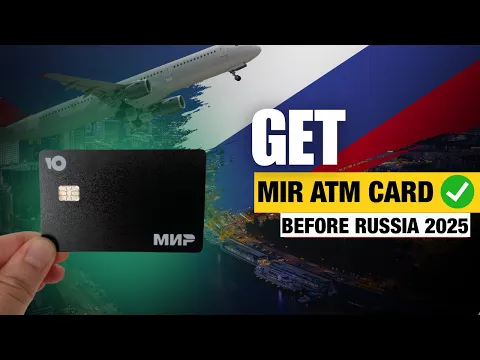

With the integration, Russian tourists in Iran can pay with their Mir cards at local establishments, while Iranians have access to Russian terminals through the Shetab network. This interoperability, which began in pilot phase in 2024, is expanding to include millions of active cards.
The Goal: Evading Sanctions And Creating Alternatives
The movement has a clear purpose: to evade Western sanctions that limit Iran and Russia’s ability to access global markets and traditional financial systems.
Without full access to SWIFT, the two countries have created an infrastructure that ensures:
- Settlement of bilateral transactions in rubles and rials, without dollars.
- Secure payments for exporters and importers even under sanctions.
- Domestic card network independent of American brands.
This is another step in the effort to create a parallel financial architecture that does not depend on the United States or the European Union.
Growing Trade Between Moscow And Tehran
Bilateral trade between Iran and Russia has grown significantly in recent years. In 2022, exchanges amounted to about US$ 4 billion.
In 2024, the value had already exceeded US$ 5 billion, driven by exports of Russian grains, Iranian oil, and industrial equipment.
The expectation is that banking integration will further elevate this figure. With direct transactions in local currencies, companies save on exchange costs and reduce the risk of external blockages.
The Anti-Sanctions Block In Formation
The Iran–Russia partnership does not happen in isolation. It is part of a larger effort by countries seeking alternatives to the Western financial system.
- China expanded the use of CIPS (Cross-Border Interbank Payment System) for settlements in yuan.
- India has already made imports of Russian oil in rupees, although with obstacles.
- BRICS countries are discussing expanding settlement in local currencies and reducing the use of the dollar in the internal trade of the bloc.
In this context, the Tehran–Moscow network functions as a model and trial for other financial partnerships outside the Washington–Brussels axis.
The Reactions From The West
The creation of this parallel network worries the U.S. and the European Union. SWIFT is more than a technical platform: it is a geopolitical power tool.
Controlling who can access the network is tantamount to having influence over global trade and the banking system.
Washington has already signaled that it may sanction banks from third countries that integrate into the Iran–Russia system. However, in the face of increasing multipolarity, these threats lose some of their effectiveness. More and more, countries are seeking escape routes to keep their trade active.
Limitations And Challenges Of The Parallel Network
Despite progress, the Iran–Russia banking integration still has limitations:
- Limited scale: it only covers the two countries, with potential for gradual expansion.
- Fragile currencies: both the ruble and the rial suffer from volatility and inflation.
- International acceptance: outside the Iran–Russia axis, Mir and Shetab cards still have limited reach.
Still, experts believe that the movement is strategic and symbolic. It shows that there are technical alternatives to SWIFT and that sanctioned countries can cooperate to reduce vulnerabilities.
The Future Of Iran–Russia Cooperation
The next steps include:
- Expansion of the use of Mir and Shetab cards in all commercial banks of both countries.
- Inclusion of new currencies in the network, such as the Chinese yuan.
- Future integration with the BRICS system, creating a more robust parallel payment ecosystem.
If this trend continues, the Iran–Russia network could become a prototype of a multipolar financial system, in which regional blocks build their own infrastructures without depending on the West.
Iran And Russia: A Financial Axis Outside SWIFT
By connecting their banking systems, Moscow and Tehran have taken a step beyond energy and military cooperation: they have created an alternative financial axis.
The Mir–Shetab integration symbolizes not only resistance to sanctions but also the construction of a new financial order.
Although limited in scale, the movement has global symbolic effect: it proves that the hegemony of the dollar and SWIFT can be contested. And in the long-term game, it opens space for other countries to follow the same path.