






 Portuguese
  Spanish
  5 min of reading
  0 comments


Russia is building Turkey’s first nuclear power plant — amidst the war against Ukraine, with Russian funding and Russian operation on NATO member soil
In the city of Mersin, on Turkey’s Mediterranean coast, the Russian state company Rosatom is constructing the Akkuyu nuclear power plant — a complex of 4 VVER-1200 reactors with a total capacity of 4,800 megawatts.
However, the most surprising aspect is not technical — it is geopolitical: Russia is building critical nuclear infrastructure within a NATO member country, the military alliance created precisely to contain Russian influence.
Moreover, the construction did not stop during the invasion of Ukraine in 2022 — on the contrary, it continued at an accelerated pace while Turkey voted for sanctions against Russia in international forums.
-
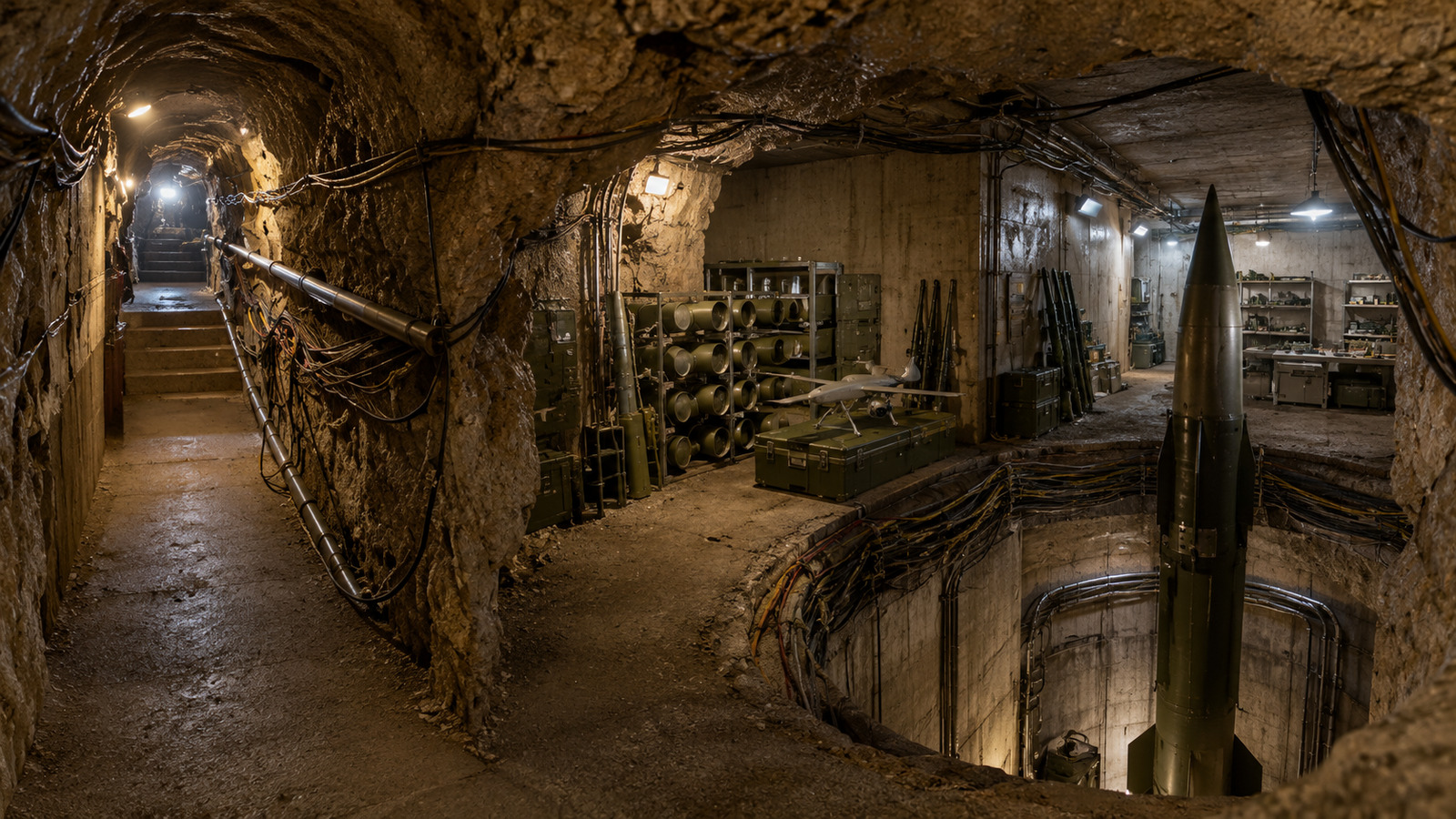
Israel finds Hezbollah militarized tunnel over 200 meters long under village, with 4 missile launch shafts, 12 chambers, anti-tank missiles, drones, and weapons depots at a depth of 25 meters.

-
Ukraine launches largest drone attack on Moscow since 2022, Russia claims to have intercepted nearly 200 aircraft near the capital, Kapotnya refinery targeted again, and offensive reignites alert about war reaching the Russian energy heart just a few kilometers from the Kremlin.

-
Truck drivers, freight, and fines from 2022 take center stage in politics: Chamber approves MP with amnesty, mandatory tracking by CIOT, million-dollar penalties, and new minimum wage for those who spend more than 24 hours on the road.

-
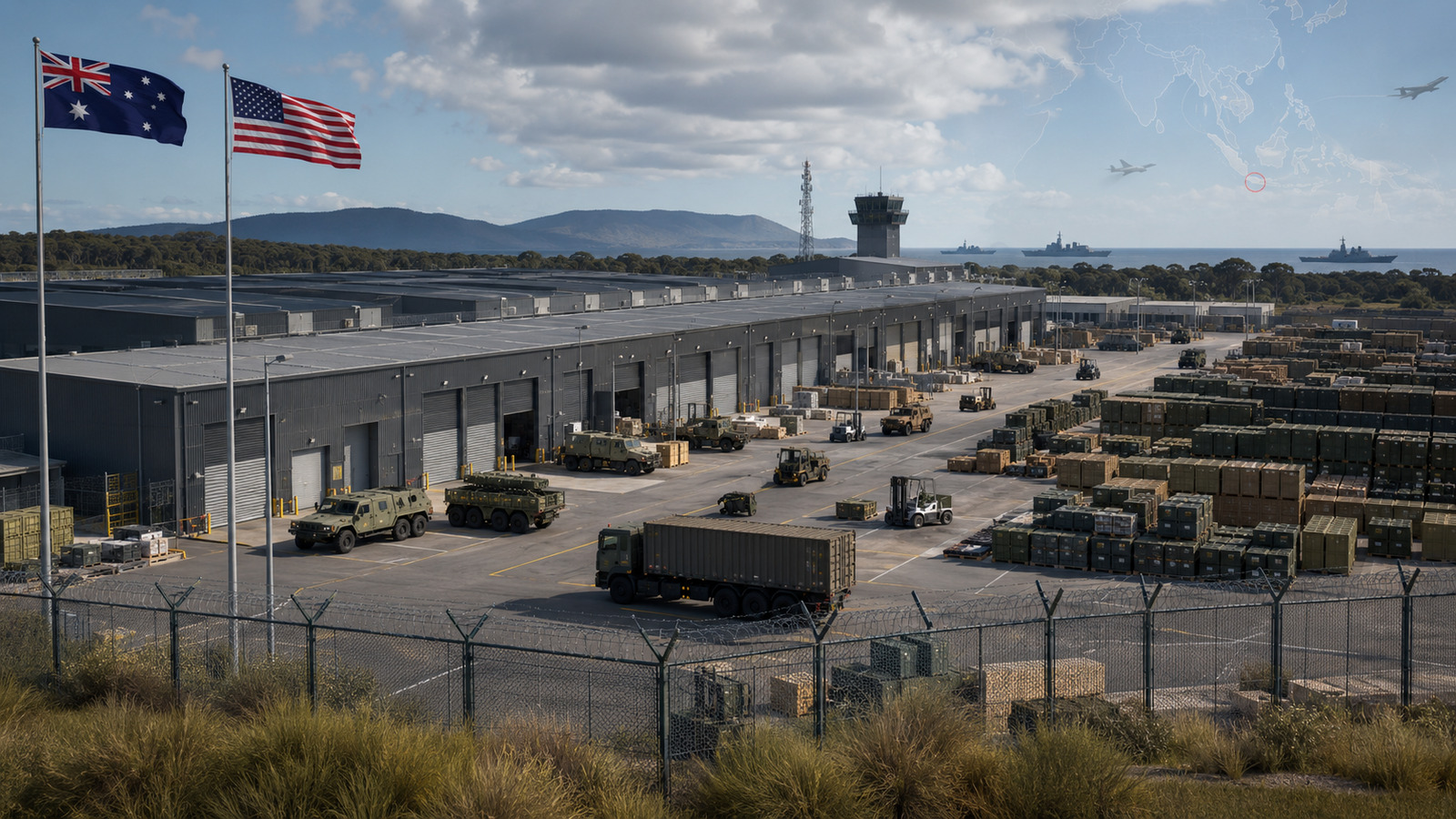
China off the radar: US plans mega $30 million weapons depot in Australia, out of reach of most Chinese missiles, with full capacity expected by 2028


Thus, Akkuyu is probably the biggest geopolitical paradox in global energy: a NATO country being powered by the same country the alliance considers an existential threat.
The total investment is estimated at US$ 20 billion — fully financed by Rosatom.
There are 4 state-of-the-art reactors — enough to supply 10% of Turkey’s entire electricity demand
Each VVER-1200 reactor at Akkuyu generates 1,200 megawatts — totaling 4,800 MW when all are operational.
Consequently, the plant will supply 10% of the entire electricity demand of a country with 85 million inhabitants.
Furthermore, the VVER-1200 reactors are generation III+ — the most advanced in commercial operation, with passive safety systems that function without electricity in emergencies.
Therefore, Turkey will receive cutting-edge technology under conditions that no other supplier offered: full financing, turnkey construction, and operation for 60 years.
In this sense, the Akkuyu model has set a precedent in analysts’ view: Russia offers “free” nuclear plants in exchange for long-term strategic energy dependency.

The paradox diplomats try to ignore: NATO member dependent on Russian nuclear energy for 60 years
Turkey has been a NATO member since 1952 and holds the alliance’s second-largest army.
However, by accepting that Rosatom builds, finances, and operates the plant for 60 years, it created a structural energy dependency that no sanction can undo.
Similarly, the agreement provides that Rosatom sells electricity directly to the Turkish government at agreed prices — Russia controls how much Turkey will pay for energy for six decades.
Likewise, the contract was signed in 2010 and survived multiple crises between the two countries, including the downing of a Russian fighter jet by the Turkish air force in 2015.
As a result, Akkuyu is a symbol of the pragmatic and contradictory relationship between Moscow and Ankara: regional adversaries, partners in nuclear energy.
Despite this, Turkey argues that diversifying the energy matrix is a matter of sovereignty — the alternative would be to remain 100% dependent on imported natural gas — a situation reminiscent of the global renewable energy paradox. The issue is similar to the Brazilian energy paradox: having abundant resources but depending on imports, also partly from Russia.
Rosatom dominates the global nuclear export market — and Akkuyu is the most controversial trophy in its showcase
The Rosatom, the Russian nuclear state company, is currently the largest exporter of nuclear technology in the world, with projects in over 20 countries across five continents.
Consequently, the company has built or is building plants in Bangladesh, Egypt, Belarus, Hungary, India, and now Turkey — consolidating a network of energy dependency that no Western sanction has managed to dismantle.
Moreover, Rosatom’s business model is unbeatable for developing countries: full financing, turnkey construction, personnel training, and operation for decades — all included in the package.
Similarly, no Western competitor — neither the French EDF, nor the American Westinghouse, nor the Korean KHNP — offers comparable conditions, which explains why Russia wins nuclear bids even in countries politically aligned with the West.
Above all, the war in Ukraine has not affected any of Rosatom’s ongoing nuclear contracts — proving that, in the nuclear energy market, economic pragmatism surpasses geopolitics.
Therefore, Akkuyu is not just a plant in Turkey — it is the showcase of the Russian model of global nuclear expansion, where each reactor built abroad is an anchor of influence that will last 60 years or more.

The first reactor is expected to start operating in 2026 — and Turkey becomes the newest member of the nuclear club
Rosatom’s schedule foresees the commissioning of the first reactor in 2026.
Still, experts warn that delays are common in nuclear projects worldwide.
As a result, when all 4 reactors are operational, Turkey will have leaped from zero to 4,800 MW nuclear in less than a decade.
Akkuyu is the perfect portrait of modern contradictions: a NATO country fights Russian influence in public while building its energy dependency on Russia in private — and no one has managed to propose a better alternative.
Will the model spread — with Russia building “free” plants in exchange for decades of influence? Or will it be the last project of its kind before geopolitical tensions make nuclear cooperation between adversaries impossible?
The Akkuyu effect could reshape the nuclear map of the Middle East
The inauguration of Akkuyu in Turkey could trigger a regional nuclear race in the Middle East and North Africa.
Indeed, Egypt (with the El Dabaa plant, also by Rosatom), Saudi Arabia, and Jordan already have nuclear programs at different stages of development.
Moreover, if Turkey demonstrates that it is possible to operate a nuclear plant with foreign financing and operation without giving up sovereignty, other countries in the region may follow the same path.
Consequently, the Middle East — a region already marked by geopolitical instability — could become one of the new poles of nuclear energy on the planet in the coming decades.
Above all, the issue that concerns Western analysts is not the energy itself, but the potential for nuclear proliferation: each new plant is also a step closer to the technical knowledge necessary to develop atomic weapons.
Therefore, Akkuyu is not just a plant — it is a precedent that could transform the nuclear power balance of an entire region.
Similarly, the success or failure of the Akkuyu model will determine whether Rosatom will continue to be the dominant nuclear exporter in the world — or if sanctions and geopolitical tensions will eventually reach the sector that has so far remained shielded.
Likewise, countries like Brazil and Argentina — which already have civilian nuclear programs — are watching the Akkuyu model with interest, evaluating whether full financing by Rosatom could be a viable alternative to expand their own nuclear capabilities without spending their own resources.








Be the first to react!