






 Portuguese
  Spanish
  5 min of reading
  0 comments


Satellite images reveal that China is building the largest underground military complex in history — and it will be 10 times bigger than the Pentagon
Defense analysts monitoring satellite images have detected in the Qinglonghu region, about 32 kilometers from Beijing, a colossal construction site that has been quietly excavated for years.
According to a report by Newsweek, the site — nicknamed “Beijing Military City” by intelligence experts — occupies approximately 1,500 acres and shows unmistakable signs of large-scale military construction.
However, what caught the analysts’ attention the most was not the surface size — but what is being built underneath it.
-
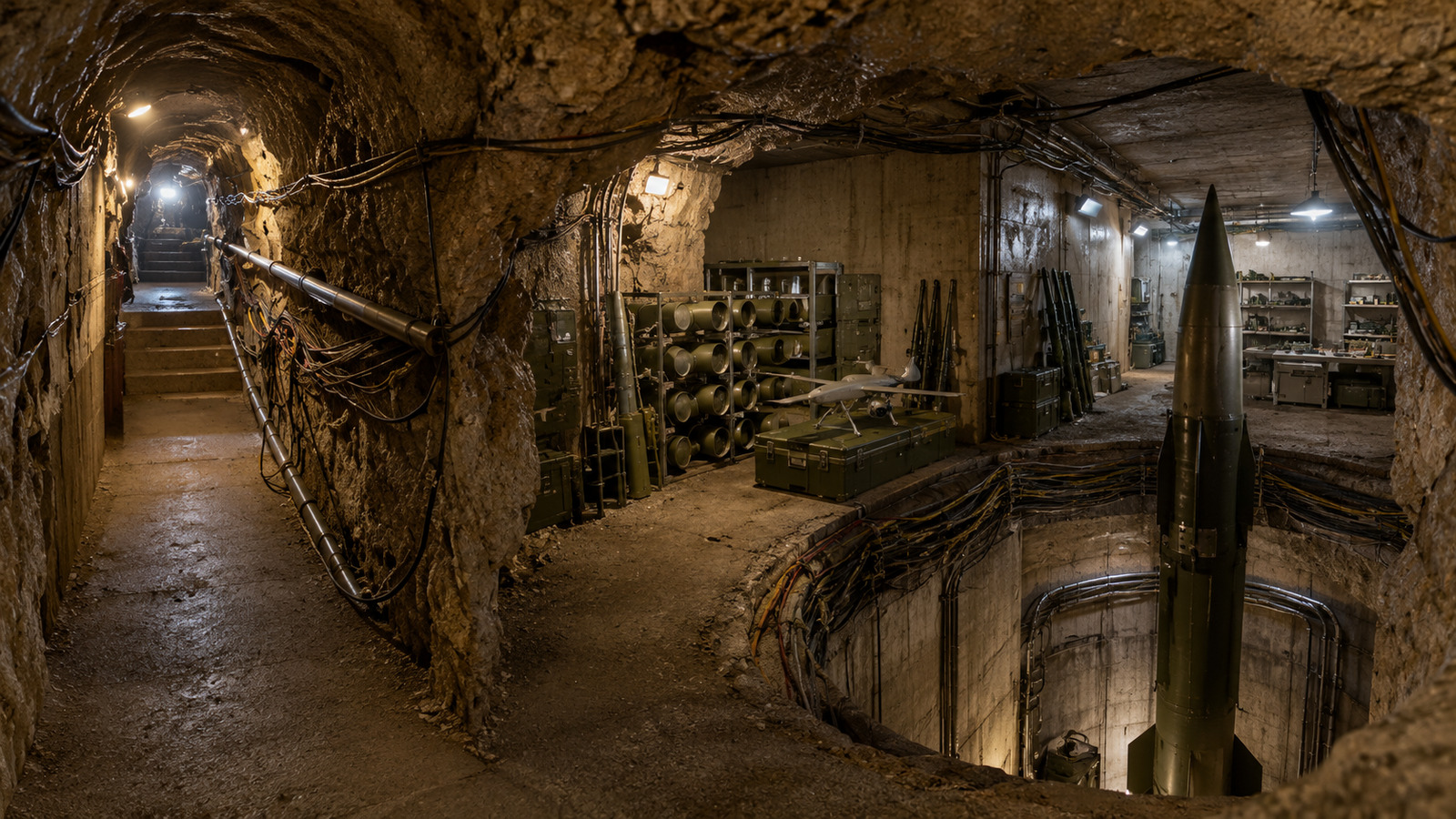
Israel finds Hezbollah militarized tunnel over 200 meters long under village, with 4 missile launch shafts, 12 chambers, anti-tank missiles, drones, and weapons depots at a depth of 25 meters.

-
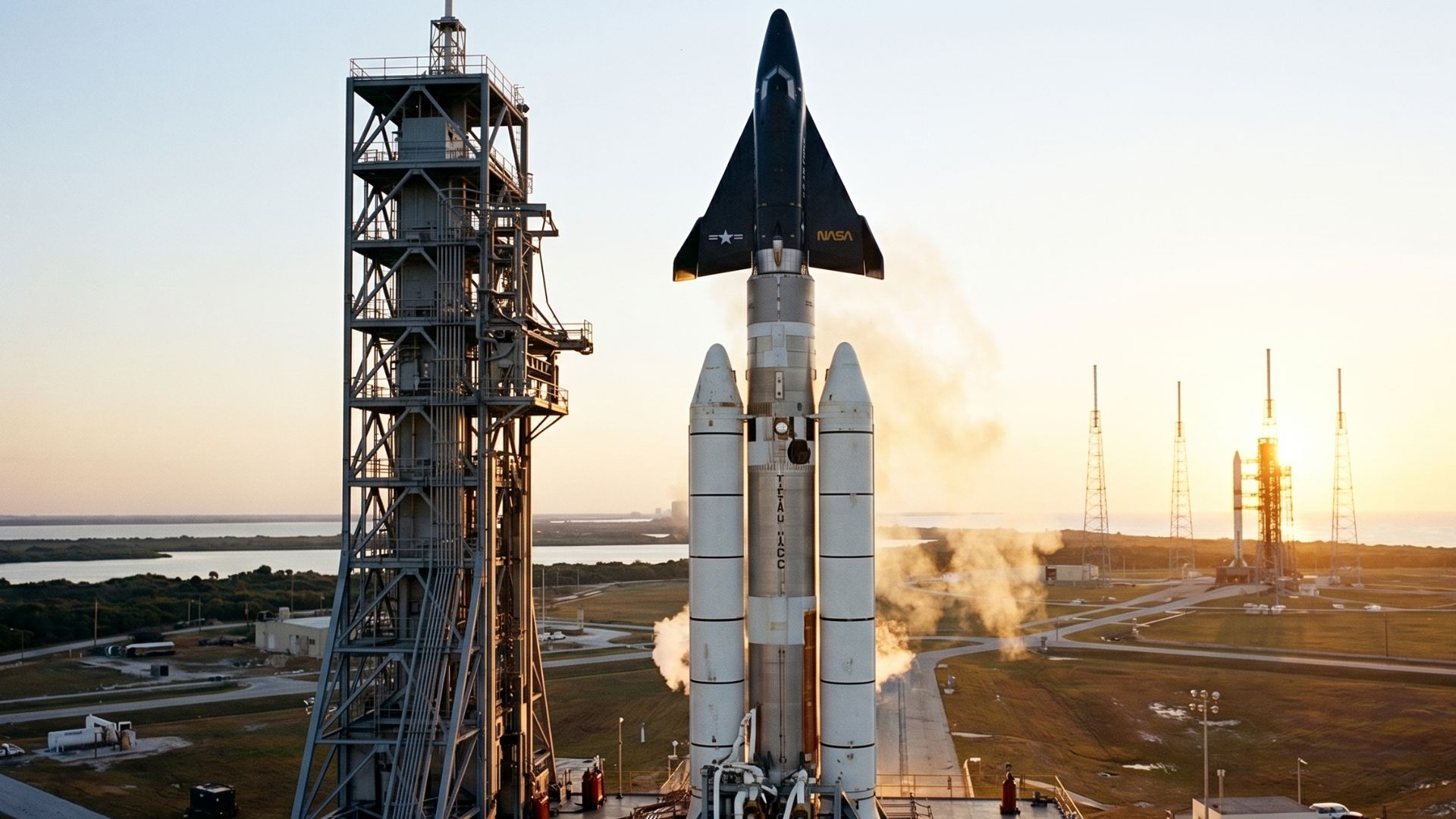
The military spaceplane that almost took the Cold War into orbit: Boeing X-20 Dyna-Soar was designed to re-enter above Mach 20, fly for up to 40 hours, land like a plane, and transform Titan rockets into a gateway to a new era of orbital warfare.

-
FAB bets on national drones and increases investments to strengthen the Brazilian aerospace industry

-
Ukraine launches largest drone attack on Moscow since 2022, Russia claims to have intercepted nearly 200 aircraft near the capital, Kapotnya refinery targeted again, and offensive reignites alert about war reaching the Russian energy heart just a few kilometers from the Kremlin.


According to multiple intelligence sources cited by the Sustainability Times, the complex includes deep excavations indicating the construction of underground bunkers capable of withstanding direct nuclear attacks.
Thus, China may be erecting the largest underground military command center ever built by any nation — surpassing even the most secretive facilities of the United States and Russia.
Moreover, the total area of the complex — estimated at 1,500 acres — is approximately 10 times larger than the Pentagon, the iconic building of the U.S. Department of Defense that occupies about 150 acres.

More than 100 cranes operate simultaneously — and the Chinese government has not said a word about the project
Satellite photos from February 2025 show more than 100 cranes operating simultaneously on the site — a scale of activity typically associated with the construction of megacities, not military facilities.
Consequently, analysts conclude that the project is treated as an absolute priority by the Central Committee of the Chinese Communist Party.
However, despite the monumental visible scale of the space, the Chinese government has not officially confirmed the existence of the project nor revealed its purpose.
Similarly, no reports from the Chinese state media have mentioned the Qinglonghu site — a silence that, paradoxically, confirms the classified military nature of the facility.
Likewise, the speed of construction is unprecedented for underground military projects, which historically take decades to complete — like Gaddafi’s artificial river in Libya, which also involved colossal underground excavations, or Project 816, which China itself took 17 years to excavate.
Therefore, Qinglonghu may represent a new era in Chinese military engineering: underground megastructures built in record time with modern excavation technologies.
What analysts believe: a nuclear bunker capable of protecting Chinese leadership during a total war
According to an analysis published by the Indian Defence Review, the complex will likely replace the Western Hills Complex — the current Chinese military command bunker, in operation since the 1960s.
In this sense, the new complex would be the main strategic command center of China in case of large-scale military conflict — including nuclear war scenarios.
Moreover, experts point out that the partially buried design and depth of the excavations are consistent with facilities designed to survive direct impacts from tactical and strategic nuclear weapons.
Above all, the existence of a nuclear attack-proof command bunker is considered essential for the credibility of Chinese nuclear deterrence: if the leadership can survive a first strike, the threat of retaliation becomes credible.
Despite this, the zero transparency of the project fuels international fears that the complex may have additional purposes beyond command and control — including storage of strategic arsenals or classified research centers.

The nuclear expansion that scares the world: 500 warheads by 2030, a thousand by 2035
The Qinglonghu complex does not exist in isolation — it is part of an accelerated Chinese nuclear expansion that has been alarming Western analysts for years.
According to reports from the U.S. Department of Defense, China has tripled its nuclear arsenal in the last five years and may reach 500 warheads by 2030 and a thousand by 2035.
Consequently, the construction of a command center capable of coordinating an arsenal of this magnitude is perfectly consistent with the country’s military modernization trajectory.
On the other hand, CNN reported in April 2026 that satellite images of nuclear sites in Sichuan province show continuous expansion and unidentified constructions.
Similarly, the pace of construction of intercontinental ballistic missile silos in the Chinese desert has accelerated significantly — with more than 300 new silos identified in the last three years.
Still, China officially maintains a “no first use” policy on nuclear weapons — although Western analysts increasingly question whether this doctrine will be maintained as the arsenal grows.
What the world knows — and what it still doesn’t know — about the largest secret military project on the planet
The construction in Qinglonghu is one of the worst-kept military secrets in history: the images are public, the cranes are visible from space, and analysts publish detailed reports on the site.
However, the internal details remain an absolute mystery: how many underground levels it will have, what systems will be installed, and how long the Chinese leadership could survive isolated in case of a total nuclear attack.
What is known is the following: 32 km from Beijing, China is excavating a structure 10 times larger than the Pentagon, with more than 100 cranes operating simultaneously — and no one in the government has explained what it is for.
In an era where satellites photograph every square meter of the planet, the largest military project in the world is also one of the most enigmatic — and Beijing’s silence only raises more questions about what they are building beneath those hills.
In fact, the investment in Chinese nuclear expansion is so accelerated that Pentagon analysts have revised their estimates three times in the last two years — always upwards.
Despite this, China has never participated in any nuclear arms control treaty, unlike the U.S. and Russia — which means its nuclear expansion has no formal limit.
Above all, the Qinglonghu complex may be just the visible tip of a much larger iceberg: U.S. intelligence estimates that there are at least six other underground military projects underway in China that have not been photographed by satellite.
On the other hand, military history shows that great powers have always built command bunkers during periods of tension — the U.S. has Cheyenne Mountain, Russia has Mount Yamantau, and now China will have Qinglonghu.
Consequently, the difference is that Qinglonghu is being built in the full era of satellite transparency — which makes it impossible to hide, but not impossible to keep secret what is inside it.








Be the first to react!