Portuguese
  Spanish


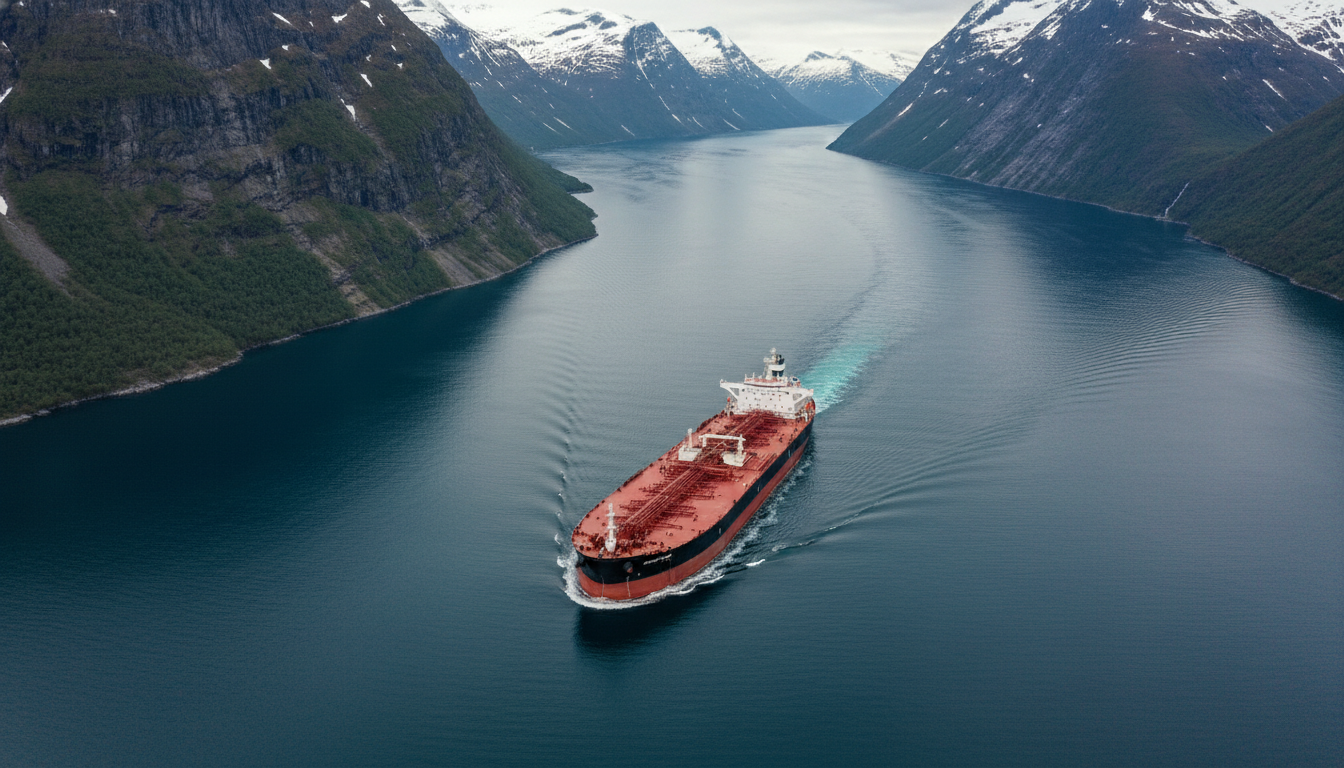

Iranian minister announced free passage for all commercial ships during ceasefire — Brent fell $9 to $90.38 and WTI dropped 9.4% to $82.59 in a single trading session
Iran declared on Friday (17) that the Strait of Hormuz is completely open for the passage of all commercial vessels.
The announcement was made by Foreign Minister Seyed Abbas Araghchi, according to G1.
The reopening is valid during the ceasefire between Israel and Hezbollah in Lebanon, established on Thursday (16).
-
Ayatollah Ali Khamenei’s Funeral Draws 15 to 20 Million in Tehran, Calls for Revenge Against Trump After Joint Israel-U.S. Attack

-
U.S. Establishes Permanent Embassy in Jerusalem, Reigniting International Debate Over Israel’s Capital
-
OPEC+ Boosts Oil Supply by 188,000 Barrels per Day in July 2026, Leading to Price Drop from $112 to $89 per Barrel in Under Two Months

-
TotalEnergies Signs 20-Year Deal to Purchase 2 Million Tons of LNG from Alaska, Boosting Project Viability


Oil plummets nearly 10%
The market reaction was immediate and brutal.
The barrel of Brent for June closed at $90.38 on the ICE, down 9.06% — a loss of $9.01 in a single day.
The WTI for May fell 9.41%, closing at $82.59 on the Nymex, a drop of $8.58.
For the week, WTI has already lost 14.5% and Brent has dropped 5.06%, according to Times Brasil.
This is the largest daily drop since the conflict between the US, Israel, and Iran began in February.
What Araghchi said
“According to the ceasefire in Lebanon, the passage for all commercial ships through the Strait of Hormuz is declared completely open, on the route coordinated already announced by the Ports and Maritime Organization of the Islamic Republic of Iran,” the minister stated.
The ceasefire has an initial deadline until Tuesday (April 21), which may be extended.
The agreement was signed by President Trump on April 7, after nearly two months of partial blockage of the Strait.
During this period, only a few commercial vessels were transiting daily, according to Portal MIE.
What changes in practice
With ships circulating freely, freight and marine insurance costs are expected to drop in the coming days.
For Brazil, the drop in oil alleviates inflationary pressure on fuels.
However, oil company stocks are suffering. Petrobras lost 6% on the stock market on Friday.
Aviation companies like Azul rose 2.08%, benefiting from cheaper kerosene.
Caution: The president of the Iranian Parliament, Mohammad Bagher Ghalibaf, warned that “with the continuation of the blockade [naval by the US], the Strait of Hormuz will not remain open“. The reopening may be reversed if Washington maintains the blockade on Iranian ports.