






 Portuguese
  Spanish
  4 min of reading
  36 comments


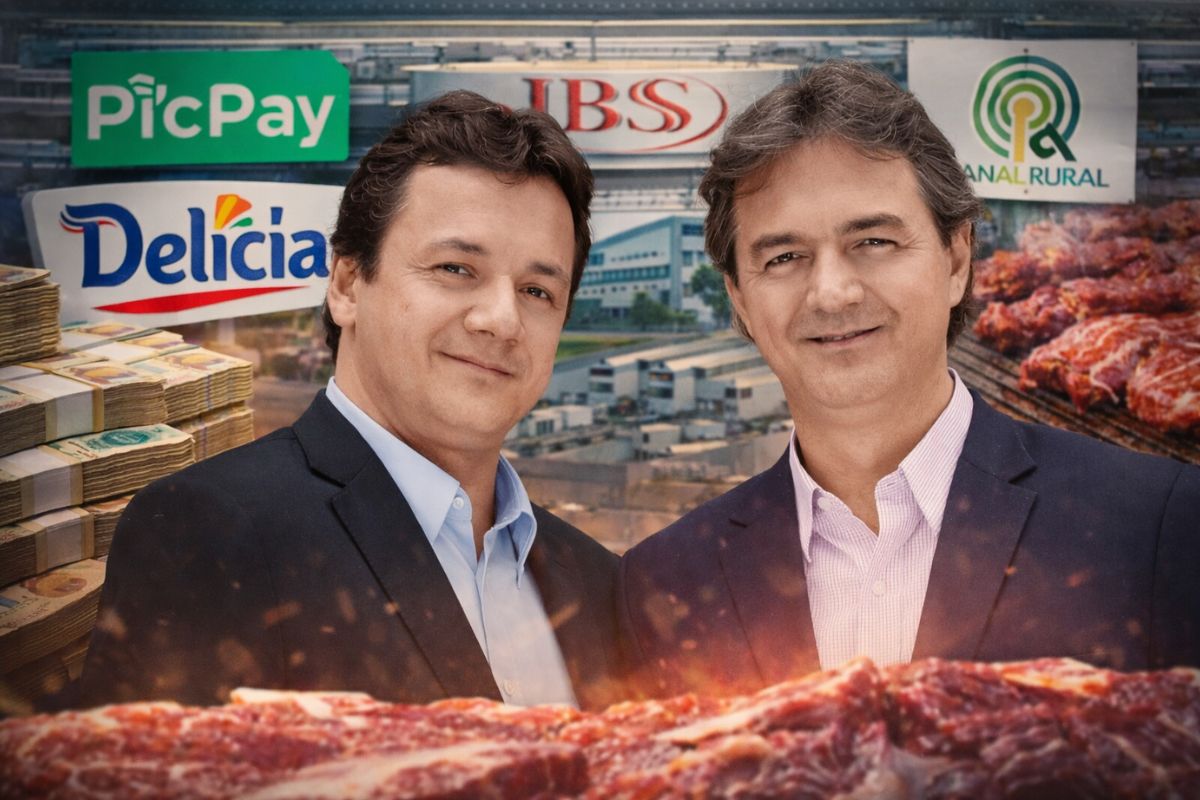


With an Estimated Net Worth of R$ 50 Billion, the Batista Brothers Lead the World’s Largest Meat Producer, Participating in Businesses That Unite More Than 50 Brands and Repositioning J&F to Attract International Investment, Combining Food, Financial Services, Energy, and Pulp in Increasingly Large Scales, with National and International Presence.
The Batista Brothers consolidated, in 2025, a position that blends industrial scale, sector diversification, and economic influence. Joesley and Wesley, 53 and 54 years old from Goiás, rank 17th among the richest in Brazil, with R$ 25 billion each, according to the annual billionaire ranking.
What catches attention is not only the size of the fortune but the speed of transformation. The story began in Anápolis, with a butcher shop founded in 1953 by José Batista Sobrinho, known as Zé Mineiro, and evolved into a business structure that today connects meat, finance, energy, pulp, and consumer goods within the same corporate ecosystem.
Who Are the Batista Brothers and Where Does Their Wealth Come From

Joesley and Wesley Batista are the key figures behind JBS, a company that evolved from a local operation in Goiás to become, in 2007, the largest meat producer in the world. The family origin helps to explain the logic of growth: rather than operating solely as a food company, the group began to build a business platform with multiple branches.
-
Brazilian Joins Homeownership Consortium, Faces Decade of Dual Payments Totaling $141,000, Surpassing Traditional Mortgage

-
Land Rover to Halt Production in July, Putting 371 Jobs at Risk, as Chinese Automaker Negotiates to Convert Factory to 100,000 Vehicles Annually by 2027

-
Mexican Pest Threatens U.S. Cattle Herds at Historic Lows, Potentially Boosting Brazilian Beef Exports as Burger Prices Soar

-
Brazilian Freight Bill Progresses in Congress with $5,000 Minimum Wage, 70% Advance Payment, and Fines Up to $1 Million, as Agriculture and Industry Warn of Rising Costs and Legal Uncertainty


This movement gains dimension when the numbers come into play. The combined wealth of R$ 50 billion and the position at the top of Forbes’ list were not born merely from the performance of one brand, but from the integration of productive, financial, and strategic assets.
Practically, the trajectory of the Batista Brothers directly answers the questions of “who” and “how much”: two controllers, a large conglomerate, and a structure that has multiplied value over decades.
What Is the Current Value of the Operation and How It Expanded Beyond Meat
JBS, the historical core of the group, has a market value of around R$ 90 billion on the B3. In 2025, the company was also listed on the New York Stock Exchange, a step that repositions the market’s perception of the company and expands the scope of its fundraising and international exposure. It’s not just operational growth; it’s financial repositioning.
At the same time, the Batista Brothers reinforced their expansion into sectors outside animal protein. J&F, the family holding company, retains about 50% of JBS and structures eight businesses that collectively exceed 50 brands.
This portfolio includes well-known food and consumer names, such as Seara, Doriana, Friboi, and Swift; financial services like PicPay and Banco Original; as well as assets in energy and pulp, like Âmbar and Eldorado. The result is a business design in which revenue, risk, and market presence are distributed across different areas.
Where the Weight of the Holding Lies: Brands, Sectors, and Financial Strategy

The command center remains in Brazil, with roots in Goiás, but the weight of the holding today is measured by its connection between sectors. J&F combines food, finance, media, energy, and personal hygiene businesses in an architecture that enhances bargaining power and reduces dependence on a single economic cycle. This diversification serves as both a shield and a lever.
Another relevant point is the corporate reorganization to access the international debt market, a movement associated with the restructuring of J&F itself.
The formal incorporation of businesses in pulp, mining, and consumer goods, as well as the complete buyback of Eldorado last year, reinforces the understanding that the group is adjusting its structure for a more sophisticated financing and expansion phase.
In market language, it’s the transition from an operationally-driven conglomerate to one with an ever more global financial strategy.
The Governance Factor: Influence, Investigations, and Repositioning
The trajectory of the Batista Brothers also includes episodes of significant institutional impact. In 2017, JBS was at the center of the Lava Jato discussions, and the brothers entered into a plea bargain agreement with the PGR, admitting to illicit payments involving approximately 1,800 politicians and public agents. This chapter marked the group’s image and pressured corporate governance at the highest level.
In the following years, the narrative underwent legal and regulatory rebalancing. In 2023, there was an acquittal of insider trading accusations at the CVM.
This outcome does not erase the reputational crisis of 2017 but helps to explain why the recent strategy combines business expansion with institutionalization efforts. In the market, scale without governance has a ceiling; scale with governance has momentum.
The Batista Brothers’ case illustrates how a family business can navigate different phases — local origin, industrial consolidation, reputational crisis, and strategic reorganization — without losing its capacity to generate value.
The transition from the butcher shop in Anápolis to a portfolio with more than 50 brands, presence in different sectors, and prominence in the world’s largest meat producer illustrates a rare transformation in speed and scope.
Looking ahead to the coming years, the central question shifts from simply “how much do they have” to “how will this structure evolve.”
In your view, do diversified family conglomerates increase the stability of the real economy or concentrate too much power in a few groups? What weighs more for you in this type of empire: efficiency, influence, or governance?





Monopolismo!
Infelizmente cresceram com o nosso dinheiro(nossos impostos), pois eles não pagam impostos, é repassado para o consumidor!
E esta conta nós pagamos mais de 3vezes, pois ele pegam dinheiro nosso, investem nós teu objetivos, os produtos que eles produzem da prioridade para o exterior!
E o que sobra pra nós e só resto, rejeitado pelo estrangeiros!
Este Brasil, não é e nunca mais será do brasileiro!
ELES JA QUITARAM O EMPRÉSTIMO JUNTO AO BNDS ??