Portuguese
  Spanish


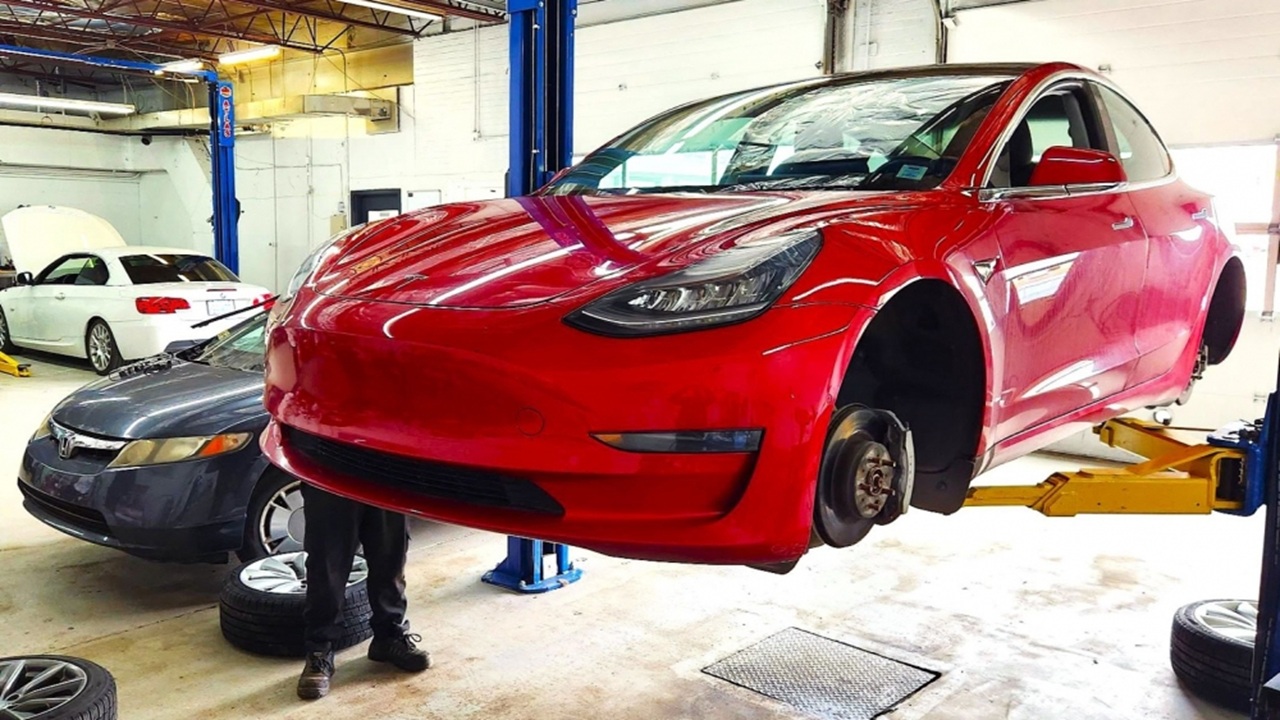

Study by BCA Expertise analyzed 2.7 million claims and repairs and pointed out that the repair of electric and electrified cars costs 23.2% more. The difference involves factors such as vehicle age, upper segment, official workshops, accidents in large cities, greater weight, and lower chance of total loss
The repair of an electric vehicle still costs more than the repair of a gasoline or diesel car. Although this vehicle usually requires less maintenance, workshop costs remain higher.
A study by BCA Expertise, a consultancy linked to the largest group of auctions and used car purchases, analyzed 2.7 million claims and repairs. The survey pointed out that the repair of battery-powered cars costs 23.2% more.
Battery alone does not explain the difference
For a long time, the battery was pointed out as the main villain in the repair cost of an electric vehicle. The part has significant weight, as it represents between 30% and 40% of the total value of the vehicle.
-
China’s Solar Panel Installation in Desert Unintentionally Alters Soil, Moisture, and Vegetation Dynamics

-
China’s Plan to Prevent Giant Asteroids from Hitting Earth Involves Deep Nuclear Blasts and 20 Years of Preparation
-
Google Invests Billions in Italian Island’s Innovative Energy Storage Using Liquid CO2 Technology

-
LG Unveils 670-Liter Multidoor Refrigerator in Brazil with Transparent “InstaView” Panel, Independent Temperature Zones, and Smartphone Control, Starting at $15,100




But the study shows that the problem is not limited to it. With the gradual decrease in battery costs, other factors have come to better explain why the repair remains more expensive.
BCA Expertise observed that the participation of accidents involving electric and electrified cars doubled in three years, reaching 12.5% in 2025. In the same period, the difference between electric and combustion cars rose from 13.7% to 23.2%.
Newer vehicles make repairs more expensive
One of the explanations lies in the profile of the cars. The electric and electrified models analyzed are, for the most part, newer than vehicles with combustion engines.
In addition, many belong to upper segments or even luxury brands. This combination increases the price of parts, labor, and procedures.
The more recent age of the models influences the choice of repair location. Owners of electric cars tend to resort to specialized workshops or official manufacturer centers.
On the other hand, owners of gasoline or diesel vehicles generally look for general repair workshops. The difference appears in the labor: the study points to €13.20 more per hour for services related to electric cars.
Where accidents happen also changes the price
Another unusual point is the location of the accidents. Accidents involving electric cars tend to occur more in large cities, while those involving combustion models appear more distributed.
In urban areas with higher purchasing power, labor costs tend to be higher. This helps to push up the repair value.
The greater weight of an electric car also factors in. Because of the battery, these vehicles can cause more severe damage in collisions, increasing complexity and cost.
Average value reduces total loss cases
The average value of the car also alters the insurers’ decision. An electric vehicle has an estimated average value of €15,000, compared to €5,200 for the combustion engine cars analyzed.
With a higher value, the electric car has a lower chance of being considered a total loss. Thus, even when the repair is expensive, it tends to be approved.
In practice, this means that more electric cars return to the workshop after accidents. With a similar accident rate, the final result is a 23.2% more expensive repair.