Portuguese
  Spanish


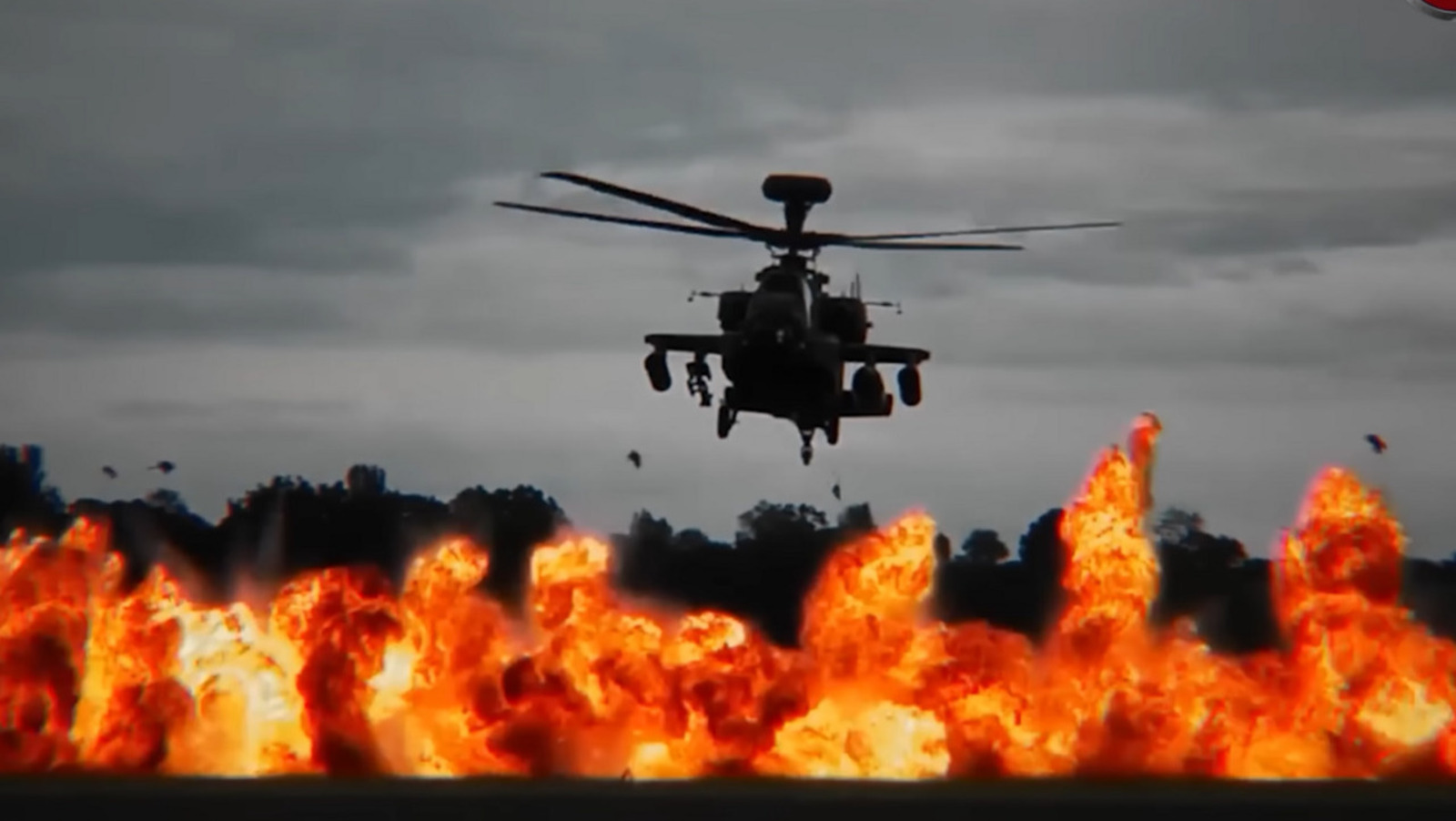

With Longbow radar, 30 mm cannon, Hellfire missiles, and drone control, the Apache Guardian combines reinforced armor and the ability to attack multiple threats in hostile scenarios safely
Called a flying tank, the Apache Guardian combines heavy armor, advanced sensors, and long-range armaments in a single platform, capable of operating in hostile scenarios and quickly attacking different threats with precision and greater safety.


Structure made to withstand
The AH-64E Apache Guardian was designed to continue operating even after sustaining severe damage in combat.
Its fuselage features reinforced armor and redundant systems that keep vital functions active, even under intense punishment.
-
U.S. Military Intervention Risk in Brazil Raises Alarm, Highlights National Sovereignty Amid Tensions Over Washington’s Terrorist Designation of PCC and Comando Vermelho

-
Brazilian Air Force’s Sole KC-30 Aircraft Completes Strategic Mission to Spain for 105mm Anti-Tank Ammunition for Leopard 1A5 Tanks

-
Brazilian Air Force Seeks to Acquire More Gripen Fighter Jets
-
U.S. Air Force Launches Air-to-Air Missile Project with Range of Up to 1,850 km for Indo-Pacific Operations




This resilience, combined with a large armament capacity, transforms the helicopter into an offensive platform ready to face heavy ground defenses with relative safety.
Longbow radar enhances battlefield awareness
The Aero Behind Aviation channel, which has 2.07 million subscribers, details the Longbow radar installed above the main rotor.
The system allows the Apache Guardian to monitor the battlefield without exposing itself directly, identifying threats even in low visibility conditions.
According to the presentation, the radar tracks up to 128 targets simultaneously and automatically prioritizes the 16 most dangerous for engagement.
This feature reduces the crew’s workload and accelerates attack decisions on the battlefield.
Helmet and cannon work together
The IHADSS helmet connects the crew member’s head movements to the sensors and the 30 mm front cannon.
This allows the weapon to follow the operator’s gaze in real time, enabling quick shots without the need to align the entire aircraft.
This functionality facilitates responses during evasive maneuvers and increases the Apache Guardian’s speed in close combat.
Arsenal covers different targets
The helicopter can operate against armored vehicles and also against enemy positions in open areas, adjusting the attack according to the mission.
Among the main offensive systems are the Hellfire missiles, capable of destroying armored vehicles and fortifications from over 8 km away.
The Hydra 70 rockets also appear, used for area saturation and close support in different scenarios.
Completing the set is the 30 mm cannon, employed with precision and speed in short-range actions.
The variety of weapons allows for adjusting the response according to the encountered threat, maintaining the operational efficiency of the helicopter in distinct missions with armored targets, fortifications, and positions in open areas.
This combination ensures real flexibility in the field and adapts the Apache Guardian to different types of threats without losing operational efficiency.
Connection with drones extends the helicopter’s range
In the E version, the Apache gained the ability to control drones directly from the cockpit, receiving images and data in real-time.
According to Boeing, this connection enhances situational awareness and helps identify threats at long distances.
The system also allows for coordinating joint attacks, reinforcing the crew’s ability to react with more information during the mission.
With this integration, the Guardian stands out as a reference in attack aviation until 2026, bringing together protection, sensors, armaments, and continuous data exchange on a single platform.
With information from Revista Oeste.