Portuguese
  Spanish


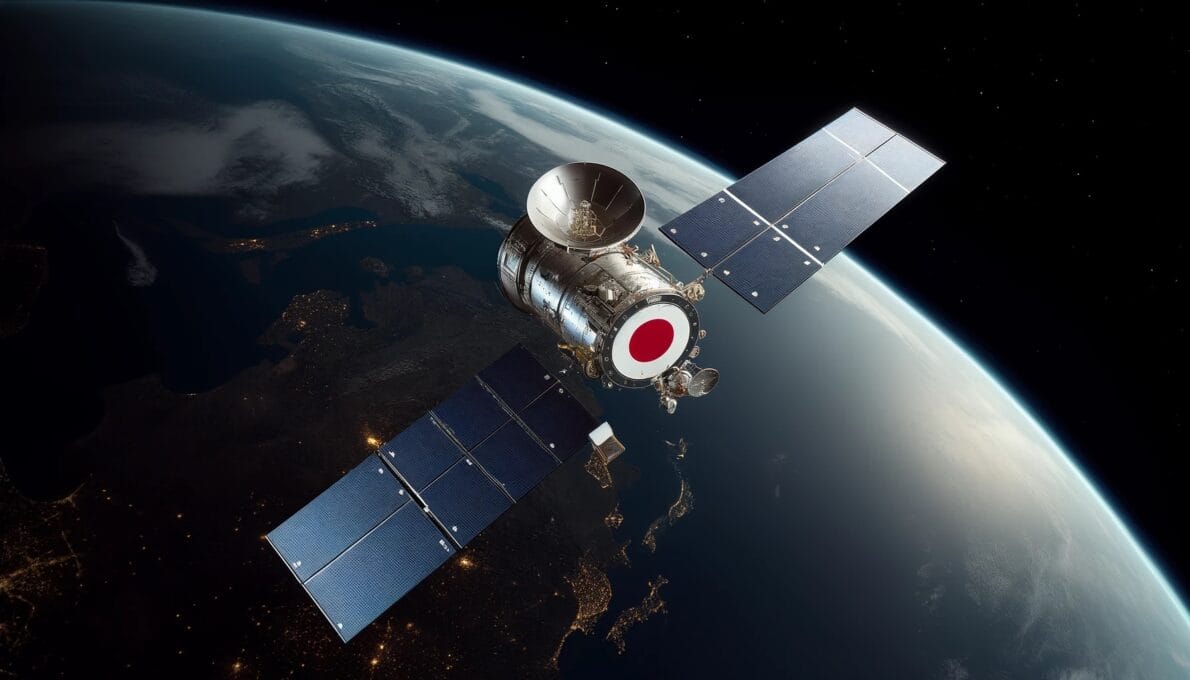

Japan Plans to Transmit Solar Energy from Space to Earth. Nicknamed ‘Wireless Solar Energy’, the Technology Will Be Tested Next Year at an Altitude of 400 km.
Japan is moving forward to transmit solar energy from space to Earth as early as 2025. The expectation is that the country will install a satellite in low Earth orbit that will serve as a kind of mini solar power plant. In this way, according to scientists, the “wireless solar energy” will be transmitted wirelessly to our planet.
Understand How It Is Possible to Transmit Solar Energy from Space

According to Koichi Ijichi, a consultant from the research institute Japan Space Systems, in an interview, it will be a small satellite, weighing about 180 kg, that will transmit about 1 kilowatt of power from an altitude of 400 km.
The novelty of ‘wireless solar energy’ was introduced at the International Conference on Space Energy, held last week in London, United Kingdom. One kilowatt is approximately the amount of energy required to operate a household appliance for 1 hour, such as a washing machine, for example.
-
Brazilian scientists are simultaneously advancing two research projects on clean hydrogen and driving solutions that could transform the energy matrix, enhance industrial competitiveness, and accelerate large-scale emission reduction targets.

-
Advancement in renewable energy: A R$ 150 million project launched by Petrobras and Finep aims to create state-of-the-art electrolyzers for green hydrogen, strengthening national research and preparing Brazil to compete in a billion-dollar energy market.
-
Solar energy can increase property value by up to 10% and become a selling point.
-
Illiterate or semi-literate grandmothers were trained to repair solar systems, open rural workshops, and light up homes that still depended on kerosene.




The idea of transmitting solar energy from space is that the panels can receive continuous sunlight exposure while in orbit. The technique is more advantageous because the panels can operate 24 hours a day in space, while solar plants on Earth remain idle at night when there is no sunlight.
In this way, the panels capture sunlight and convert it into beams of microwave energy. The satellite then transmits the beam through the air to a receiving station on the planet’s surface. There, they can convert the received solar energy into electricity.
Wireless Solar Energy Project Will Not Hit the Market Anytime Soon
The satellite will have a photovoltaic panel of 2 square meters to charge the battery, and the accumulated energy will be sent to a microwave-shaped receiving antenna, as previously mentioned. Since the satellite travels at high speeds, the antenna needs to be large enough to receive the wireless solar energy, around 40 km long and 5 km wide.
The Japanese satellite is part of a project called OHISAMA, which means “sun” in Japanese. The project is expected to launch next year, but due to the generated power, it is not expected to become commercial anytime soon. Tests for wireless energy transmission are expected to take place this December, on a smaller scale.
It is worth mentioning that this is not the first time a solar energy generation project has been installed in space. The first record of this was in 1968, during the Apollo mission. However, at that time, the technique was considered impractical due to high costs and the need for very large structures.
Japan Initiative Has Been Done Before
The technology of Japan to transmit solar energy from space is not new. Last year, researchers at the California Institute of Technology in the U.S. successfully transmitted solar energy from space to Earth without the use of wires for the first time.
The energy transmission occurred through the Microwave Array for Power-transfer Low-orbit Experiment (MAPLE) system. The mechanism directed microwaves in space to a receiver on the roof of the university campus in Pasadena.
Additionally, in September, the Chinese company LONGi Green Energy, the largest solar energy company in the world, launched a project to install solar panels in space. The goal was to test whether it is possible to generate energy for Earth. If successful, solar panels in space would solve the growing energy shortage in China. In the past, the country experienced a series of blackouts, and factories had to cut production due to a crisis in the sector.