Portuguese
  Spanish



Japan Approves Stem Cell Treatment for Parkinson’s and Authorizes Cardiac Therapy with Muscle Sheets, Expected to Reach the Market by Mid-Year
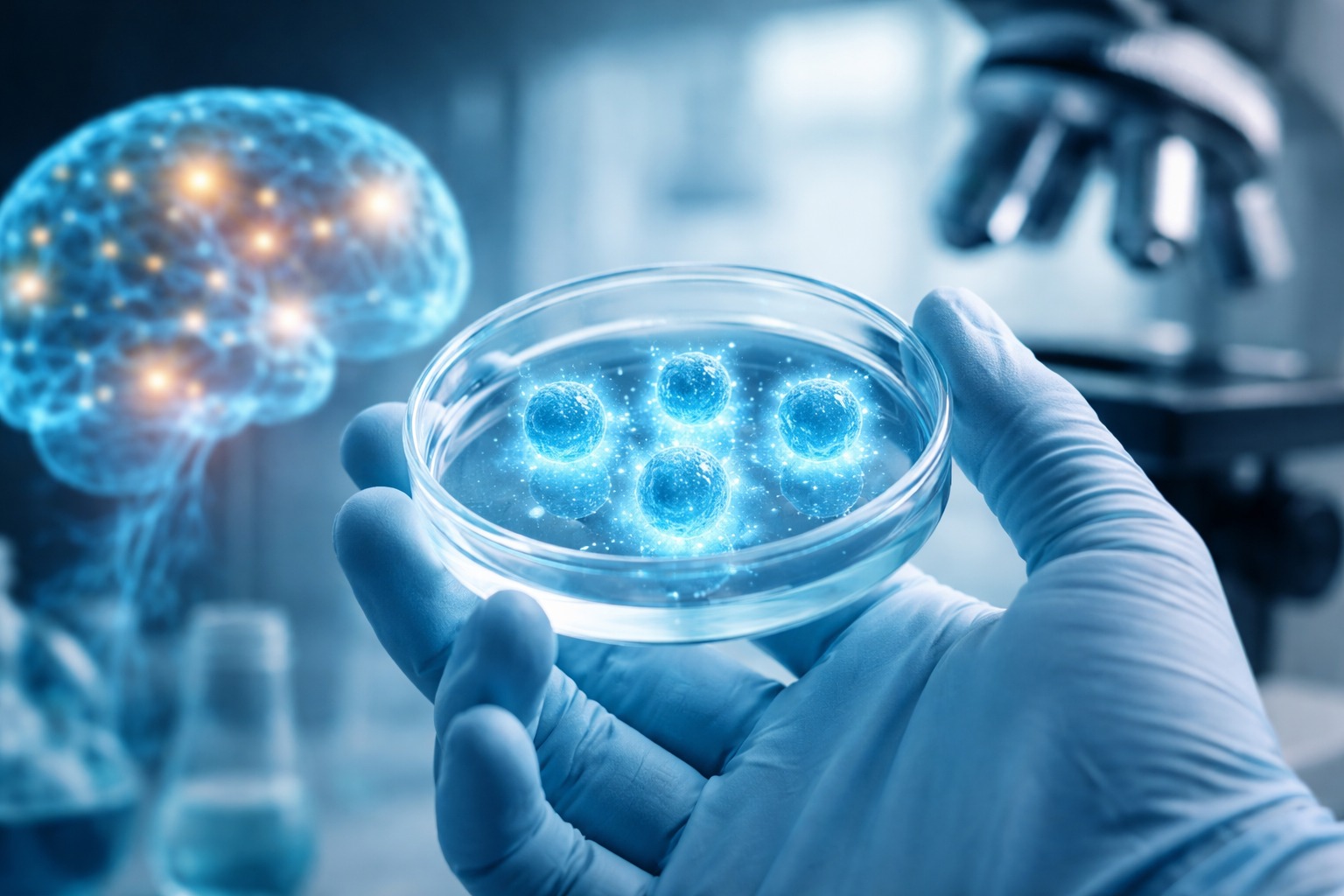
Stem Cells have received regulatory approval in Japan for two innovative medical treatments aimed at Parkinson’s disease and severe heart failure. The decision allows therapies developed by pharmaceutical companies to be produced and marketed, with availability expected for patients by mid-year.
The Japanese government has approved two new treatments based on stem cells, one for Parkinson’s disease and the other for severe heart failure, according to an announcement made this Friday (6) by a pharmaceutical company and the country’s press.
The therapies are expected to reach the market by mid-year, according to information from the Ministry of Health.
-
Engineers Develop Fridge-Sized Machine to Produce 95-Octane Synthetic Fuel from Air and Water, Aiming to Sustain Combustion Engines Without Oil

-
Two-Armed Robot Uses AI to Reassemble Destroyed Pompeii Frescoes, Solving an “Impossible” Puzzle
-
New Law in Brazil Requires Breaks for Type 1 Diabetes Management at Work, School, and Public Exams

-
Scientists Confirm “Greening” of Antarctica: Ice on the World’s Coldest Continent Turns Green as Mosses Multiply Over Tenfold in Four Decades


The Sumitomo Pharma group has received authorization to produce and sell Amchepry, an experimental treatment for Parkinson’s that involves transplanting stem cells directly into the patient’s brain.
The technique aims to replace brain cells that cease to exist in individuals affected by the disease.
At the same time, the Japanese Ministry of Health approved ReHeart, a therapy made up of sheets of cardiac muscle developed by the medical startup Cuorips.
According to local press, these sheets can stimulate the formation of new blood vessels and help restore heart function in severe cases.
Stem Cell Treatment May Become the First of Its Kind on the Market
If commercialization is confirmed according to the official timeline, Amchepry could become the first commercially available medical product in the world based on induced pluripotent stem cells, known as iPS.
These cells are created from the genetic reprogramming of already specialized adult cells. The process allows them to return to a state similar to that of young cells, making it possible for them to be transformed into various other cell types used in medical treatments.
Research with iPS is considered one of the central fields of modern regenerative medicine and has been the target of scientific investments in several countries.
Research Involved Seven Patients with Parkinson’s
The treatment developed by Sumitomo Pharma received a “conditional and time-limited approval” for production and marketing, according to a statement from the company itself.
A trial conducted by researchers at Kyoto University assessed the safety and efficacy of the treatment. The study involved seven patients with Parkinson’s, aged between 50 and 69 years.
Each participant received implants of five or ten million cells on both sides of the brain. The cells used were derived from iPS obtained from healthy donors.
These cells were developed until they became precursors of dopamine-producing brain cells, a substance that stops being produced adequately in individuals with Parkinson’s.
Use of iPS Gained Prominence with the 2012 Nobel Prize
The iPS Stem Cells can be transformed into various different cell types, which expands their potential for regenerative treatments in multiple areas of medicine.
The Japanese scientist Shinya Yamanaka received the Nobel Prize in 2012 for his pioneering research that led to the development of this technology.
Japan’s Minister of Health, Kenichiro Ueno, stated during a press conference that he hopes the new treatments will benefit patients. According to him, the expectation is that these therapies will provide relief for those affected by the disease.
Disease Affects Millions of People Worldwide
Parkinson’s disease is a chronic and degenerative neurological disorder that compromises the body’s motor system.
Among the most common symptoms are tremors, muscle stiffness, and movement difficulties, which tend to worsen over time.
According to the Parkinson’s Foundation, around 10 million people live with the disease worldwide.
With the Japanese authorization, the new treatments based on stem cells may begin to be offered to patients within a few months, marking a new step in the clinical use of this medical technology.
Information from UOL.