Portuguese
  Spanish


A study by the British universities of Exeter and Hertfordshire with the British Antarctic Survey, published in October 2024, confirmed the greening of Antarctica: the vegetation of the Antarctic Peninsula, made mainly of moss, grew more than ten times in four decades. Scientists link the phenomenon to global warming, and Brazil is monitoring everything from within, on the same continent where melting threatens to raise sea levels.
The image of an Antarctica only of white ice is changing. The coldest continent on the planet is undergoing a silent greening, with plants gaining ground on its edges, as addressed in a video by the Top10 Channel. The phenomenon sounds unlikely, but it is real and has been measured by satellite.
The scientific confirmation came from a robust study. According to the University of Exeter, British researchers analyzed nearly forty years of satellite images and concluded that the vegetation of the Antarctic Peninsula, dominated by moss, expanded dramatically, a clear sign of global warming in that region.
The numbers are impressive. The area covered by vegetation jumped from less than one square kilometer in 1986 to almost twelve square kilometers in 2021, a growth of more than ten times that defines what scientists call the greening of Antarctica, one of the most visible faces of global warming on the planet.
-
2,000-Year-Old Gold Rings Found with Human Bones in Thailand Reveal Rare Burial and Feature Ancient Indian Inscription

-
Lenovo Unveils Legion Y700 Tablet with RGB Backlighting, 5G, and SIM Card Support

-
World’s First Nuclear Hydrogen Unit Begins Operation: Copper-Chlorine Technology with Initial Capacity of 150 Liters per Hour, Aiming for 3,000 Liters per Hour
-
Mechanics Retrofit Old Fiat Uno with BYD Electric Motor for Silent, Low-Voltage Operation Reaching Nearly 60 km/h in Home Test


Next, see what it means for Antarctica to turn green, what the moss study revealed, why the Antarctic Peninsula is greening, how this connects to the melting that threatens the sea level, and why the greening of Antarctica directly interests Brazil.
Moss on ice: the study that measured the greening of Antarctica
The heart of this story is an unexpected green carpet. The greening of Antarctica is not made of trees or forests, but mainly of moss, a simple and resilient plant that can survive in some of the harshest conditions on Earth.
The study that measured the phenomenon was meticulous. Researchers from the universities of Exeter and Hertfordshire, in partnership with the British Antarctic Survey, used almost forty years of satellite images to map how the moss advanced across the Antarctic Peninsula, publishing the results in a scientific journal in October 2024.
The data shows an explosion of green. The vegetation increased from less than one square kilometer in 1986 to about twelve square kilometers in 2021, which represents the tenfold growth that characterizes the greening of Antarctica linked to global warming.
And the pace is accelerating. According to scientists, between 2016 and 2021, the expansion of moss was even faster than the average of previous decades, indicating that the greening of Antarctica is not a temporary fluke but a trend that intensifies with global warming.
It is worth understanding the real scale of the phenomenon. Twelve square kilometers of moss is small compared to the fourteen million square kilometers of the continent, but what is alarming is not the current size, but the speed: the greening of Antarctica shows how much global warming is already affecting even the coldest place on Earth.
Why the Antarctic Peninsula is turning green
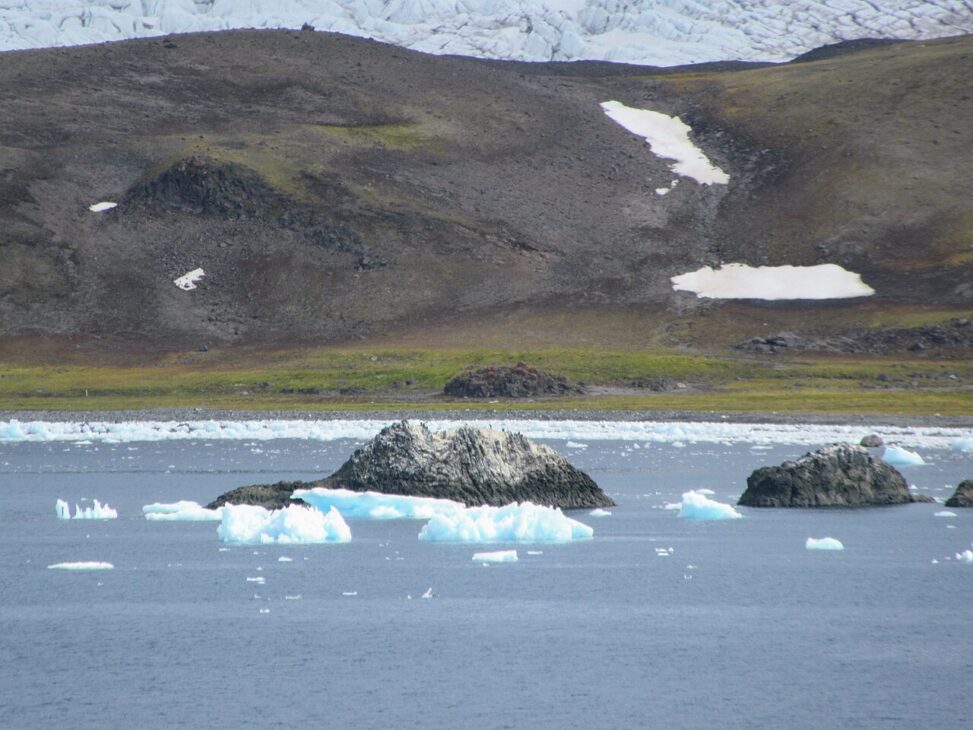
The explanation for the greening lies in the climate. The Antarctic Peninsula, that arm of land pointing towards South America, is one of the fastest-warming regions on the planet, and it is precisely there that the moss found conditions to spread under the effect of global warming.
With the ice retreating, there is space for life. As the snow and ice melt due to global warming, previously covered areas become exposed, and the moss takes advantage of these new terrains to grow, pushing the greening of Antarctica further and further.
The meltwater also helps. The melting provides moisture that the moss uses to develop, creating a cycle in which global warming releases space and water at the same time, accelerating the greening of Antarctica in that portion of the Antarctic Peninsula.
The green even changes the soil itself. The moss accumulates organic matter and helps form a layer of soil where there was only rock and ice before, paving the way for other plants to settle in the future and expanding the greening of Antarctica caused by global warming.
All this makes the Antarctic Peninsula a climate laboratory. Observing the greening of Antarctica there is like watching, in real time, the effect of global warming on an extreme ecosystem, a visible warning that even the white continent is not immune to the planet’s changes.
From green to ice: why greening is only half the story
The greening of Antarctica is the visible and almost pleasant part of the change, but it is only half the story. While the moss advances at the edges, the true weight of global warming is in the melting ice that threatens the sea level.
It is important to connect the two phenomena. The same heat that makes the moss grow on the Antarctic Peninsula also melts giant glaciers in the rest of Antarctica, and it is this melting, much more than the green, that can raise the sea level and affect the entire planet.
Therefore, the greening acts as a warning. It is easy to see in satellite images and serves as a notice that global warming has already reached Antarctica, drawing attention to what happens beneath the ice, where the risk to the sea level is much greater.
This is where the world’s most feared glacier comes in. To understand why global warming in Antarctica is so concerning, one must look beyond the moss and get to know Thwaites, the glacier that could reshape the sea level of coastal cities.
The other face of the continent: the Thwaites glacier and the sea level
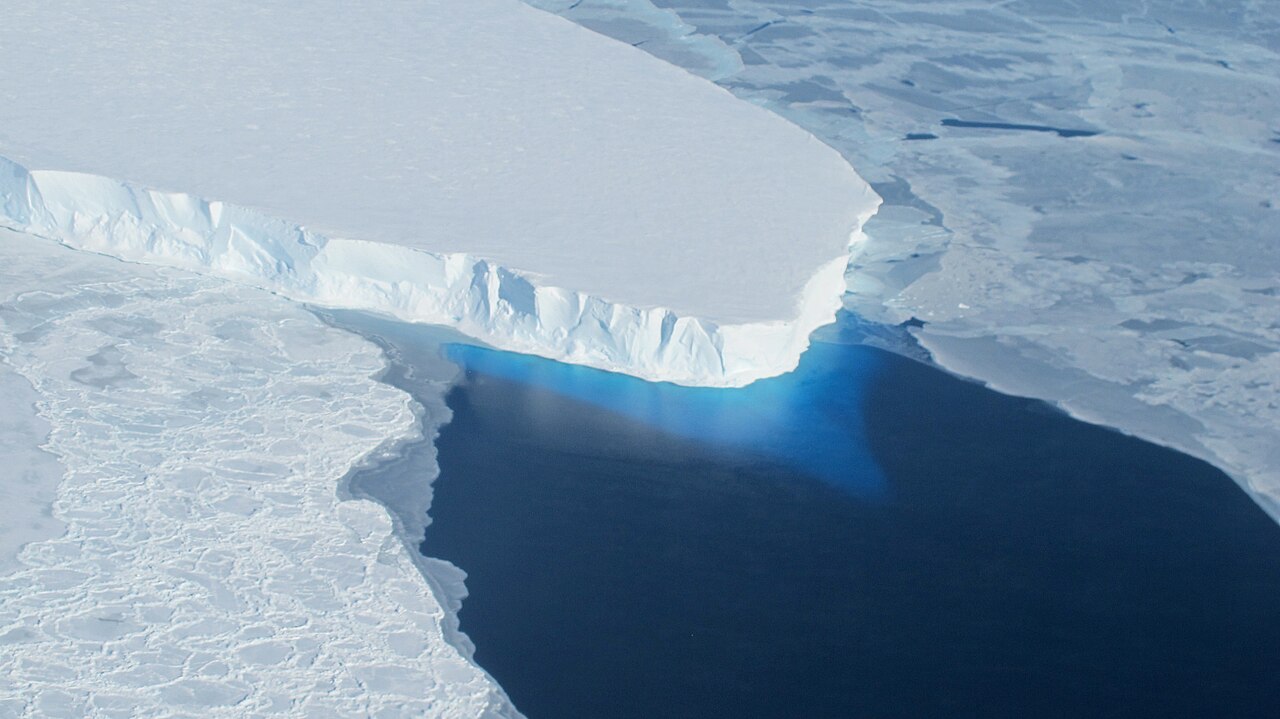
If the moss is the green face of Antarctica, the ice hides a much greater threat. On the west side of the continent is the Thwaites glacier, nicknamed the “Doomsday Glacier,” a colossal ice mass that worries scientists worldwide due to its potential impact on the sea level.
The size of Thwaites is impressive. At about 120 kilometers wide, it is one of the largest glaciers on Earth, and its basin has an area comparable to that of a Brazilian state, which gives an idea of the damage its melting would cause to the sea level due to global warming.
The dramatic nickname has a reason. Thwaites acts as a kind of “cork” that holds back the ice of West Antarctica, and its collapse could unlock a massive amount of ice, significantly raising the sea level and affecting coastal cities across Antarctica and beyond.
Alone, the glacier is already concerning. It is estimated that the complete melting of Thwaites would raise the sea level by about 65 centimeters, and it already accounts for about 4% of the annual rise in sea level worldwide, a reminder that global warming affects both the green and the white of Antarctica.
Even so, alarmism should be avoided. Scientific models indicate that Thwaites is expected to retreat in the coming decades, but without an immediate collapse, so the most extreme scenario of sea level rise refers to the long term, not tomorrow, even with the advance of greening in Antarctica.
The Silent Risk of Invasive Species
Besides the unusual beauty, the greening brings a danger. As moss forms new soil in Antarctica, it paves the way for other plants to arrive, including species that are not native to the continent and could disrupt that unique environment.
The greatest risk comes from outside. Seeds and spores can be unintentionally brought by tourists, scientists, and visitors who step on the Antarctic Peninsula, and with global warming making the climate less hostile, these species would have a better chance of surviving and spreading along with the greening of Antarctica.
Such an invasion would be difficult to reverse. Once established, an invasive plant can compete with native moss and forever change the ecosystem of Antarctica, which is why scientists are calling for strict biosecurity rules for those visiting the region.
Therefore, the green requires vigilance. The greening of Antarctica is fascinating, but it is also an invitation to caution, as the same global warming that brings the moss can open the door to invaders capable of altering one of the last untouched places on the planet.
Brazil in Antarctica: the Comandante Ferraz Station
Brazil is not a mere spectator in this story. The country has maintained, for decades, the Comandante Ferraz Antarctic Station, located on King George Island, in the South Shetland archipelago, right in the region of the Antarctic Peninsula that is currently experiencing the greening of Antarctica.
The Brazilian presence is old and organized. Through the Brazilian Antarctic Program, created in 1982, and the Brazilian Navy, the country has been conducting scientific research in Antarctica since the 1980s, closely studying phenomena such as the advancement of moss and the effects of global warming.
The current station is modern. Inaugurated in 2020, after a fire destroyed the previous one, the new Comandante Ferraz has laboratories that allow the study of climate, biology, and geology, placing Brazil at the epicenter of the changes that cause the greening of Antarctica and affect the sea level.
Being there gives Brazil a significant role. As the country has its own base on the Antarctic Peninsula, its scientists can firsthand observe the greening of Antarctica, contributing data on global warming and helping to understand what the melting ice could mean for the sea level worldwide.
There is also a strategic interest. Maintaining a presence in Antarctica ensures Brazil a voice in decisions about the continent and access to cutting-edge research, at a time when the greening of Antarctica and the behavior of glaciers like Thwaites have become central topics in the debate about the sea level.
Is Antarctica really turning into a “green jungle”?
In light of sensational headlines, a dose of realism is needed. Antarctica is not turning into a forest or a “green jungle”: the greening is currently limited to moss, lichens, and algae scattered over a tiny fraction of the Antarctic Peninsula.
The numbers help put things in perspective. The approximately twelve square kilometers of vegetation are an almost invisible point on the map of a giant continent, so talking about the greening of Antarctica does not mean saying that the ice will be replaced by green fields due to global warming.
What matters is the trend, not the size. The scientists’ warning is not that Antarctica is already green, but that the moss is advancing rapidly, and this speed reveals how much global warming is already transforming even the most extreme environment on the planet, with future impacts on the sea level.
In other words, balance is needed. The greening of Antarctica is real and deserves attention, but exaggerating the phenomenon hinders understanding; the correct approach is to view it as a clear symptom of global warming, not as the imminent end of Antarctic ice.
What the greening of Antarctica has to do with Brazil
It may seem distant, but the greening of Antarctica touches Brazil in several ways. Starting with science: Brazilian researchers study the moss and the climate precisely on the Antarctic Peninsula, contributing to understanding the global warming that affects the entire world.
There is also the connection with the coast. The melting of Antarctica, including glaciers like Thwaites, raises the sea level that washes Brazilian beaches, which means that what happens on the icy continent may, in the future, affect cities and ports along the coast of Brazil.
The topic also reinforces the importance of national research. Maintaining the Comandante Ferraz Station and the Brazilian Antarctic Program costs money, but it ensures the country has its own data on the greening of Antarctica and on global warming, something strategic in the face of threats to the sea level.
Finally, there is the climate warning. The greening of Antarctica is yet another sign that global warming is not a problem elsewhere, but an issue that involves Brazil, both for the science the country produces and for the effects that the sea level may have on the Brazilian coast.


The greening of Antarctica shows how the planet is changing in places that seemed untouchable. Seeing the moss advance more than tenfold in four decades over the coldest continent in the world is an impressive portrait of global warming in action.
More than curiosity, it is a serious message. While green takes over the edges of Antarctica, glaciers like Thwaites threaten to raise the sea level, and Brazil, present on the continent with Comandante Ferraz, closely monitors these transformations that link the distant ice to our own coast.
And you, did you imagine that Antarctica could be “turning green” because of global warming? Do you think the world is taking the greening of Antarctica and the threat to the sea level seriously? Share your opinion in the comments and share with those who care about the climate.