Portuguese
  Spanish


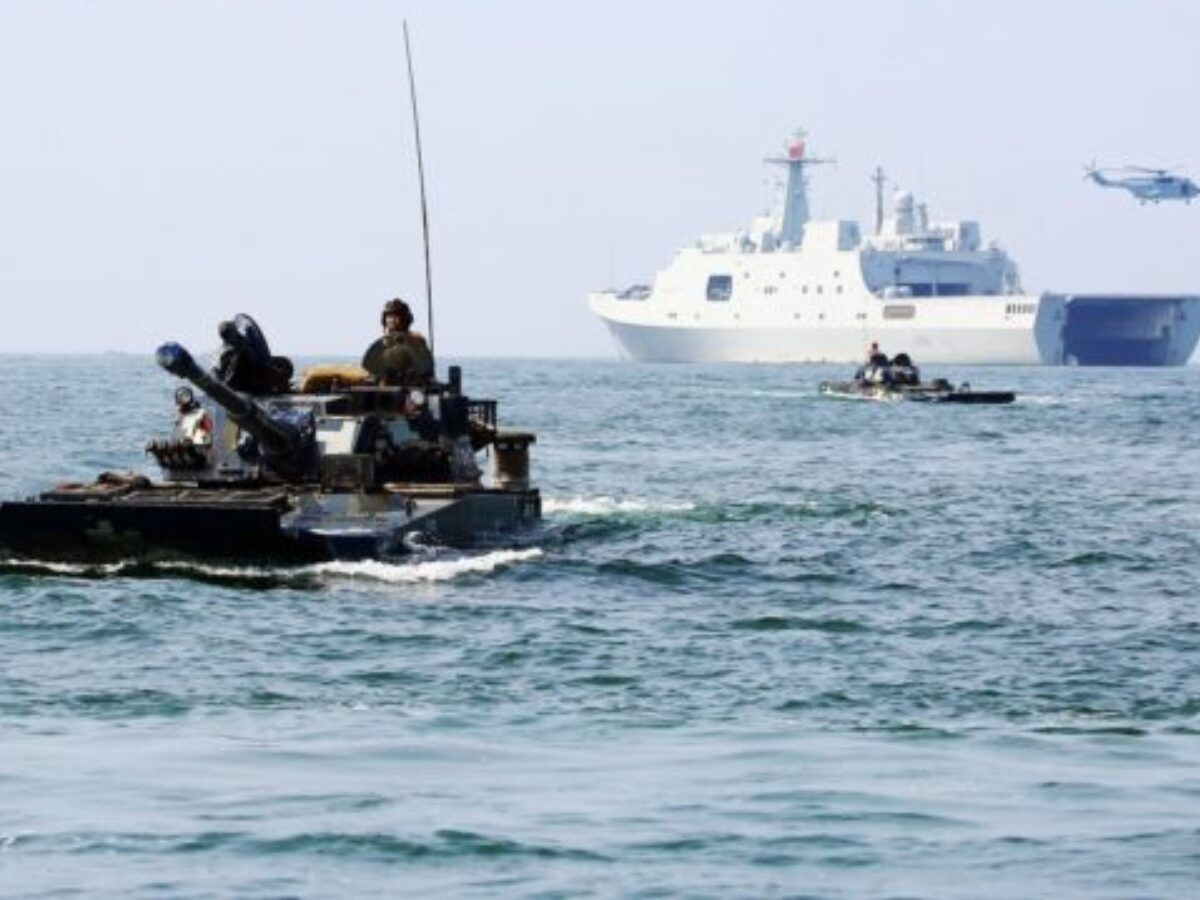

Military Alliance Between Japan and the United States Advances with Strategic Simulation Involving Conflict in the Taiwan Strait and Coordinated Response Against Chinese Vessels.
In a move that highlights the growing strategic alignment between Japan and the United States, the two countries conducted an unprecedented joint military exercise in February 2024. The operation simulated a scenario of high geopolitical tension: a Chinese invasion of Taiwan. The training, dubbed “Keen Edge,” underscored Japan’s willingness to act more assertively in defense of regional stability, utilizing the right to collective self-defense to respond to Chinese military advances.
Simulation Details Coordinated Military Response in the Pacific
The “Keen Edge” exercise, held regularly every two years, reached a new level in 2024 by including, for the first time, a contingency scenario directly linked to a potential conflict between China and Taiwan.
The joint training reflected the deepening military partnership between the United States and Japan, while also consolidating new defense guidelines adopted by the Japanese government following recent revisions to its security policy.
-
North Korean Fiasco: Launch of the Largest Warship Ends in Sinking

-
While giant ships still burn heavy fuel and the maritime sector races against climate targets, Maersk and Vale are starting to bet on ethanol as a new route to reduce emissions at sea.

-
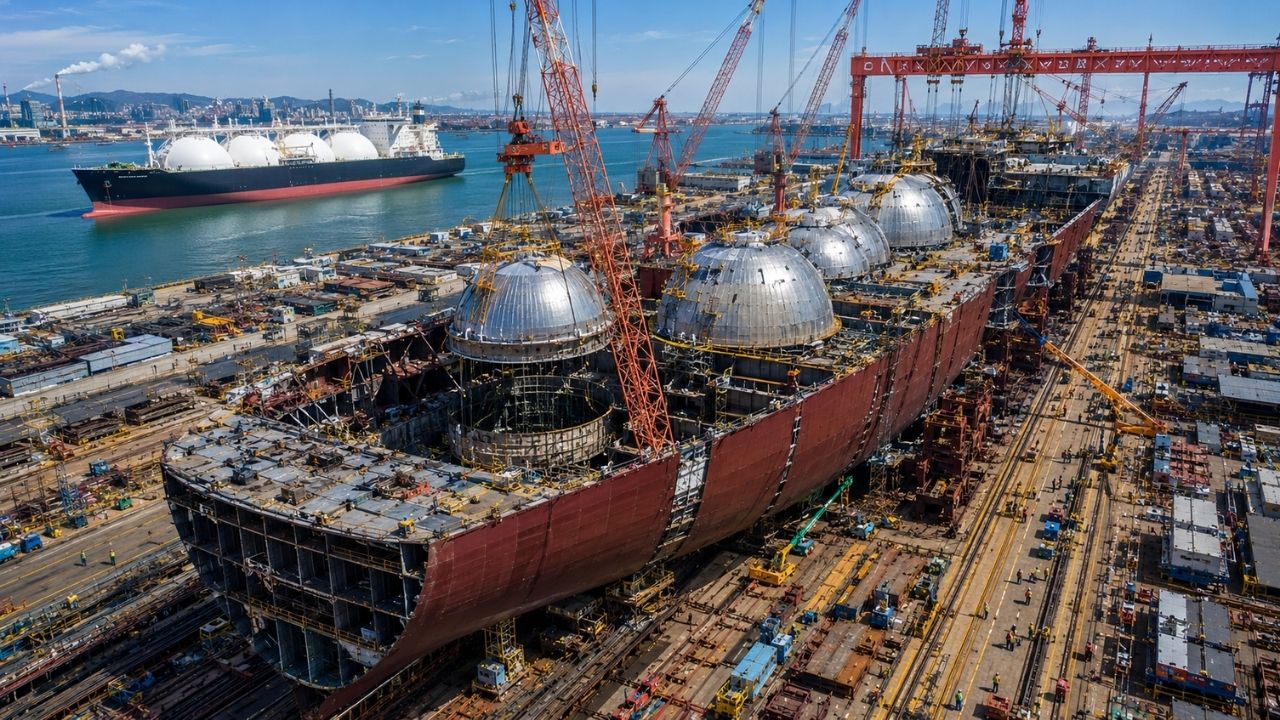
China begins construction of the world’s largest LNG ship, a 344-meter giant capable of supplying 4.7 million homes for a month, carrying 271,000 m³ of gas, and placing QatarEnergy in the largest naval order ever recorded in world history.
-
China is designing a container ship with a thorium nuclear reactor that will operate for 40 years without refueling, and the 25,000-container giant from Jiangnan Shipyard will cross oceans without emitting carbon in an industry that burns 300 million tons of fuel per year.



The simulation was based on the assumption of a Chinese offensive against Taiwan, accompanied by attacks on U.S. military bases located in Japanese territory.
Despite the offensives, the Japanese government assessed that the attacks did not constitute a direct aggression against Japan.
Nonetheless, the incident was classified as an existential threat, allowing the country to invoke the right to collective self-defense and support U.S. armed forces in response to the threat.
Japanese Fighters Attack Chinese Vessels in Simulated Scenario
In one of the central actions of the military exercise, Japan’s Self-Defense Air Force fighters were mobilized to launch anti-ship missiles against Chinese transport vessels crossing the Taiwan Strait.
The decision to target amphibious vessels instead of aircraft carriers was strategic: the selected targets were directly involved in simulating the landing of Chinese troops on the island, necessitating an immediate response.
The operation also included a simulated episode of the landing of Chinese forces on Yonaguni Island, Japan’s westernmost territory. In response, the Ground Self-Defense Force deployed troops from Kyushu Island to reinforce defenses in the southwestern Japanese islands.
This movement revealed significant logistical challenges, such as the shared use of runways by transport aircraft and fighters, generating discussions about operational priorities.
Cooperation Between Japan and the U.S. Gains Strength with Australian Participation
For the first time in the history of Keen Edge, the exercise included the participation of Australian forces, signaling an expansion of the military cooperation axis in the Indo-Pacific.
The Australian presence strengthens strategic ties among democracies in the region and highlights Japan’s growing role as a pillar of regional security in the face of China’s military expansion.
This context also aligns with the establishment of Japan’s new Joint Operations Command, whose formal implementation is scheduled for March 2025.
The exercise served as an early test of the new command structure, allowing for strategic and operational adjustments based on the simulation results.
Japanese Defense in Transformation: From Passive Posture to Strategic Action
The 2024 edition of Keen Edge marks a turning point in Japan’s national security doctrine. Based on constitutional reinterpretations adopted in recent years, the country has been progressively abandoning its exclusively defensive posture, expanding its role in coordinated actions with allies, especially the United States.
According to the Chief of Joint Staff, Yoshida Keishū, “it was a qualitatively superior exercise compared to previous editions.”