Portuguese
  Spanish


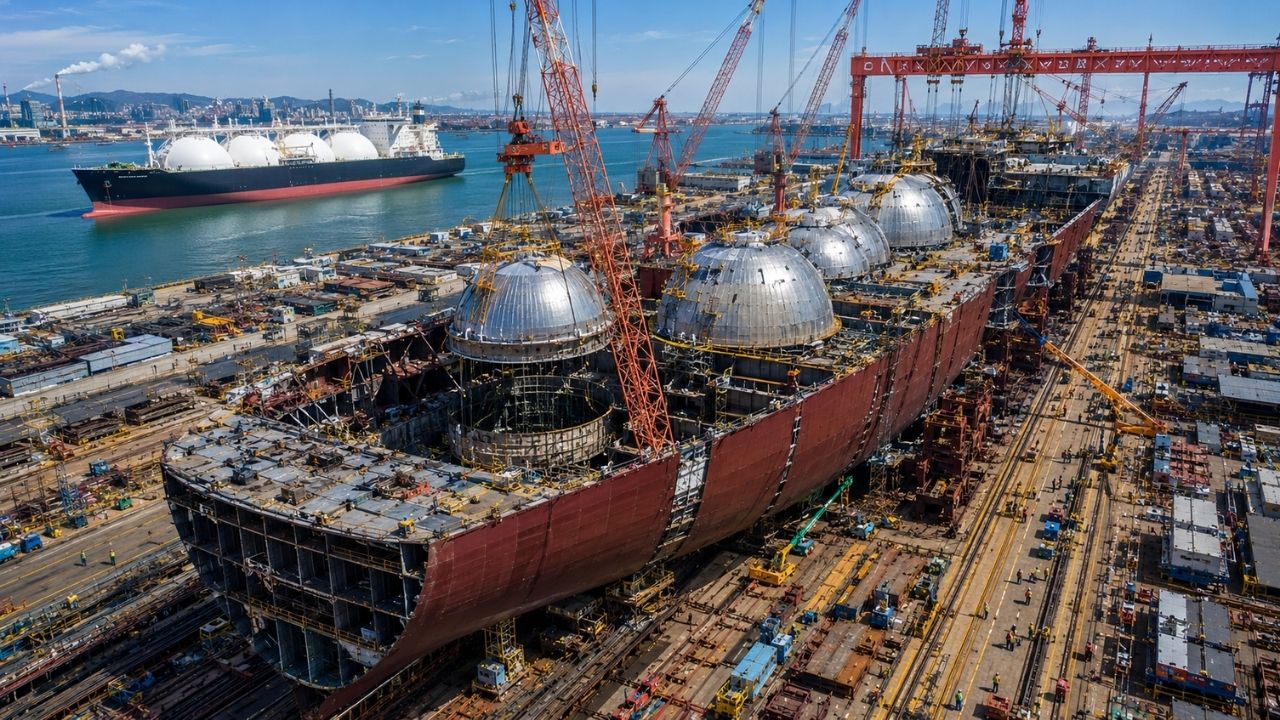


The China State Shipbuilding Corp began, on June 9, 2026, the construction of the first QC-Max class ship at the Hudong-Zhonghua shipyard in Shanghai. The 344-meter giant is 57% larger than a conventional LNG carrier and is part of a historic contract for 24 vessels valued at over 8.3 billion dollars.
On June 9, 2026, the China State Shipbuilding Corp, known by the acronym CSSC and considered the largest shipbuilder in the world, formally began the construction of a ship that promises to redefine the limits of maritime engineering and energy transportation. The first example of the QC-Max class, whose official name has not yet been disclosed, began to be erected at the facilities of the subsidiary Hudong-Zhonghua Shipbuilding in Shanghai, marking the beginning of the execution of the largest shipbuilding order ever recorded in world history.
The ship will be 344 meters long, 53.6 meters wide, and have a draft of 12 meters, with the capacity to transport 271,000 cubic meters of liquefied natural gas per trip, enough volume to meet the gas consumption demand of 4.7 million households in Shanghai for an entire month. The information was released by CSSC itself through an official statement, based on which the China Daily published the news on the same date.
The contract that made history in shipbuilding
The milestone of June 9, 2026, is the visible result of an agreement reached in 2024 between CSSC and QatarEnergy, the state giant in the oil and gas sector of Qatar, formerly known as Qatar Petroleum. The two groups signed two separate contracts for the construction of 24 QC-Max class ships, with a total value exceeding 56 billion yuan, equivalent to approximately 8.3 billion dollars. Combined, the two contracts form the largest shipbuilding order ever placed in the entire history of the sector.
-
Global Shipping Faces Shortage of Certified Maritime Officers, Salaries in the U.S. Can Exceed $100,000 Annually

-
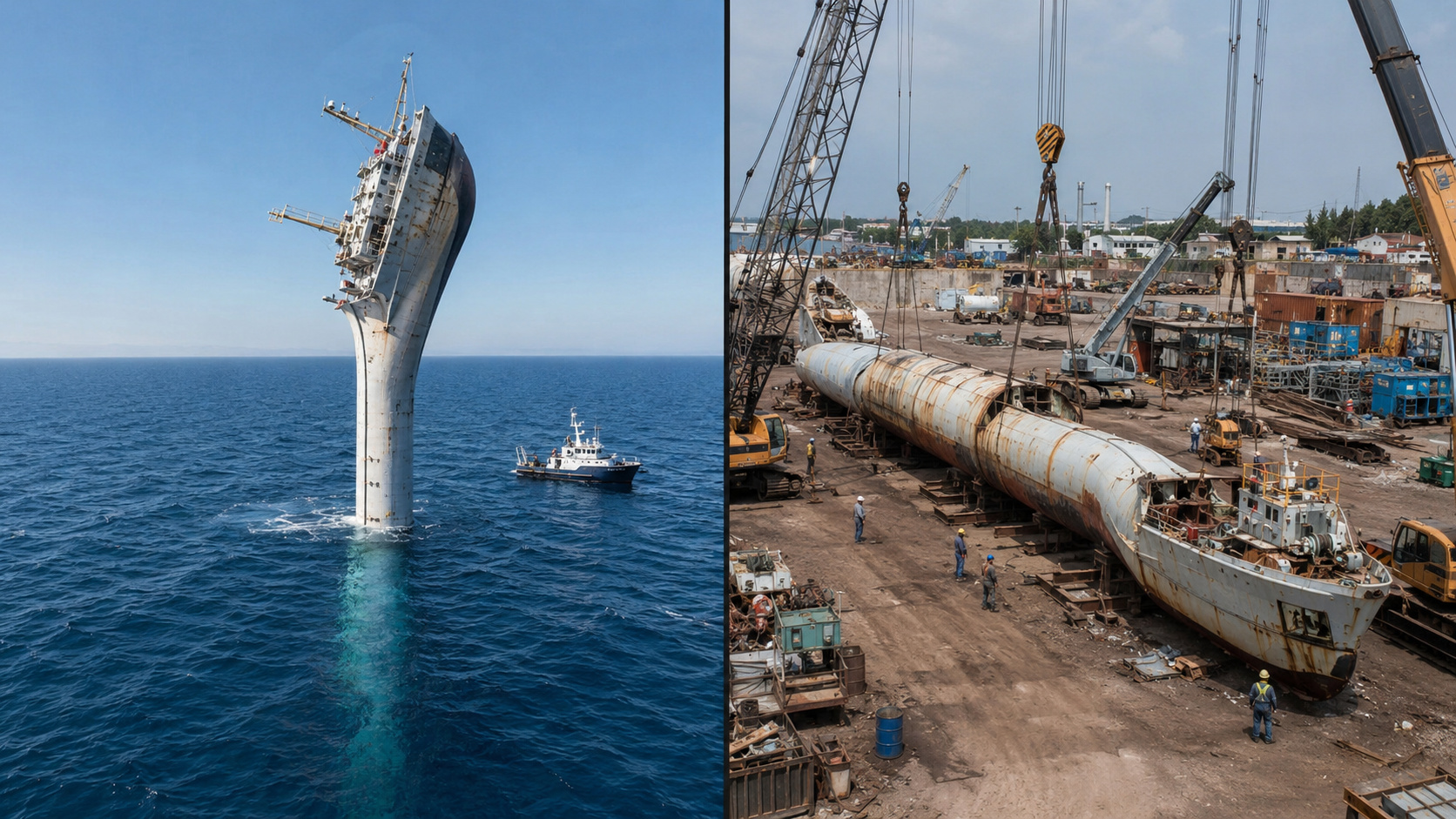
The FLIP: A 108-Meter Ocean Laboratory That Stood Vertically for 60 Years, Dismantled in 2023
-
North Korean Fiasco: Launch of the Largest Warship Ends in Sinking

-
While giant ships still burn heavy fuel and the maritime sector races against climate targets, Maersk and Vale are starting to bet on ethanol as a new route to reduce emissions at sea.



QatarEnergy occupies a central position in this project not by chance. The state-owned company is responsible for all oil and gas activities in Qatar and is recognized as the world’s largest LNG supplier. The order for 24 vessels directly reflects Qatar’s ambition to expand its liquefied natural gas export capacity to global markets in the coming decades.
What makes the QC-Max class different from everything that exists today
The QC-Max ships are not just larger, they represent a significant technical leap compared to the current fleet of LNG carriers operating worldwide. Each vessel will have a capacity of 271 thousand cubic meters of LNG, compared to the 174 thousand cubic meters of the largest conventional carriers, an increase of approximately 57% in volume per trip. In practical terms, this means more gas transported per route, per fuel consumed, and per crew on board.
According to data published by CSSC, each ship will be able to transport 155 million cubic meters of natural gas in a single crossing, a volume equivalent to the monthly consumption of 4.7 million households just in the city of Shanghai. Extrapolating to the set of 24 vessels ordered, the complete fleet will represent an unprecedented logistical capacity for LNG transport in the history of global energy.
The role of Hudong-Zhonghua and China’s position in the sector
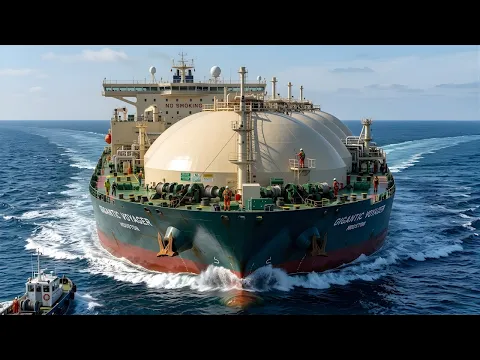

The construction of the QC-Max ships was entrusted to Hudong-Zhonghua Shipbuilding, a subsidiary of CSSC located in Shanghai and considered one of China’s leading LNG tanker manufacturers. The shipyard is part of a select group of builders worldwide with the technical capability to produce vessels of this category, given the complexity involved in the cryogenic insulation required to store liquefied natural gas at temperatures close to -163 degrees Celsius.
Hudong-Zhonghua already has a consolidated history in the segment: over the years, the shipyard has manufactured and delivered dozens of LNG tankers to clients in different countries. The start of construction of the first QC-Max on Chinese soil reinforces China’s position as a dominant power in the global shipbuilding industry, especially in the most technically demanding segment of large energy carrier construction.
What this giant ship reveals about the future of the LNG market
The construction of the world’s largest LNG ship does not occur in isolation. It is part of a broader movement to expand the global infrastructure for liquefied natural gas transportation, driven by the growing demand from countries seeking to diversify their energy sources or reduce reliance on coal. The increased capacity per vessel is a strategic factor: the larger the ship, the lower the logistical cost per unit of energy transported, which favors long-term contracts and long-distance routes.
The contract between CSSC and QatarEnergy, signed in 2024 and now in the execution phase, also signals the consolidation of a high-level industrial partnership between two of the world’s largest players in their respective sectors. There is, as of now, no information released about the delivery schedule of the 24 vessels, nor about the specific routes the ships will serve after their completion, data that will likely be revealed as the work progresses.
The start of the construction of this giant LNG ship says a lot about where the energy market is heading, and about who is building the infrastructure that will move it.
What do you think: will the size of these vessels change the dynamics of global energy trade? Does China consolidating this naval leadership concern or impress you? Leave your opinion in the comments.