






 Portuguese
  Spanish
  2 min of reading
  0 comments


Plastic Pollution Is One of the Greatest Environmental Challenges Facing the Planet, Especially for Oceans. In Search of Sustainable Solutions, Japanese Scientists Have Developed a Recyclable Plastic That Completely Dissolves in Seawater Without Generating Microplastics, Reducing Harm to Marine Life.
Japanese researchers have created an innovative plastic that completely dissolves in seawater without generating microplastics. This advancement could revolutionize the industry and reduce marine pollution.
Plastic is one of the biggest pollutants in the oceans. Small fragments, known as microplastics, are ingested by marine animals and can make their way to humans.
To combat this problem, scientists from the RIKEN Center for Emergent Matter Science (CEMS), led by Takuzo Aida, have developed a biodegradable and recyclable material.
-
Helicopter Drops 180 Tons of Sand and Gravel on Swedish River to Revive Ecosystem Damaged by Decades of Exploitation

-
Brazilian Company Launches Retro Smartphone with 48 MP Camera, T9 Keyboard, and Privacy Features for Social Media-Free Use

-
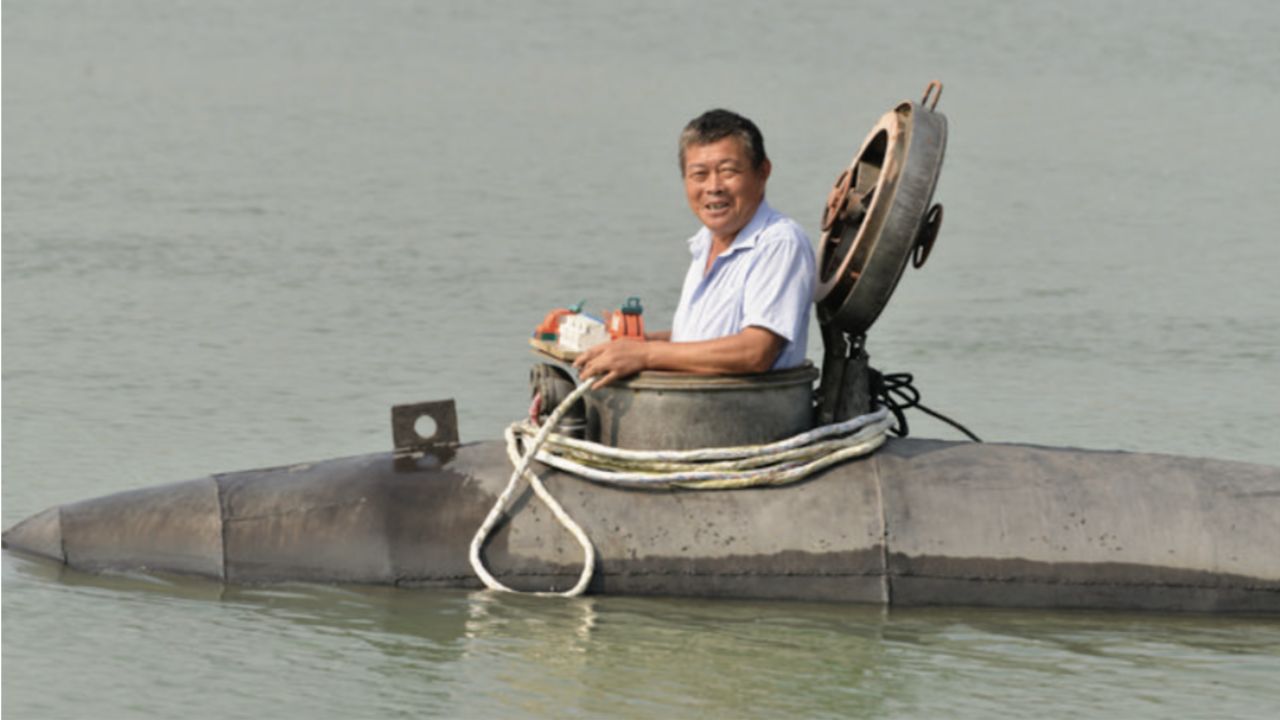
Self-Taught Chinese Farmer Builds 5-Ton Submarine from Scrap, Launches It in Anhui River
-
Invisible Induction Technology Enables Wireless Power for Blenders, Coffee Makers, and Air Fryers, Reducing Countertop Cables




How Does It Work?
This new plastic is made from supramolecular polymers, a type of material whose molecules are held together by reversible interactions. It is composed of two ionic monomers:
- Sodium Hexametaphosphate, a common food additive.
- Guanidine-Based Monomers, which ensure flexibility and strength.
The great advantage is that both compounds can be degraded by marine bacteria. Thus, the plastic completely disappears upon contact with ocean water.
The Role of Desalination in Production
During the production of the plastic, the monomers generate two layers:
- A Thick Layer, which forms the structure of the plastic.
- A Watery Layer, where salt ions are present.
The removal of this watery layer through the desalination process results in a strong and durable material. Without this step, the plastic would become brittle and less useful.
Properties of the New Material
This plastic stands out due to several characteristics:
- Dissolves in the Sea Within a Few Hours, without generating microplastics.
- Non-Toxic and Non-Flammable, making it safe for the environment.
- Can Be Molded at High Temperatures, allowing for various uses.
- Compatible with 3D Printing, expanding its application to various industries.
- Strong and Adaptable, it can be manufactured in different shapes and textures.
Biodegradability in Soil
In addition to dissolving in the ocean, this plastic also decomposes rapidly in soil. In just 10 days, it completely disappears, releasing nutrients such as phosphorus and nitrogen, which can be utilized in agriculture. Unlike other biodegradable plastics, it leaves no residues or polluting fragments.
If produced on a large scale, this plastic could help reduce marine and terrestrial pollution. Its use could encompass packaging, disposable utensils, and medical tools.
The development of this material represents an important step toward creating a circular economy, in which products can be recycled or degraded without causing negative impacts on the environment. This innovative solution could transform the plastic industry and make the planet more sustainable.
Study available in the journal Science.





Be the first to react!