






 Portuguese
  Spanish
  4 min of reading
  0 comments


Animals Hunted In Monterey County Presented Fluorescent Muscle Tissues And Fat, Resulting From Ingestion Of Blue Rodenticide Used In Agriculture, Which Can Affect The Whole Food Chain And Reach Human Consumption
An unusual phenomenon caught the attention of hunters and researchers in California: neon blue wild boars were found in March of this year in the Salinas area of Monterey County. The discovery occurred during routine wildlife control activities and revealed that the animals had ingested an agricultural poison capable of altering the coloration of their tissues.
Specialist Dan Burton, who first observed the occurrence, expressed surprise to the Los Angeles Times. “I’m not talking about a little blue. I’m talking about neon blue, blueberry blue. It’s crazy,” he said. The case was immediately reported to the California Department of Fish and Wildlife (CDFW).
The initial analyses showed that both the muscle and fat exhibited intense fluorescence. The finding raised concerns about environmental contamination and potential risks to human health and natural predators that feed on these animals.
-
Low-Demand Brazilian Beef Offal Gains Popularity Abroad: Indonesia Purchases $19.5 Million, Boosting Revenue and Reducing Waste

-
Soy Expansion in Former Brazilian Savanna Sparks Water and Land Conflicts in Major Agricultural Frontier
-
Mexican Pest Threatens U.S. Cattle Herds at Historic Lows, Potentially Boosting Brazilian Beef Exports as Burger Prices Soar

-
Avocado Boom for European and U.S. Markets Fuels Water Crisis in Drought-Stricken Chilean Region


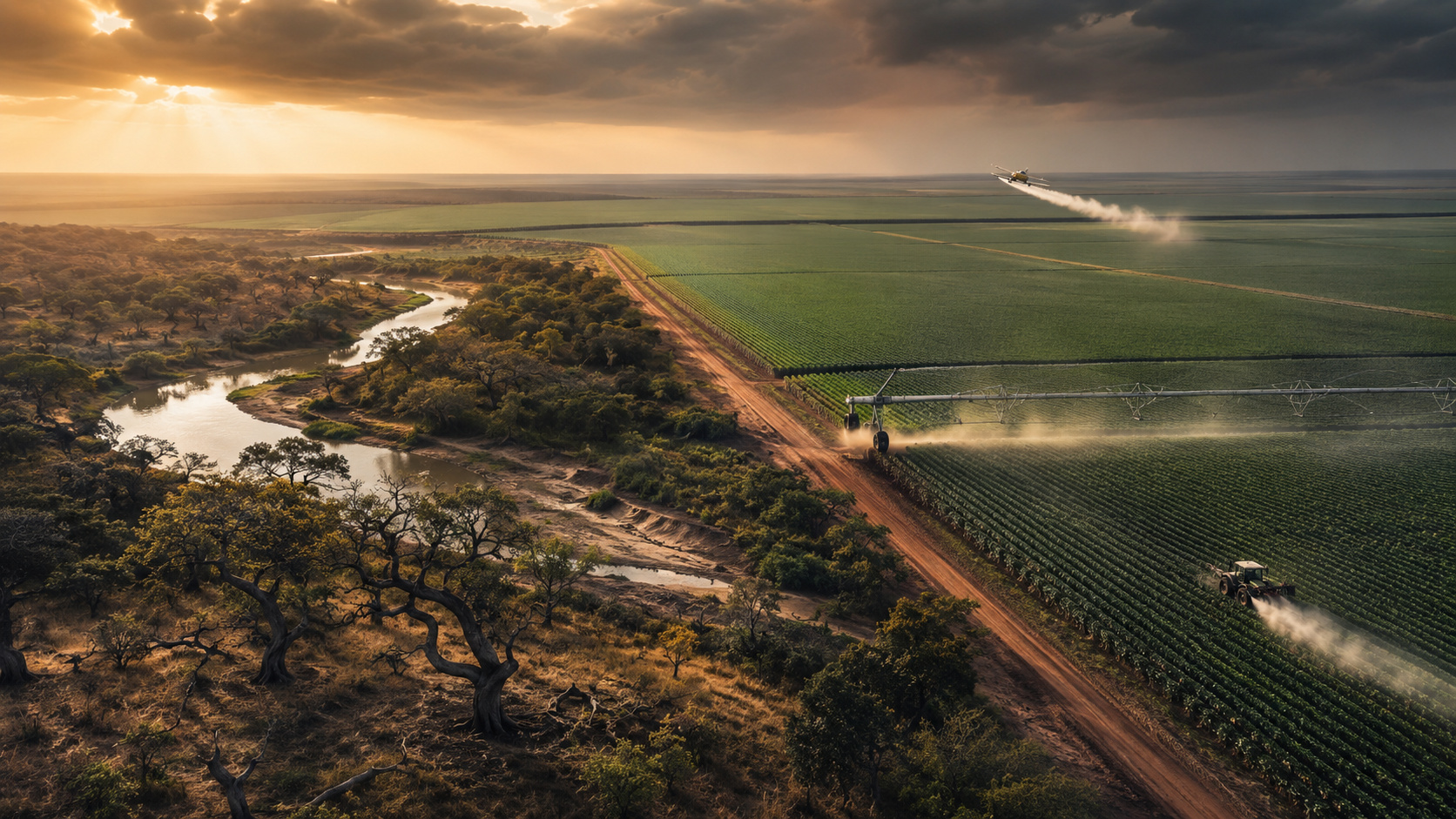


Rat Poison Identified As Cause Of The Phenomenon
After investigations, the CDFW Wildlife Health Laboratory and the California Animal Health and Food Safety Laboratory confirmed that the source was diphacinone, an anticoagulant rodenticide widely used in agricultural areas. The product is dyed bright blue as a form of identification for humans, but does not deter wildlife.
According to specialists, the poison remains active in the tissues of the animals, even after being cooked, which poses a risk to hunters and consumers. The effect of the substance is not immediate: it causes internal bleeding by preventing the recycling of vitamin K, leading to death a few days after ingestion.
According to the Los Angeles Times, the wild boars had been exposed “for a prolonged period.” Although the doses intended for rodents are lethal to them, they do not immediately kill larger animals, which can weigh between 45 and 90 kilograms.
Impact On Ecosystems And History Of Contamination
Wild boars—hybrids of wild boars and domestic pigs—are omnivorous animals and end up ingesting both poisoned bait and intoxicated rodents, becoming involuntary transmitters of the substance. This amplifies the effects of the poison throughout the food chain.
In 2018, the CDFW had already found traces of rodenticides in 8.3% of the analyzed wild boars and in 83% of the bears studied in California, especially in areas near rodent control programs. These numbers reveal that contamination is not new, but the neon blue coloration has brought new visibility to the problem.
The use of diphacinone has been restricted since 2024 and can only be handled by certified technicians. Still, residues continue to circulate in ecosystems. For authorities, “if the pig is blue, something is wrong”, but even animals without visible signs may be contaminated.
Concerns From Hunters And Official Guidelines
The CDFW warned hunters about the need to be extra cautious when handling the meat of wild boars, deer, bears, and waterfowl hunted in the region. They also advised that any abnormalities be immediately reported to the Wildlife Health Laboratory.
Furthermore, farmers were encouraged to adopt alternative pest management methods, such as mechanical traps, fencing, and the use of natural predators, reducing reliance on chemical rodenticides.
Ryan Bourbour, pesticide research coordinator at the CDFW, emphasized: “Hunters should be aware that the meat of hunted animals may be contaminated if those animals have been exposed to rodenticides.”
Broader Environmental Issues
The discovery raised discussions about the unforeseen impacts of agricultural chemical use on wildlife habitats. Environmental health authorities highlight that, even with restrictions, residues continue to affect non-target species and may end up in human consumption.
According to the CDFW, cases like that of the fluorescent wild boars serve as a warning that substances applied for pest control can generate unintended side effects, affecting animal populations and potentially public health.
The information was published by the Los Angeles Times and the Metrópoles, and confirmed in statements from the California Department of Fish and Wildlife. The laboratory results reinforce the need for constant monitoring and integrated strategies to reduce the impact of rodenticides on ecosystems.
And you, do you believe that similar cases of contamination in wildlife may have already occurred in Brazil without the same repercussions? How should the country act in situations like that of the wild boars in California?





-

-

-

-

-

18 people reacted to this.