






 Portuguese
  Spanish


At 42 years old, the Argentine Jésica Belletti left Greater Buenos Aires and built with her own hands a 30 m² adobe and straw house in the mountains of Córdoba. Built through bioconstruction, the hexagonal and sustainable dwelling was where she had her child, and today it also became her profession.
A former teacher proved that it is possible to raise your own house with mud, straw, and wood. In the Córdoba mountains, Argentina, Jésica Belletti built with her own hands a 30 m² adobe house using an ancient bioconstruction technique. The story was told by the Argentine newspaper Infobae.
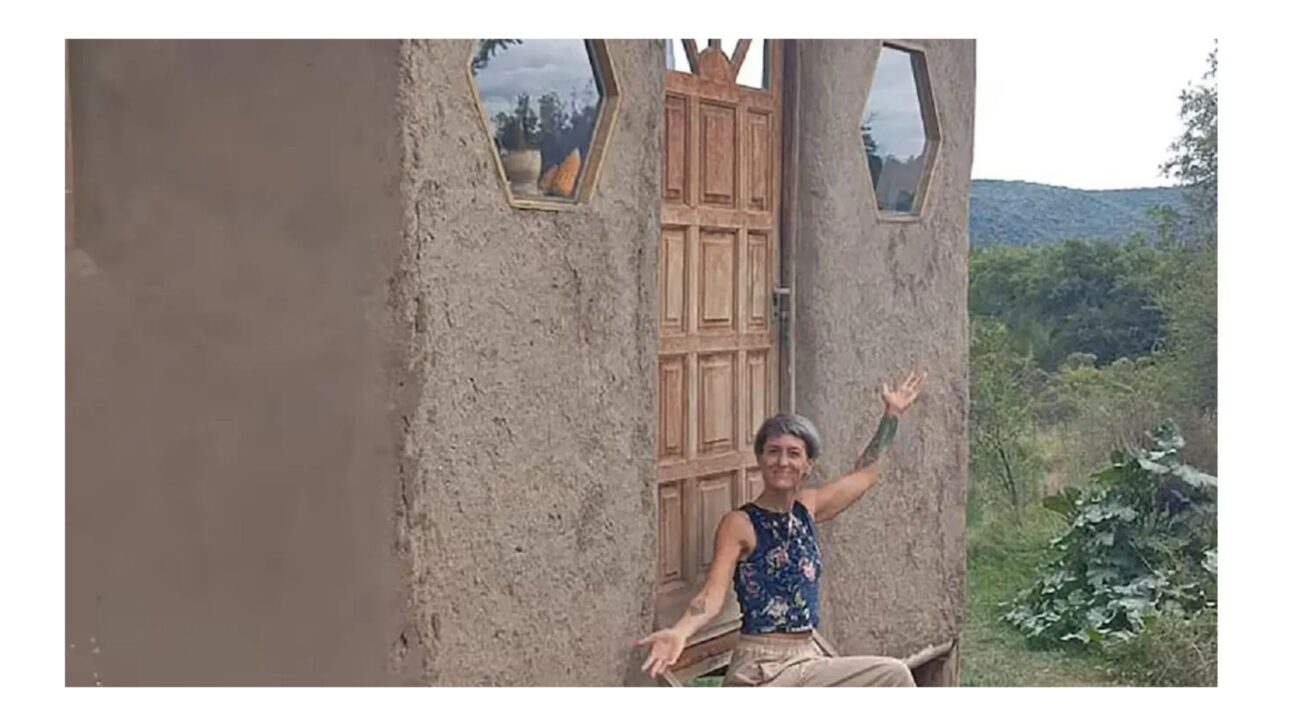
The result is a compact, hexagonal dwelling with low environmental impact. The house measures five by six meters, combining bedroom, kitchen, and living space in a single area, and only used cement in the foundation. Everything else was handmade, with natural materials taken from the surrounding area, a concrete example of sustainable construction.
More than a home, the project became a livelihood. It was in that house that Jésica had her child, in December 2023, and it was from there that she turned her knowledge into work: today she works with bioconstruction, building homes from natural materials for other families. Next, see how the house was made and why the technique generates so much interest.
-
Couple Transforms 1920s UK Cinema into Garden with 4-Meter Window After $450,000 Renovation

-
Cost of Installing Electric Fences in 2026: Price Per Meter and Factors Affecting Installation

-
Retired Builder Constructs House Using Over 4,000 Milk Cartons in Brazil, Engineer Estimates Structure Could Last 100 Years
-
Concrete-filled PVC homes could be cheaper than traditional masonry, UPF research finds; with ready modular panels, less waste, and faster construction, the Concrete-PVC system aims to cut costs and transform affordable housing in Brazil.


Who is Jésica Belletti and how the house came about
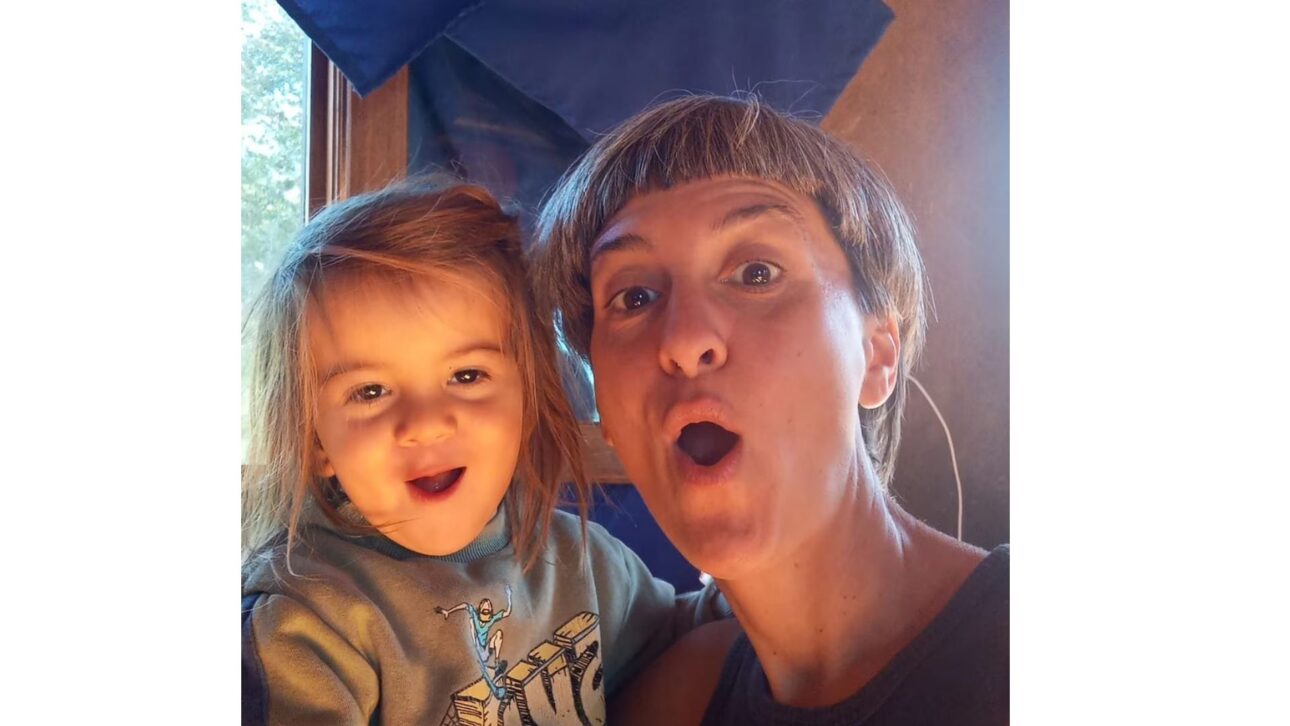
The protagonist is not a construction expert. Jésica Belletti, now 42 years old, was a teacher in Berazategui, Greater Buenos Aires, for over a decade before completely changing her path. Without prior construction experience, she decided to learn hands-on how to build her own home.
The turnaround began years before the house existed. Still in her 20s, Jésica left urban life, set up a trailer, and traveled through Argentina in search of a place to live closer to nature. That’s how she arrived in the Traslasierra Valley, in Córdoba, and settled in the Los Hornillos region around 2021.
The decision to build came from the desire to have her own space. Instead of buying a ready-made house or constructing a conventional brick and cement building, she opted for bioconstruction, a technique that uses natural, local, and low-impact materials. The construction of the adobe house began in the summer of 2022.
A personal milestone intertwined with the project. In December 2023, already living in the house she built, Jésica gave birth to her son, Kunturi, in a home birth assisted by midwives. The birth, reported by Infobae, became part of the story of that handmade construction in the mountains.
What the 30 m² Adobe and Straw House is Like
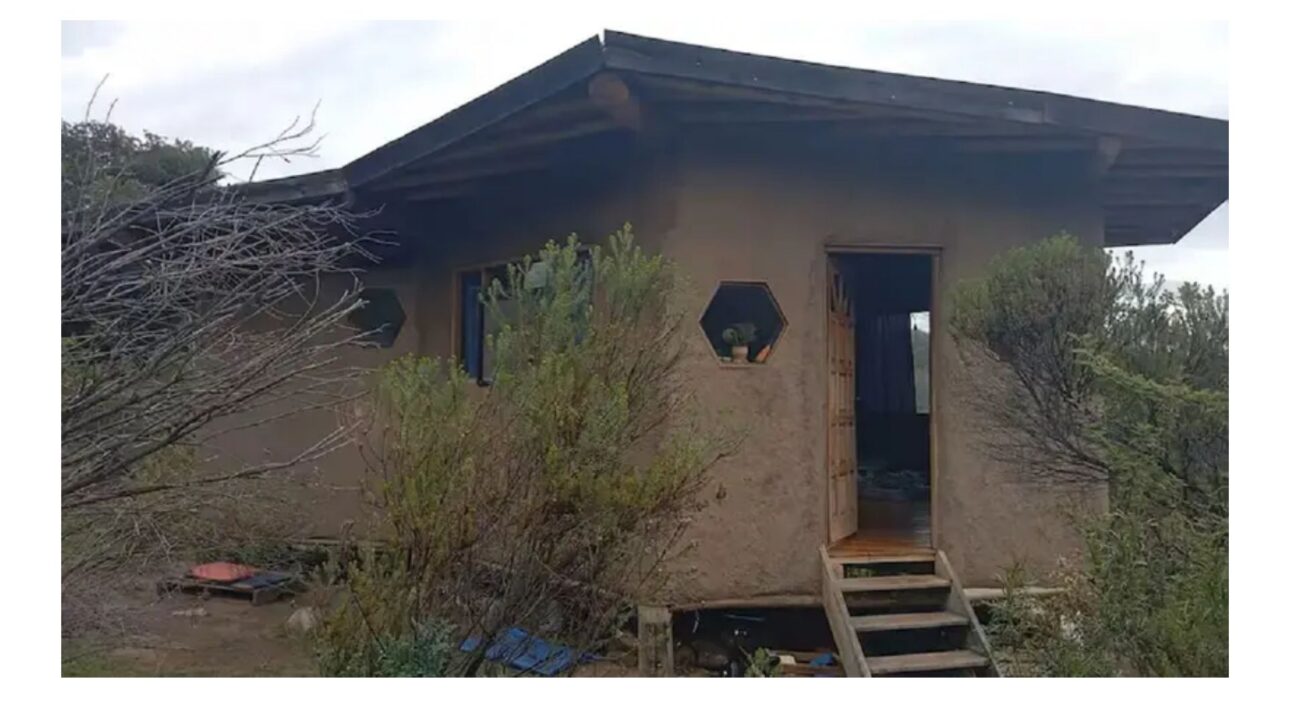
The house’s layout is as simple as it is efficient. It measures five by six meters, about 30 m² in total, organized in a hexagonal shape. In a single integrated space are the sleeping area, kitchen, and living room, while the bathroom is separate, in an independent room.
The hexagonal shape is not just aesthetic. Angled walls help better distribute the structure’s stresses and create a cozy internal space, making use of every square meter. In a small adobe house, this geometry contributes to the feeling of spaciousness despite the limited size.
The materials largely came from the land itself and the surroundings. The walls combine clay, straw, and wood, three inexpensive and abundant elements in the region. Using local resources reduces transportation costs and gives the adobe house a direct connection to the landscape where it was built.
Only one detail deviated from the natural world. According to Infobae, only the foundation of the house used cement; everything else was built by hand, without the typical industrial materials of a common construction. It is this almost absence of industrial inputs that makes the dwelling so sustainable.
Inside, the finish relies on the natural aesthetic of clay. The hand-plastered walls take on an earthy tone and a smooth texture, without industrial coatings. The result is an environment that many people associate with coziness, with the advantage of using non-toxic materials in an adobe house designed to be healthy.
The quincha technique: clay, straw, and wood
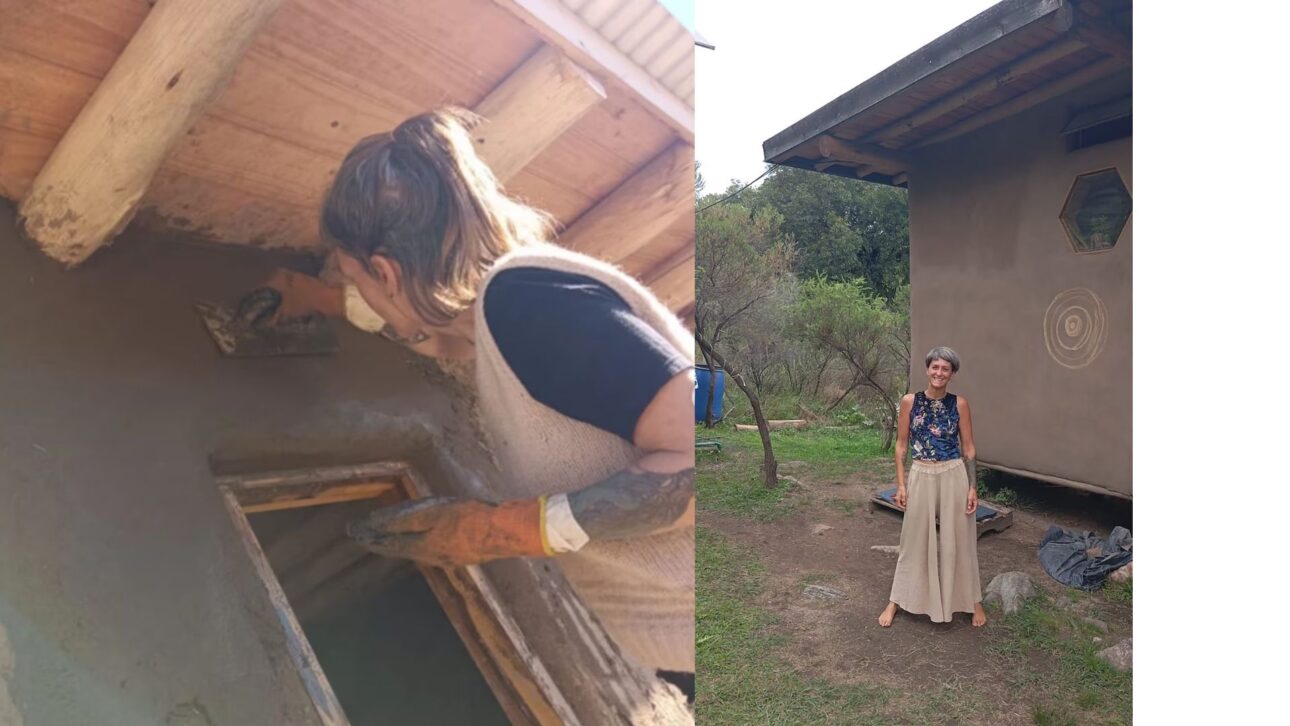
The heart of the construction is an ancient technique called quincha. In it, a wooden structure is filled and coated with a mixture of clay and straw, forming strong walls full of thermal inertia. “I closed with quincha, plastered inside, and moved in,” summarized Jésica to Infobae, describing the method.
Quincha belongs to the same family as earthen construction. Like adobe, made from sun-dried clay bricks, it uses earth as the main raw material, without firing and without cement. The difference lies in the wooden framework that supports the mixture of clay and straw, giving lightness and flexibility to the walls.
Straw plays an essential role in this recipe. Mixed with clay, it acts as a natural reinforcement, holding the mass, reducing cracks, and improving insulation. It is an intelligent use of a material that, in the countryside, would often be discarded as agricultural waste.
The whole process requires patience more than brute force. Each layer needs time to dry, and the pace of the construction follows the climate and material availability. For Jésica, this is part of the method: according to her, it’s not about building quickly, but about understanding each stage and adapting to the environment.
Quincha even has recognized structural advantages. By combining the flexibility of wood with the weight of clay, it often performs well in earthquake-prone regions, which is why variations of the technique are traditional in Andean countries. It’s no coincidence that Argentina and neighbors like Peru preserve quincha constructions that have endured for generations.
What is bioconstruction?
The word sums up a philosophy of building. Bioconstruction is the name given to the set of techniques that erects homes with natural, local, and low environmental impact materials, such as clay, straw, wood, sand, and lime. The goal is to make a healthy and sustainable house, spending the minimum of industrial resources.
Its roots are ancient, but the interest is current. Many of these techniques, like adobe, rammed earth, and quincha, have been used for centuries by different peoples, but have regained strength in the face of concerns about sustainability and construction costs. Jésica’s adobe house is a modern example of this return to origins.
In practice, bioconstruction starts from a few simple principles. Using what is nearby, taking advantage of waste like straw, respecting the local climate, and prioritizing the health of the inhabitants are central points of the method. Not surprisingly, this type of construction is also usually cheaper than conventional construction.
According to the newspaper El Destape, bioconstruction allows saving money and building a house more simply. It is a possible answer for those who want a decent roof without relying on large loans or a heavy materials industry.
Living roof, solar panels, and mountain water
Jésica’s house doesn’t stop at the clay walls. The roof is of the living type, covered with stones, soil, and native plants, like succulents, which help insulate the temperature and integrate the construction into the landscape. It is a sustainable solution that transforms the covering into another layer of natural protection.
The energy also comes from a clean source. To have electricity in the mountain, the home is equipped with solar panels, which power basic appliances like an efficient refrigerator and a small washing machine. Thus, even far from the city, the adobe house maintains a minimum comfort without relying on the traditional grid.
The water follows the same logic of taking advantage of what the mountain offers. The supply comes from nearby watercourses, and capture systems help store rainwater. This arrangement reduces consumption and reinforces the house’s autonomy in relation to urban infrastructure.
Together, these systems demonstrate the reach of bioconstruction. More than just mud and straw walls, the project considers the whole: roofing, energy, water, and materials work together to make the dwelling efficient and low-impact. It is the practical translation of a house designed to be sustainable from start to finish.
Why are mud houses cooler and cheaper?
There is science behind the comfort of earth walls. Mud has high thermal inertia, meaning it takes time to heat up and cool down. Therefore, thick walls of an adobe house keep the internal temperature more stable, cooler in the heat and warmer in the cold, reducing the need for air conditioning or heating.
The choice of openings completes this effect. Wooden roofs and well-positioned windows make use of natural light and aid in ventilation, reducing spending on lighting and climate control. The result is a more comfortable house passively, without relying so much on energy.
The wallet also appreciates it at various stages of the construction. Since much of the materials are natural and local, like mud and straw, the cost drops significantly compared to brick, cement, and steel. For many people, it is precisely this economy that makes bioconstruction a viable alternative.
It is important, however, not to confuse simple with easy. A raw earth construction requires technique, good foundation, protection against moisture, and maintenance, to avoid the risk of cracks and infiltrations. When well executed, however, an adobe house can last for decades, combining low cost and durability.
There is no shortage of durability evidence around the world. Raw earth constructions with centuries of existence remain standing on different continents, from villages in Europe to historic cities in North Africa and the Andes. This history shows that, with maintenance and good construction details, mud is a serious material, capable of housing generations.
From homeownership to profession: building for other families
Jésica’s learning was not limited to her own home. After building the house where she lives, she turned her knowledge of bioconstruction into a source of income, helping to build natural material homes for other families. What started as a necessity became a profession.
This work is usually collective, not solitary. “The work is physical, collective, and, in many cases, participatory,” said Jésica, according to Infobae, describing how the constructions take place. Generally, many hands come together in each project, in a model that involves those who will live in the house and a team of builders.
The place where Jésica settled helps explain the phenomenon. The Traslasierra Valley, in Córdoba, has become one of the bioconstruction hubs in Argentina in recent years, attracting people willing to swap brick for mud and learn the technique in practice. There, mud and quincha houses have ceased to be exceptions and form almost a community of builders.
This format has an important multiplier effect. By participating in the construction, the families themselves learn the technique and can reproduce it later, spreading the knowledge of bioconstruction. Thus, each adobe house built also functions as a kind of open-air practical workshop.
For Jésica, combining housing and work completed a cycle. The same skill that solved her house today financially supports the family and still meets a growing demand for cheaper and sustainable constructions. It is proof that the technique goes far beyond a personal project.
What this has to do with Brazil
Brazil has a long familiarity with earth houses. Techniques such as wattle and daub, rammed earth, and adobe itself are at the base of Brazilian popular architecture, present in historical constructions and rural houses throughout the country. Jésica’s adobe house directly connects with this tradition.
In recent years, this ancient knowledge has come back into fashion here. A movement of bioconstruction is growing in Brazil, with people building houses of clay, bamboo, straw, and reused materials, in search of cheaper and sustainable housing. The topic is gaining space in courses, workshops, and the specialized press.
There is also a relevant social background. With a large housing deficit and millions of families without adequate homes, low-cost techniques arouse interest as part of the solution. Constructions that utilize earth and agricultural waste, such as straw, can reduce the cost of housing without compromising quality.
The technique also already appears in manuals, courses, and community efforts across the country. Universities and NGOs spread the knowledge of bioconstruction, and adobe and rammed earth constructions appear both in rural settlements and in high-standard homes that adopt the style by choice. Clay is gradually ceasing to be seen as synonymous with poverty to become a conscious choice for those who want a sustainable house.
Finally, there is the encouragement to look at one’s own backyard. The Argentine case shows that simple materials, combined with technique and planning, generate efficient and durable houses. For Brazil, rich in raw earth tradition and natural resources, it is a reminder that building sustainably can be more accessible than it seems.
The story of Jésica Belletti shows that an adobe and straw house can be much more than a rustic dream. With 30 m², a hexagonal shape, a living roof, and solar energy, the home she built with her own hands in the Córdoba mountains became a model of efficient, cheap, and sustainable bioconstruction, and it also became her profession.
And you, would you live in a house made of clay, straw, and wood? Share in the comments what you think of the bioconstruction technique and if you believe this type of natural construction can gain more space in the cities and countryside of Brazil.


