





 Portuguese
  English
  Spanish
  3 min of reading
  0 comments


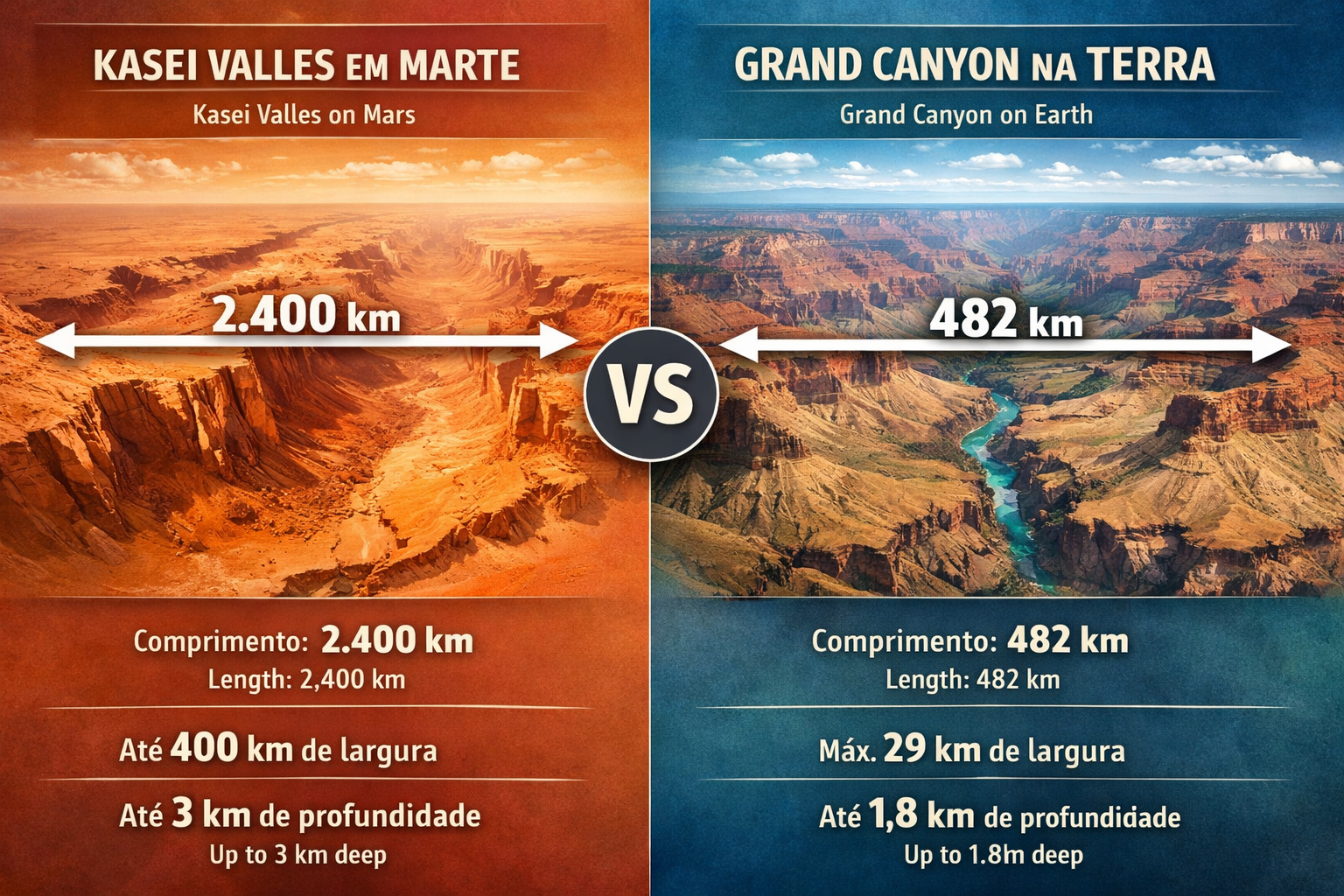
Giant Martian System Surpasses the Grand Canyon in Scale, Has 100 Km Wide Edges Up to 482 Km, and Reveals Signs of Megafloods That Occurred About 3 Billion Years Ago
The planet Mars holds one of the most impressive geological structures ever recorded in the Solar System. The Kasei Valles, considered the largest flood feature ever identified by scientists in space, cuts through the Martian surface like a colossal scar. Beyond its nearly incomprehensible size, it houses the largest dry waterfalls in the universe, clear evidence that the red planet once hosted extremely violent rivers.
The information was released by the portal “Mysteries of Space,” a channel with over 900 thousand subscribers, which detailed the dimensions and scientific hypotheses surrounding this Martian formation.
Why Does Kasei Valles Impress Science So Much?
First of all, it is necessary to understand the size of the phenomenon. The Kasei Valles system stretches over 2,400 kilometers. In some isolated sections, the width exceeds 400 kilometers, officially reaching up to 482 kilometers.
-
The anxiety that hinders so many students during exams received a response in Enem 2026, which started allowing support companions for those with mental disorders such as OCD and ADHD, as well as fibromyalgia, in a measure that follows the 191% increase in the demand for specialized care.

-
The upper part of a monumental statue attributed to Pharaoh Ramses II, weighing between five and six tons and measuring about 2.2 meters, was discovered at the site of Tel al-Faraoun in the Nile Delta, revealing a stronger presence of the great pharaoh in northern Egypt than previously imagined.
-
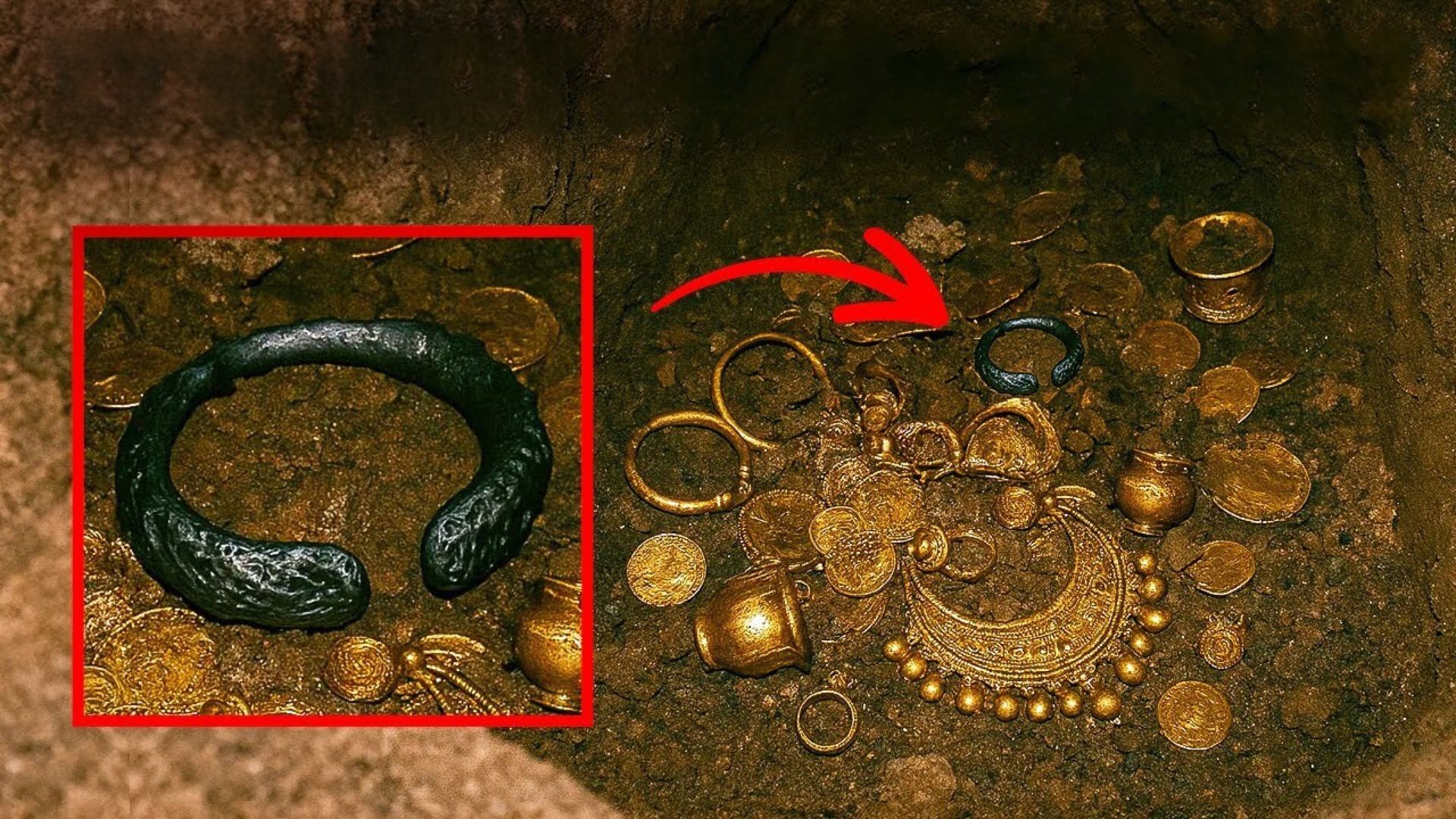
The most valuable treasure of the Bronze Age in Spain hid an impossible secret for 60 years: scientists confirmed that the bracelet and the gold hemisphere of the Villena Treasure were forged with meteorite iron even before iron metallurgy existed on the Iberian Peninsula.
-
Civil engineer explains the strategy that would allow Luciano Hang to build Havan megastores in just four months, combining flat land, standardized prefabricated structures, and concrete panels that replace masonry to speed up each construction across the country.



For comparison, the famous Grand Canyon in the United States is 446 kilometers long and has a width of up to 29 kilometers. In other words, when placed side by side, the Earth’s canyon seems small next to the Martian brutality.
Additionally, in the southern region of the channel, there are two monumental dry waterfalls. They create an abyss with free-fall that can reach 500 meters in height, although previous estimates indicate about 400 meters. This main edge extends approximately 100 kilometers from end to end.
Consequently, we are talking about a structure whose scale surpasses any natural reference on Earth.
How Did Scientists Discover This Martian Scar?


The official discovery occurred in the 1970s when the Mariner 9 probe sent the first black-and-white images of the Martian surface. As soon as astronomers analyzed the photos, they realized that the massive tear could not have been formed by common processes.
With technological advancement, the Mars Odyssey and Mars Reconnaissance Orbiter missions began scanning every detail of the region. Currently, digital maps reveal that the flows responsible for forming the Kasei Valles occurred about 3 billion years ago.
Therefore, scientists believe that enormous volumes of water sculpted the Martian terrain in an unprecedented megaflood event. However, there are still significant debates about the exact origin of these forces.
Water or Lava? The Great Unresolved Mystery
The main hole of Kasei Valles likely formed when a colossal flood tore away the volcanic basalt crust. As a result, vertical cliffs and deep beds emerged, which still impress today.
Among the most striking numbers are:
- Free fall of up to 500 meters
- Average depth of about 2,900 meters
- Main edge over 100 kilometers in length
Still, one question remains open. Were only freshwater rivers responsible for this gigantic scar? Or did lava flows also contribute to the excavation of the Martian crust?
Currently, researchers rely on orbital images and geological calculations. However, these remote analyses have limitations. Therefore, the hope of science lies in future missions that aim to bring Martian soil samples back to laboratories on Earth.
Only with physical material will it be possible to accurately determine the exact age of the flood and the nature of the fluids that shaped this planetary scar.
Thus, Kasei Valles is not just an astronomical curiosity. It represents a key piece in understanding Mars’ climatic past and possibly its ability to have hosted water on a large scale.
Do you believe that Mars once had oceans capable of creating structures even larger than Kasei Valles?


Be the first to react!